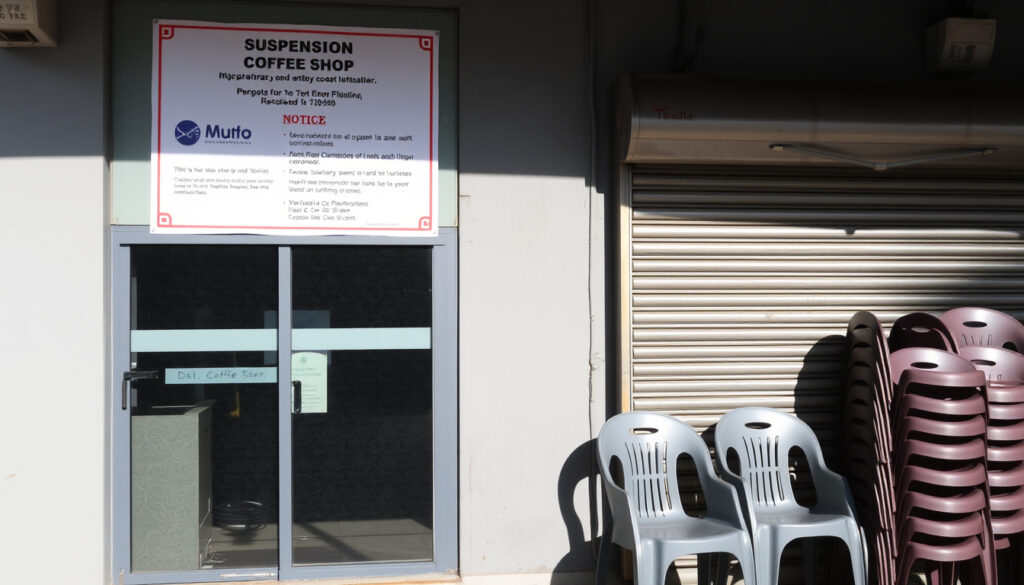
Singapore Coffee Shop Toilet Suspension: Fines & Rules
Anyone who frequents a Singapore coffee shop has likely faced the toilet dilemma — hold breath or walk out. In February 2025, six coffee shops were suspended and fined under the Singapore Food Agency’s (SFA) Points Demerit System for unclean toilets, marking one of the biggest single‑day enforcement actions in years — this article covers penalties, toilet types, and rules on flushing and water use.
Coffee shops suspended (Feb 2025): 6 ·
Average fine per shop: $1,100‑$1,300 ·
Coffeeshop toilets rated dirty: 91% ·
Demerit‑point threshold for suspension: 12 within 12 months ·
Annual suspensions for toilet lapses (pre‑2025): 4
Quick snapshot
- Six coffee shops suspended on Feb 21, 2025 (The Straits Times (Singapore’s leading English‑language newspaper))
- Repeat offenders among them (The Straits Times)
- 1‑day suspension plus fines (The Straits Times)
- $1,100–$1,300 per shop (Mothership (Singapore news site))
- 12 demerit points = suspension (Singapore Food Agency (food‑safety authority))
- 400 fines issued annually before 2025 (Ministry of Sustainability and the Environment (Singapore government regulator))
- Squat toilets still common in older coffee shops (MSE reply)
- Western toilets in newer ones (MSE reply)
- Bidet spray (bum gun) standard (BBC Future)
- Most Singaporeans use water + paper (BBC Future)
- Bidets in many homes and hotels (Statista)
- Flushing toilet paper not always safe (PUB (National Water Agency))
Four figures capture the scale of the issue: out of 1,200 coffee shops, most scored poorly on hygiene.
| Metric | Value |
|---|---|
| Number of coffee shops in Singapore | 1,200 |
| Percentage of dirty coffee shop toilets | 91% |
| Annual suspensions before 2025 | 4 |
| Suspension duration per offense | 1 day |
Can you be fined for not flushing the toilet in Singapore?
What are the penalties for dirty coffee shop toilets?
- The maximum penalty upon conviction is S$2,000 per offence under the Environmental Public Health (Food Hygiene) Regulations (Ministry of Sustainability and the Environment (Singapore government regulator)).
- However, the SFA can issue a lower “composition sum” of up to S$500 without court action (Singapore Food Agency (food‑safety authority)).
- Offenses accumulate demerit points under the Points Demerit System (SFA).
How does the SFA demerit point system work?
- A coffee shop licensee who accumulates 12 demerit points within 12 months faces a first suspension of 1 day, a second of 2 days, and a third of 3 days (SFA Points Demerit System).
- Each toilet‑related offence typically earns 4 demerit points (Mothership).
- In the February 2025 wave, the 1002 Food Court in Toa Payoh incurred 14 points: 6 for lacking toilet paper and soap, and 8 for failing to keep toilets clean (The Straits Times (Singapore leading newspaper)).
The SFA’s demerit system was revamped on 1 April 2020 to raise penalties (SFA revision notice). Yet the 91% figure — cited by World Toilet Organisation founder Jack Sim — suggests enforcement alone hasn’t fixed the problem. The real question is whether grants or stricter surveillance will shift the trend.
Does Singapore use squat toilets?
Are squat toilets common in coffee shops?
Yes — older coffee shops and hawker centres often feature squat toilets. Newer outlets, especially those renovated in the last decade, increasingly install Western‑style toilets. There is no official government survey on the exact ratio, but anecdotal reports and builder practices indicate squat models still make up a significant share of coffee‑shop loos.
Part of the reason is space: squat toilets require less room and are easier to clean (water hose can cover the entire surface). But there is no official count. The Ministry’s response to a parliamentary question in March 2025 (MSE written reply) focused on enforcement, not fixtures.
What are the benefits of squat toilets?
- Some users find squatting a more natural position for elimination.
- Squat toilets are easier to clean with a hose.
- They use less water per flush than many western models.
Is it okay to flush toilet paper in Singapore?
Why is flushing toilet paper sometimes a problem?
Many of Singapore’s older buildings — including coffee shops built decades ago — have narrow plumbing that cannot handle paper. Flushing can cause blockages and overflow. The sewerage system in newer developments (post-1990s) is generally designed for paper, but old hawker centres and coffee shops are often not upgraded. The National Water Agency PUB states that only “toilet paper that disintegrates” should be flushed, and many operators simply post a sign to bin it.
What should you do instead?
- Look for a bin beside the toilet — it’s there for a reason.
- If the toilet has a bum gun (bidet spray), use water first, then dab with paper and put the paper in the bin.
- When in doubt, treat every coffee shop toilet as the “bin” type.
There is no nationwide rule requiring coffee shops to provide flushing‑safe plumbing. The cost of retrofitting pipes often lands on the licensee — one reason many small operators resist upgrades despite the SFA grant announced in 2025 (MSE reply).
The implication: older plumbing infrastructure remains a barrier to higher compliance. Until grants cover more retrofits, the bin‑and‑spray method will stay the norm.
Are public restrooms free in Singapore?
Do coffee shop toilets require payment?
Most coffee shop toilets in Singapore are free for customers. Some lonelier outlets (especially those in older shopping areas) may charge 20 to 50 cents. This is legal as long as a sign is posted. However, under the SFA’s licensing conditions, a licensee cannot deny toilet access to a paying customer. If you buy a drink, the toilet should be free.
Are there any free public toilets?
- MRT stations and public parks provide free toilets maintained by the National Environment Agency.
- Library toilets and community club toilets are also free.
- Hawker centre toilets are normally free but sometimes charge a small fee if operated by an external cleaner.
Does Singapore use toilet paper or water?
Do Singaporeans use bidets?
Yes — the “bum gun” (hand‑held bidet spray) is standard in most households and many coffee shop toilets. It’s common to use water first, then dry with paper. Toilet paper is also widely used, but seldom alone. In fact, many locals consider not using water odd. The global figure of 70% of the world using water for cleansing (BBC Future) includes Singapore’s habits.
Do I still wipe after using a bidet?
Yes — a quick dab after using the bum gun removes excess water. The practice is a two‑step process: spray, then pat dry. It leaves you cleaner than paper alone, and many people find it more comfortable.
Why don’t Americans use bidets?
The cultural divide is largely historical: American homes were not plumbed for bidets, and the post‑war housing boom standardised the paper‑only bathroom. Meanwhile, Southeast Asian and Japanese bathrooms adopted the spray nozzle. Changing habits is slow, but the global bidet market is growing at about 8% annually (Statista).
Do Singapore hotels have bidets?
Most mid‑range and budget hotels in Singapore include a bum gun. International chains may not, but the standard local setup is a spray. If you’re a traveller from the West, expect to see a hose beside the toilet.
Timeline: Enforcement escalates
- : Six coffee shops fined and suspended for one day for unclean toilets (The Straits Times)
- : Parliamentary question tabled on coffee shop toilets and renovation grants (MSE reply)
- : 12 coffee shops complete toilet upgrades under SFA grant, per CNA report (Channel NewsAsia)
- Ongoing: SFA demerit point system enforcement continues; monthly inspections aimed at repeat offenders.
What we know — and what remains unclear
Confirmed facts
- Six coffee shops suspended on Feb 21, 2025 (The Straits Times)
- Fines ranged $1,100–$1,300 per shop (Mothership)
- 12 demerit points within 12 months triggers suspension (SFA)
- 91% of 1,200 coffeeshop toilets are considered dirty — according to Jack Sim, founder of the World Toilet Organisation (Facebook post by Jack Sim)
What’s unclear
- Exact number of repeat offenders among the six suspended
- Real‑world impact of the Coffee Shop Toilet Renovation Grant on overall hygiene
- Whether all coffee shops have transitioned to Western toilets
- How the 91% figure was derived — Jack Sim’s claim is not from an official survey
- Effectiveness of enforcement alone in reducing dirty toilets over the long term
Voices from the ground
“Repeat offenders will face heavier penalties — we do not tolerate lapses in public hygiene.”
— SFA spokesperson, cited by The Straits Times
“91% of coffee shop toilets in Singapore are dirty. It’s time for real enforcement and a change in culture.”
— Jack Sim, founder of World Toilet Organisation, in a Facebook post
“We clean as much as we can, but with hundreds of customers a day, it’s hard to keep the toilet spotless. The SFA fines hit hard, but a grant for new pipes would help more.”
— Anonymous coffee shop owner, speaking to Channel NewsAsia
The SFA’s enhanced enforcement sends a clear signal that dirty toilets are no longer a minor liability. For the average coffee shop operator in Singapore, the choice is narrowing: invest in regular cleaning — or risk losing trade days and paying fines that exceed the cost of a cleaner. For the consumer, the implication is just as direct: expect more bin signs, more bum guns, and fewer excuses.
Related reading: Singapore Coffee Shop Toilet Suspension 2025: Fines, Grants & Coffee Culture · Chai Chee Pigeon Feeding Charges: Fines, Law & Case Details
mse.gov.sg, mothership.sg, sethlui.com, beta.sfa.gov.sg, stomp.sg, stomp.sg, stomp.sg, sfa.gov.sg, theindependent.sg
Frequently asked questions
How many demerit points do dirty toilets earn?
Each toilet‑related offence usually results in 4 demerit points. Previously, failure to provide soap or toilet paper can earn 6 points. Accumulating 12 points within 12 months triggers a one‑day suspension.
Are coffee shop toilets subject to NEA audits?
The Singapore Food Agency (SFA) conducts inspections under the Environmental Public Health Act. Toilet cleanliness is part of the inspection checklist. The NEA (National Environment Agency) oversees general sanitation but coffee shop toilet enforcement falls under SFA’s licensing.
Can a coffee shop be permanently closed for dirty toilets?
Repeated offences leading to a third or further suspension can extend the closure period, but permanent revocation is rare. The maximum demonstrated has been a three‑day suspension.
What is the Coffee Shop Toilet Renovation Grant?
Announced in March 2025, the grant helps coffee shop owners cover costs of upgrading toilet facilities. It is administered by SFA. As of May 2026, 12 shops had completed upgrades (CNA)
Do coffee shop owners need to provide toilet paper?
Yes — under SFA’s licensing conditions, operators must supply soap and toilet paper. The 1002 Food Court case included demerit points for failing to do so.
How can I report a dirty coffee shop toilet?
You can report to SFA via its online feedback form or call the NEA hotline at 1800‑2255‑632. Photo evidence helps.
Are there different rules for hawker centre toilets?
Hawker centres managed by NEA are subject to similar hygiene standards, but enforcement is less uniform. Coffee shop toilets fall under SFA’s Points Demerit system.
More related posts
 Goh Chok Tong’s Son Jailed: Goh Jin Hian Gets 12 Weeks
 Kok Kee Wanton Mee: History, Nutrition & Outlets
 YouTube to MP3 320kbps: Best Ad-Free Converters Guide
 7 Warning Signs of Dengue Fever: Symptoms and When to Seek Help
 Eintracht Frankfurt vs Tottenham lineups: confirmed starting XI
 Jang Ki-yong TV Shows: Full List, Best Dramas & Watch Guide
 Pasir Ris Primary School: Ranking, Reviews, Uniform & Fees