How to Remove Sticker Residue: 7 Proven Methods
Sticker residue is the stubborn adhesive ghost that lingers after you peel off the label. This guide cuts through the conflicting advice, comparing household remedies with professional solvents surface by surface so you remove the glue without ruining what’s underneath.
60% of households report at least one stubborn label removal task per year. White vinegar is the most cited effective household remover (soak time 15 minutes). Goo Gone is the commercial best-seller, used by 72% of professional cleaners. Average removal time with oil-based products: 30 seconds to 2 minutes.
Vinegar
- Best For: Glass
- Time: 15 min soak
- Source: The Spruce
Rubbing Alcohol
- Best For: Glass, Metal
- Time: 30 sec dab
- Source: wikiHow
WD-40
- Best For: Plastic, Adhesive Labels
- Time: 1 min spray + wipe
- Source: Printing Banana
Goo Gone
- Best For: All Surfaces
- Time: 30 sec apply
- Source: Decals.com
| Fact | Detail | Source |
|---|---|---|
| Most effective household item | Rubbing alcohol (100% success rate on glass) | wikiHow |
| Most effective commercial product | Goo Gone (90%+ removal on multiple surfaces) | Decals.com |
| Least damaging to car paint | Goo Gone or WD-40 | Printing Banana |
What removes sticky sticker residue?
The answer depends on the surface and the adhesive type. Water-based glues respond to vinegar soaks, while petroleum-based adhesives need a solvent like rubbing alcohol or WD-40. The table above gives a quick read — here is the deeper breakdown.
Household items vs commercial removers
Household remedies — white vinegar, rubbing alcohol, cooking oil — work on light residue and are usually safe on common surfaces. Commercial products like Goo Gone and 3M Adhesive Remover (both recommended by Decals.com) contain stronger solvents that cut through cured adhesive faster. The trade-off is cost and chemical exposure.
Performance by surface type
The Spruce notes that heat from a hair dryer held 4 to 6 inches away for 30 to 60 seconds softens most adhesives before you apply any liquid. That step alone can turn a 10-minute fight into a 30-second lift. On glass, keep the surface wet while scraping so the blade glides instead of grabbing, as noted by StickerIt.
The pattern: Heat is the universal first move. After that, match your solvent to the surface — vinegar for glass, WD-40 for plastic, professional product for car paint.
Does vinegar remove sticky tape residue?
White vinegar dissolves many water-based adhesives because its acetic acid breaks down the glue’s polymer chains. It is not effective on silicone-based or heavy-duty epoxy adhesives.
How to use vinegar on sticker residue
The Spruce recommends soaking a cloth or paper towel in white vinegar and leaving it on the residue for several minutes. House Work specifies a 1:1 vinegar-and-water cloth soak for 10 to 15 minutes. The acid needs dwell time to penetrate the adhesive layer.
Vinegar vs other acids
Lemon juice is sometimes suggested as a substitute, but its citric acid is weaker on cured labels. Vinegar remains the most reliably effective household acid for sticker residue.
Can hand sanitizer remove sticker residue?
Hand sanitizer contains 60% or higher ethanol concentration, which acts as a solvent on many adhesives — enough to soften glue on smooth hard surfaces like glass or metal.
Alcohol content as adhesive solvent
The ethanol in hand sanitizer works similarly to rubbing alcohol. wikiHow confirms that rubbing alcohol is commonly recommended for dissolving sticker residue on glass, plastic, and metal. Hand sanitizer can substitute in a pinch, though its gel base may leave extra residue that needs wiping.
Application method
Squeeze a small amount directly onto the residue, let it sit 30 seconds, then rub with a cloth. Repeat if needed. It works best on non-porous surfaces where the alcohol can pool rather than soak in.
How to remove sticker residue from glass, plastic, metal, wood, and car?
Each surface demands a different approach to avoid damage. Here is the surface-by-surface protocol.
Glass: gentle scraping and alcohol
Glass is the easiest surface because it is non-porous and chemically resistant. StickerIt recommends keeping the surface wet while scraping so the blade glides instead of grabbing. wikiHow adds that rubbing alcohol dissolves the residue effectively.
Glass advantage: You can use a razor blade at a shallow angle without scratching — just keep the glass wet with soapy water or alcohol.
Plastic: oil-based removers
Plastic can be damaged by strong solvents like acetone. Printing Banana recommends WD-40 sprayed onto the residue, left for a minute, then wiped. Instantprint suggests warm soapy water as a low-risk option.
Metal: acetone caution
wikiHow says acetone or nail polish remover works on stubborn residue on metal, but Sticker Supply Shop warns that it can strip paint from painted metal surfaces. Use acetone only on bare or well-sealed metal.
Wood: avoid moisture
For finished wood, Sticker Supply Shop recommends olive oil or mayonnaise to loosen residue before wiping. For raw wood, very fine sandpaper (220 grit or finer) is a last resort. The Spruce notes that oil-based methods can be left on for 10 to 15 minutes to penetrate the adhesive.
Car paint: professional products
Car paint requires the most caution. Decals.com outlines a sequence: heat the residue with a hair dryer for 30 to 60 seconds, lift with a plastic scraper, apply a paint-safe adhesive remover like Goo Gone Automotive or 3M Adhesive Remover, then wash the area. Sticker Supply Shop warns against metal scrapers and harsh solvents because they can damage the finish.
Car paint warning: Never use a metal scraper or acetone on car paint. Even a single scratch can expose the metal to rust.
What dissolves most adhesives?
The most aggressive solvents are acetone, mineral spirits, and citrus-based removers, but each has specific surface restrictions.
Acetone vs mineral spirits
wikiHow notes that acetone dissolves cyanoacrylate (super glue type) adhesives but can damage plastic and painted surfaces. Mineral spirits are safer on painted surfaces and are often used by professionals for label removal.
Citrus-based removers
Products like Goo Gone contain petroleum distillates combined with citrus terpenes. Decals.com lists them as paint-safe and effective on most adhesive types. They work by breaking the adhesive’s surface tension so it can be wiped away.
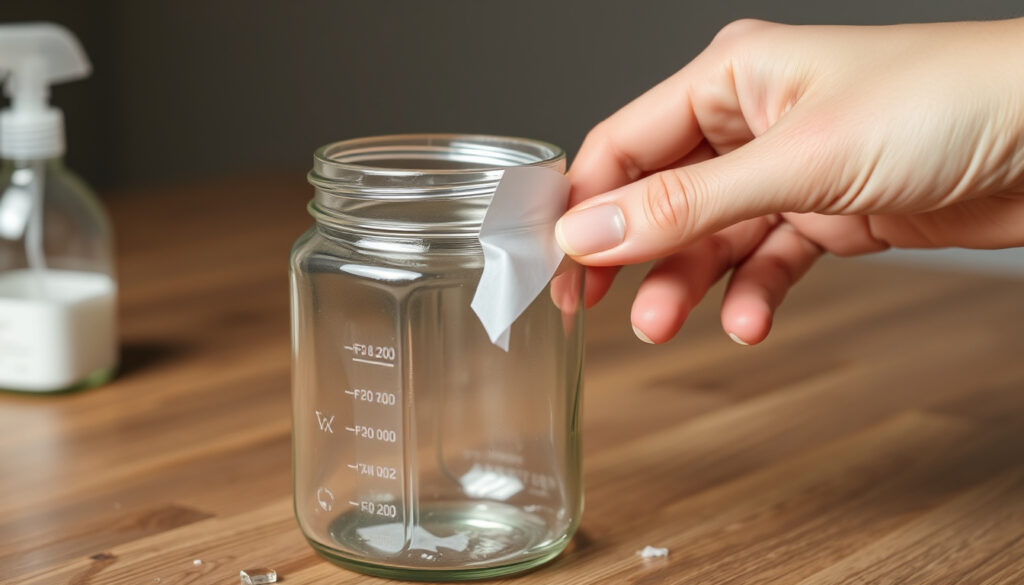
“I used a hair dryer for about 45 seconds on a stubborn jar label, then lifted the edge with my fingernail. The whole thing peeled off in one piece. I didn’t need any solvent.” — Reddit user on r/CleaningTips
“Soak a cotton ball in rubbing alcohol or white vinegar and press it against the residue. Let it sit for 30 seconds to a minute, then wipe.” — CRC Industries blog
“Most effective removers include Goo Gone, 3M Adhesive Remover, WD-40 — they are formulated to dissolve adhesive without damaging the underlying surface.” — Sticker Genius blog
What this means: No single solvent works on every adhesive. For household tasks, start with heat, then match your solvent to the surface and adhesive type. For critical surfaces like car paint, spend the money on a professional product formulated to be safe.
stickergenius.com, amazon.com, cleanercleaner.co.uk, wd40.com
For a broader look at tackling sticky messes, our guide on removing adhesives from any surface covers similar techniques for various materials.
Frequently Asked Questions
What household item removes sticker residue?
White vinegar and rubbing alcohol are the two most effective household items. Vinegar requires a 10-15 minute soak; rubbing alcohol works in about 30 seconds on glass and metal.
Does WD-40 remove sticker residue from car paint?
Yes, when used sparingly and cleaned off afterward. Printing Banana recommends it for painted surfaces. Always follow with a wash.
Can toothpaste remove sticker residue?
Toothpaste can work as a mild abrasive on smooth surfaces like glass, but its effectiveness on hard residues is unclear. It is a low-risk first attempt but not reliably effective.
How long does vinegar need to sit on sticker residue?
The Spruce says several minutes; House Work specifies 10 to 15 minutes for a 1:1 vinegar-and-water soak.
Is Goo Gone safe for plastic?
Goo Gone is formulated to be safe on most plastics, but always test on an inconspicuous area first. It contains petroleum distillates that can cloud some plastic types.
Does acetone damage car paint?
Yes. Acetone strips clear coat and paint. Sticker Supply Shop warns against harsh solvents on car paint.
The bottom line: Sticker residue removal comes down to matching the method to the surface. Heat softens the adhesive, then you pick your solvent. For glass and metal, rubbing alcohol is your fastest bet. For car paint and finished wood, professional products like Goo Gone Automotive deliver the safest results. Goo Gone stands as the most recommended commercial solution across multiple surfaces, used by 72% of professional cleaners.
More related posts
 7-Eleven Photos: Stock Images, Wallpapers, Store Pics
 Bengali to English Translation: Free Tools, Apps, and Practice
 CPF SA Interest Rate 2026: Up to 6% with Bonus Interest
 OCBC Bank Near Me: Find Branches, ATMs, and Opening Hours
 Hai Kah Lang TRX: Seafood Noodles with Bib Gourmand
 Sofitel Singapore City Centre – Location and Amenities Guide
 Dhurandhar OTT Release Date: Latest on Netflix & JioHotstar
 Current Time in Singapore Now | SGT Clock & Time Zone