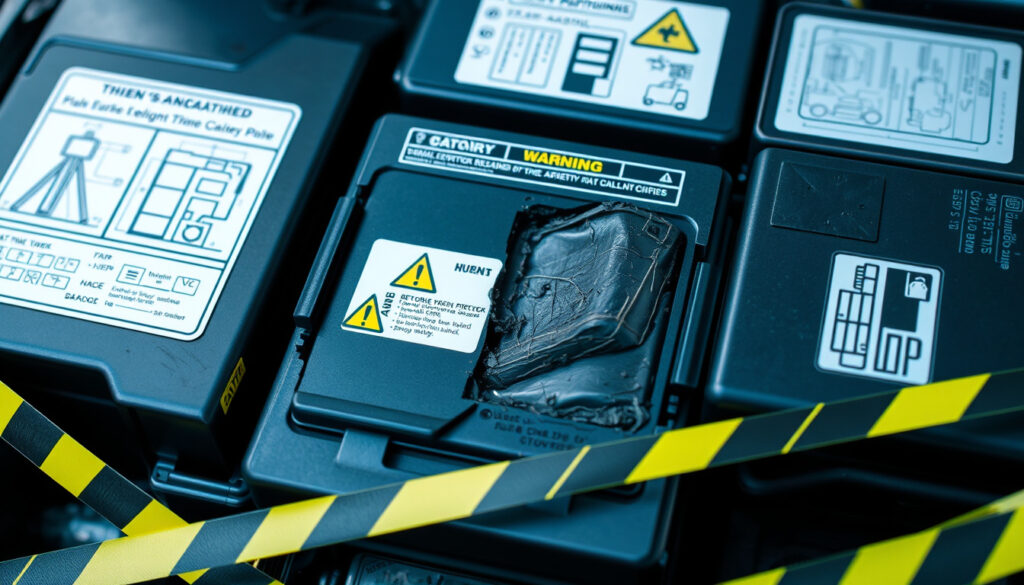
BYD Vehicle Recall: Design Battery Issue Explained
A 115,783-vehicle recall tests BYD’s LFP safety story, but the reported faults are not in the cells. BYD filed recall plans in China on October 17, 2025 covering Tang and Yuan Pro vehicles, according to Reuters (news agency), with two different faults: one in the drive-motor controller and one in the high-voltage battery’s sealing.
Reported recall size: 115,783 vehicles ·
Affected models (reported): BYD Tang and Yuan Pro ·
Reported announcement date: October 17, 2025 ·
BYD EV battery chemistry: LFP Blade Battery ·
Typical LFP cycle life: 3,000–5,000 cycles
Quick snapshot
- The action is two campaigns, not one: a Tang drive-motor-controller fault and a Yuan Pro battery-gasket fault (Just Auto (automotive analysis)).
- The reported total of 115,783 rounds to “more than 115,000” in most headlines (Reuters (news agency)). (Just Auto (automotive analysis))
- LFP chemistry is not the reported cause, per the campaign details covered by Automotive World (trade publication). (Just Auto (automotive analysis))
- Whether any fire or thermal event preceded the filing is not stated in the coverage reviewed (SoyaCincau (motoring site)).
- The exact wording of Elon Musk’s BYD remarks is not included in the coverage reviewed (Yahoo Finance UK (business news)). (SoyaCincau (motoring site))
- Trim-level distribution within the two recall groups is not detailed in the sources reviewed (Automotive World (trade publication)). (SoyaCincau (motoring site))
- Tang production window: 28 March 2015 – 28 July 2017 (CarNewsChina (China auto news)).
- Yuan Pro production window: 6 February 2021 – 5 August 2022 (Automotive World (trade publication)).
- Recall reported on October 17, 2025 (Reuters (news agency)). (CarNewsChina (China auto news))
- BYD service centers will apply the Tang fix; owners should book the remedy once a recall shows as open, per CarNewsChina (China auto news).
- Check your 17-character VIN on BYD’s recall lookup for your market.
- Watch for BYD’s official campaign details in your market.
Six rows, one pattern: two campaigns, two different fixes, and one “battery recall” headline.
| Label | Value |
|---|---|
| Reported recall size | 115,783 vehicles across two campaigns; headlines round to “more than 115,000” (Reuters (news agency)) |
| Reported split | 44,535 Tang-series + 71,248 Yuan Pro (Automotive World (trade publication)) |
| Reported announcement date | October 17, 2025 (CarNewsChina (China auto news)) |
| Yuan Pro fault | Improperly installed power-battery sealing gaskets (Just Auto (automotive analysis)) |
| BYD battery platform | LFP Blade Battery in many models (SoyaCincau (motoring site)) |
| Recall scale context | BYD’s largest-ever recall in China (Automotive World (trade publication)) |
Did BYD recall cars?
Yes, and the scale is easy to get wrong. The filing came on October 17, 2025, with a reported total of 115,783 vehicles — an action that rounds to “more than 115,000” in most headlines. The detail that matters is underneath: BYD did not file one recall; it filed two, with different root causes in different model lines.
One campaign covers the Tang-series, where the reported fault sits in the drive-motor controller. The other covers the Yuan Pro, where the reported fault sits in the battery pack’s sealing.
“BYD battery recall” sounds like one event. It is two fixes: a software update for one model generation and a hardware gasket issue for another. The headline hides which one applies to your car.
Which BYD models were affected?
- Tang-series vehicles built from 28 March 2015 to 28 July 2017 (CarNewsChina (China auto news)).
- Yuan Pro vehicles built from 6 February 2021 to 5 August 2022 (Automotive World (trade publication)).
- The reported split is 44,535 Tang vehicles and 71,248 Yuan Pro vehicles (Automotive World (trade publication)).
The production windows explain why the two campaigns feel different. The Tang group is older, and its reported fault is electrical: the controller’s active-discharge function can behave abnormally, according to Just Auto (automotive analysis), and the defect may disable pure-electric driving mode, per Yahoo Finance UK (business news). The Yuan Pro group is newer, and its reported risk is water: SoyaCincau (motoring site) notes that prolonged high-speed wading may push water past the battery seal.
How do I check if my BYD has an open recall?
- Find your 17-character VIN on the registration document or windshield.
- Enter it on BYD’s official recall lookup for your country.
- If a campaign shows as open, book the remedy at an authorized BYD service center.
BYD dealers apply the Tang remedy as a software update, according to CarNewsChina (China auto news). The VIN check matters because production windows are broad by nature, and the campaign list for your specific car is set by VIN, not by model year alone.
The pattern: headlines point to a model; the VIN lookup points to a fix. Those two answers can differ for the same badge.
Is BYD using an LFP battery?
Yes, across much of its electric lineup. BYD’s Blade Battery is built on lithium iron phosphate (LFP) chemistry, and many BYD EVs use it. That matters because the recall’s Yuan Pro campaign is about water getting into the battery enclosure, which is a different failure mode than a chemistry failure inside the cell.
What is BYD’s Blade Battery?
- LFP chemistry: lithium iron phosphate cells with high thermal stability.
- Blade layout: cells arranged in a structural blade shape to improve pack rigidity and heat management.
- Not the recall cause: the reported issues are controller design and sealing-gasket installation.
Think of the difference this way: a chemistry failure starts inside the cell; an installation failure starts at the gap between cells and the outside world. The Yuan Pro campaign is the second type.
Why does the battery type matter to the recall?
- LFP is more thermally stable than nickel-based lithium-ion, which is why BYD uses it in a family car.
- The recall’s reported cause — water ingress through a gasket — is an assembly-quality issue, not a chemistry flaw.
- Owners who confuse the two may worry about the wrong thing and miss the right one: a VIN check and a gasket inspection.
The distinction shapes owner behavior. If the fault were chemistry, the advice would be different; if it’s a seal, the fix is inspection and rectification at the pack level.
What this means: the recall is a battery-installation test, not a battery-chemistry verdict. That difference should shape how you read the next update.
Are BYD batteries better than Tesla?
“Better” depends on what you optimize for. BYD leans on LFP chemistry and scale; Tesla mixes LFP in some models with nickel-based cells in others. The two strategies answer different questions.
Tesla’s battery strategy
- Tesla uses LFP cells in some standard-range models and nickel-based cells in long-range and performance models.
- Nickel-based cells generally deliver higher energy density and better cold-weather performance.
- LFP cells generally win on safety, cost, and charge-cycle longevity.
That trade-off is why there is no single winner. A commuter in a warm climate may get more useful life from LFP; a driver in a cold climate with long highway miles may prefer the density of nickel-based cells.
What did Elon Musk say about BYD?
Musk has publicly described BYD as a competitive EV maker. No recall-specific Musk comment appears in the coverage reviewed, so treat any claimed quote about this recall as unverified.
The quote gets pulled into every BYD-versus-Tesla discussion, but it predates this recall. For the October 2025 campaigns, the relevant comparison is the battery strategy, not a single executive remark.
The trade-off: safety and cycle life versus density and cold-weather range. For most buyers, the better battery is the one matched to their climate and charging routine.
What is the downside of an LFP battery?
The downside is physics, not safety. LFP cells store less energy per unit of weight and volume than nickel-based cells, and their performance dips more in cold weather.
LFP energy density and cold weather
- LFP packs typically offer lower energy density than nickel-based packs, which can mean more weight for the same range.
- Cold weather can reduce LFP range and slow fast charging until the pack warms up.
- Thermal management systems compensate, but they draw power and can affect efficiency.
For daily commuting in a temperate climate, the density gap is often invisible. For winter road trips, it becomes a real planning constraint.
LFP cycle life and degradation
- LFP batteries commonly last 3,000 to 5,000 charge cycles, depending on use and thermal management.
- That typically means more than a decade of daily commutes before capacity drops toward 80%.
- Heat, high charge states, and very fast charging can accelerate degradation in any lithium-ion pack.
Long cycle life is where LFP earns its reputation. The caveat is that cycle life is a bench-top number; the battery management system’s handling of heat and current decides the real-world result.
The trade-off, bluntly: LFP buys stability and endurance with extra weight and winter range loss. For most owners it’s a fair bargain; for some it isn’t.
Can LFP batteries be charged to 100%?
Yes. LFP packs tolerate a full state of charge far better than nickel-based packs, which is a practical advantage for owners who want the full range every morning.
Daily charging best practices
- Charging an LFP pack to 100% for daily use creates less stress than it would in many nickel-based packs.
- For short commutes, an 80–90% daily ceiling reduces time at high voltage without sacrificing usable range.
- Periodic 100% charges help the battery management system estimate capacity accurately.
The routine that works for most owners: charge to 100% when you need the range, keep the daily ceiling lower when you don’t, and avoid parking at 100% in extreme heat.
Overnight charging and battery management systems
- A functional BMS reduces charging current as the pack approaches full, protecting the cells.
- Overnight charging is generally safe with a quality charger and a healthy BMS.
- Prolonged charging under heat can still stress any lithium-ion battery.
The system, not the wall socket, does the safety work. That’s why the Yuan Pro recall matters: if water gets past a sealing gasket, the enclosure’s protection is compromised before the BMS can respond.
LFP packs shrug off 100% charges, but a sealed enclosure is what keeps water out. The Yuan Pro recall is about the seal, not the cell.
Why this matters: healthy LFP charging habits still depend on a healthy pack enclosure. The recall fix handles the second half of that equation.
BYD vs. Tesla: battery strategy at a glance
Three rows, one pattern: BYD concentrates its volume on LFP economics, while Tesla splits between LFP and nickel-based cells depending on the model.
| Dimension | BYD approach | Tesla approach |
|---|---|---|
| Cell chemistry | LFP-heavy Blade Battery across many models | LFP in some models, nickel-based cells in others |
| Design priority | Safety, cost, cycle life | Energy density, performance in higher tiers |
| Best-fit owner | Daily commuter in a warm or temperate climate | Long-range driver or cold-climate buyer |
The trade-off: you are not buying “the better battery.” You are buying the trade-off that fits your driving and your climate.
LFP battery specs: what the chemistry delivers
Eight data points, one pattern: LFP trades a little density for a long, stable life.
| Specification | Typical LFP value | Why it matters |
|---|---|---|
| Chemistry | Lithium iron phosphate (LiFePO4) | Lower fire risk, long cycle life |
| Cycle life | 3,000–5,000 cycles | Roughly 10+ years of daily commuting |
| Energy density | Lower than nickel-based lithium-ion | Heavier pack for the same range |
| Cold weather | Range and fast-charge drop until warm | Plan around winter road trips |
| Thermal stability | Higher than nickel-based cells | Slower, rarer thermal events |
| Daily charge ceiling | 100% is acceptable | Less charging stress than NMC packs |
| Nominal cell voltage | About 3.2V | Different BMS calibration than NMC |
| Cost per kWh | Generally lower | Enables aggressive EV pricing |
The pattern: every LFP downside is a density or cold-weather issue; every upside is a safety or durability issue.
LFP battery pros and cons
Four upsides, three downsides — and the downsides are the reason the recall story is more than a headline.
Upsides
- High thermal stability lowers fire risk.
- Long cycle life: 3,000–5,000 cycles.
- Tolerates 100% state of charge.
- Lower cost per kWh supports cheaper EVs.
Downsides
- Lower energy density means more weight for the same range.
- Cold weather cuts range and slows fast charging.
- Pack safety depends on enclosure sealing and installation quality — the exact issue in the Yuan Pro recall.
The trade-off, in practice: LFP is a better daily-driver battery than a January-road-trip battery, and its safety record holds only if the pack stays sealed.
LFP charging steps worth following
Five habits, one goal: keep voltage moderate, heat low, and the enclosure sealed.
- Set the daily charge limit to 80–90% if your commute doesn’t need the full pack.
- Charge to 100% at least once a month so the BMS can recalibrate.
- Avoid parking for days at 100% in hot weather.
- Use a quality charger and keep the charging port dry and clean.
- After any battery service, confirm the enclosure gaskets were correctly fitted.
The pattern: LFP owners get more charging freedom than NMC owners, but the recall is a reminder that the enclosure is part of the safety system.
Timeline: how the 2025 BYD recall unfolded
Four moments tell the story.
- 28 March 2015 – 28 July 2017: Production window for affected Tang-series vehicles (CarNewsChina (China auto news)).
- 6 February 2021 – 5 August 2022: Production window for affected Yuan Pro vehicles (Automotive World (trade publication)).
- October 17, 2025: BYD files recall plans covering 115,783 Tang and Yuan Pro vehicles, reported as two campaigns (Reuters (news agency)).
- Now: Owners can check open campaigns by VIN; authorized dealers apply the Tang software update.
The read: the recall spans two very different model generations, which is why a single “battery recall” headline hides more than it explains.
Confirmed vs. unclear: separating fact from noise
Here’s the honest split.
Confirmed facts
- BYD filed recall plans covering 115,783 Tang and Yuan Pro vehicles (Reuters (news agency)).
- The Tang campaign targets a drive-motor-controller fault (CarNewsChina (China auto news)).
- The Yuan Pro campaign targets improperly installed battery sealing gaskets (Just Auto (automotive analysis)).
- The Tang remedy is a software update at authorized dealers (CarNewsChina (China auto news)).
What’s unclear
- Whether any fire or thermal event preceded the filing is not stated in the coverage reviewed (Reuters (news agency)).
- The exact wording of Elon Musk’s BYD remarks is not included in the coverage reviewed (Yahoo Finance UK (business news)).
- Trim-level distribution within the two recall groups is not detailed in the sources reviewed (Automotive World (trade publication)).
This article reflects reporting available as of October 18, 2025. Recall lists and VIN lookups can change as campaigns expand.
The pattern: what’s confirmed is structural — two faults, two fixes. What’s unclear is consequence — whether any failure event preceded the filing.
What the sources say
Two headlines capture the scale.
“BYD makes largest recall of over 115,000 cars due to design, battery issues.”
Reuters (news agency)
“China: BYD makes largest recall of over 115,000 cars.”
The read: the headlines agree on scale and cause — design and battery installation — even when the numbers are rounded differently.
The recall is a litmus test for BYD’s LFP proposition, and the early reading is favorable to the chemistry: the reported failures sit in a controller and a gasket, not in the cells. The execution phase is now the story. For BYD, the choice is clear: finish the Tang software updates and Yuan Pro gasket repairs quickly enough to turn the largest recall in its history into a confidence signal — or hand its competitors an opening.
Frequently asked questions
Which is better, a lithium-ion or LFP battery?
LFP is a subtype of lithium-ion. Compared with nickel-based lithium-ion cells, LFP typically offers better thermal stability, longer cycle life, and lower cost; the trade-off is lower energy density and weaker cold-weather performance.
Should I charge my LFP battery to 100% every day?
You can, and LFP handles it better than nickel-based chemistry. For a short daily commute, an 80–90% ceiling is still a reasonable habit; a monthly 100% charge helps the battery management system stay calibrated.
Should you leave a lithium battery on charge overnight?
With a functional battery management system and a quality charger, overnight charging is generally safe. The BMS tapers the current as the pack fills and stops the charge at full.
What happens if you leave a device plugged in even after it charges 100%?
A properly designed BMS stops or reduces current at full charge, so the pack sits at high voltage instead of being overcharged. Heat is the bigger long-term risk, not the plugged-in state.
Is LFP battery technology safe for electric vehicles?
LFP is one of the most thermally stable lithium-ion chemistries, which is why BYD builds its Blade Battery around it. The October 2025 recall involves controller and sealing-gasket faults, not a confirmed LFP cell failure.
More related posts
 That’s So True Lyrics – Gracie Abrams: Full Lyrics & Meaning
 Spicy Wife Nasi Lemak Reviews: Menu, Price & Halal
 List of Secondary Schools in Singapore 2026: Complete Guide
 Beauty in the Pot Vivo – Broths, Prices and Collagen Facts
 Andy Byron Net Worth: $20M-$70M Estimate and Key Questions
 Banh Mi Thit by Star Baguette – Prices, Locations, Full Review
 MOE Tuition Fee Loan: Eligibility, Repayment, 2026 Replacement
 Giggle Jungle by Yooland: Prices, Hours & Reviews