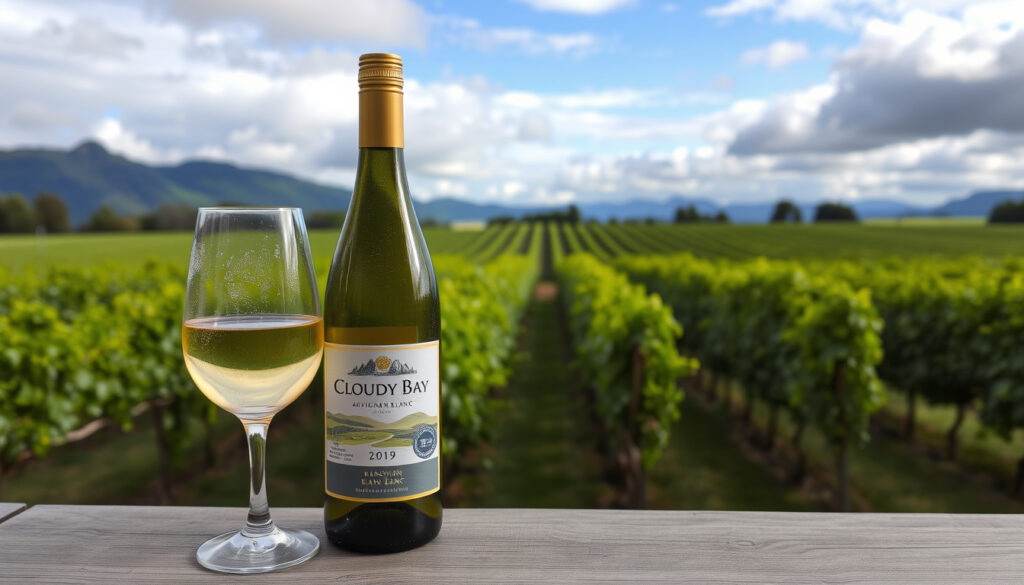
Cloudy Bay Sauvignon Blanc – Price, Vintages, Reviews and Where to Buy
Cloudy Bay Sauvignon Blanc stands as one of New Zealand’s most recognisable white wines, originating from the sun-drenched valleys of Marlborough. Since its founding in 1985, Cloudy Bay Vineyards has helped define the aromatic, crisp style that made Marlborough Sauvignon Blanc a global benchmark. The winery, now owned by luxury goods conglomerate LVMH, continues to produce wines that consistently earn high praise from critics and consumers alike, with bottles regularly appearing on retailer shelves worldwide.
The wine itself is a dry, green-and-flinty expression of 100% Sauvignon Blanc, typically bottled at 13–13.8% ABV. Its distinctive character stems from Marlborough’s cool maritime climate and free-draining soils, which coax vivid citrus, tropical, and herbal notes from the grapes. Whether referencing the latest 2025 vintage or tracking prices across retailers, understanding Cloudy Bay Sauvignon Blanc requires a grasp of its pricing landscape, retailer availability, and the evolution of its taste profile across different years.
Cloudy Bay Sauvignon Blanc occupies a mid-premium price tier in the New Zealand wine market. Wine-Searcher aggregates show an average price of approximately $32 ex-tax per 750ml bottle, translating to roughly €26 in European markets. However, actual retail prices fluctuate based on retailer, vintage year, and location, with recent listings ranging from $25 to $44 depending on the source.
Prices typically vary due to vintage availability, shipping costs, retailer margins, and import duties. The winery direct price of $44 for the 2025 vintage represents the upper range, while local wine merchants often offer the most competitive ex-tax rates.
Prices range from $25–$44 depending on retailer and vintage year. Historical vintages (2021–2023) consistently score 90–92/100 on critic ratings. Direct winery purchases command a premium over third-party retailers. The 2023 vintage averaged $26 with a 90/100 score from Wine-Searcher. Online wine merchants typically offer the best ex-tax value. Quality-to-price ratio is classified as “outstanding” by Wine-Searcher. Bulk or multi-bottle purchases may unlock additional savings at select retailers.
| Vintage | Price (ex-tax) | Key Aromas | Source |
| — | — | — | — |
| 2025 | $29.97–$44 | Peach, elderflower, makrut lime, lemon | Cloudy Bay journal |
| 2024 | $38.99 | Ruby grapefruit, mango, passionfruit | Total Wine |
| 2023 | $26 | Citrus, tropical notes | Wine-Searcher avg |
| 2022 | $25 | Green asparagus, gooseberry, wet stone | Cloudy Bay 2022 |
| 2021 | $27 | Classic Marlborough profile | Wine-Searcher avg |
Retail availability for Cloudy Bay Sauvignon Blanc spans specialty wine shops, large-format retailers, and the winery’s own online store. PJ Wine lists the 2025 vintage at $29.97 per bottle, with 28 bottles currently in stock alongside 49 bottles of the 2024 vintage. Total Wine carries the 2024 vintage at $38.99, while those seeking the newest release can purchase directly from the winery at approximately $44.
Specialty retailers like PJ Wine offer competitive pricing and often stock multiple vintage years, allowing collectors and enthusiasts to compare different releases side by side. These merchants typically provide detailed tasting notes and can advise on optimal drinking windows for each vintage.
Total Wine maintains consistent stock of Cloudy Bay Sauvignon Blanc across its US locations, making it accessible to a broader audience. Their 2024 listing reflects the current available vintage at a mid-range price point.
Purchasing directly from Cloudy Bay’s official website guarantees authenticity and often provides access to library vintages or special releases unavailable elsewhere. However, this channel commands the highest retail prices.
Search results did not confirm specific stock at Sainsbury’s, Tesco, or Costco. Wine-Searcher’s merchant locator remains the most reliable tool for finding local UK stockists.
Cloudy Bay releases new Sauvignon Blanc vintages annually, with each year’s expression reflecting that season’s unique growing conditions. The 2025 vintage made its debut in October 2025, following a year marked by patient cultivation. The winery described the release as “patience rewarded,” highlighting the cool, measured ripening conditions that developed the wine’s signature vibrancy.
The 2025 Cloudy Bay Sauvignon Blanc presents an open and expressive nose showcasing peach, elderflower, makrut lime, and freshly squeezed lemon. The palate delivers bright, layered flavours of lemon curd and white nectarine, underscored by a refreshing sea breeze quality, sea salt notes, and hints of dune grass. Critics have praised its balance and aromatic complexity, positioning it as a strong follow-up to preceding vintages.
Total Wine describes the 2024 as sleek, with ruby grapefruit, Key lime, mango puree, and salted lemon on the nose. The palate bursts with apple blossom, Key lime, Honeycrisp apple, lemon thyme, ginger, passionfruit, pineapple, and lemon candy. The effusive aromatics and tropical intensity make this a crowd-pleasing expression.
The 2022 vintage earned a Gold award at the Sakura Awards and presents with a pale water-white to yellow-green hue. Its vivid aromas of green asparagus, peapod, wet stone minerality, lime, and blossom lead into a rich, dry palate of peapod, asparagus, gooseberry, and lemon/lime crispness with flinty undertones. The wine finishes rounded, mid-weight, with balanced alcohol and a long, crisp conclusion. It pairs beautifully with goats’ cheese and feta.
Community ratings on Vivino provide valuable real-world feedback from thousands of consumers who have purchased and tasted Cloudy Bay Sauvignon Blanc. The platform aggregates user reviews to generate average scores that complement professional critic assessments.
Vivino ratings combine quantity and quality signals—the more ratings a wine receives, the more reliable its average becomes. Both the 2024 and 2025 vintages maintain a 4.1/5 rating, indicating consistent consumer satisfaction across years.
The 2025 vintage holds a 4.1 out of 5 stars based on 684 user ratings, with an average price of $31.99 across the platform’s merchant network. The 2024 vintage boasts a stronger sample size with 3,584 ratings, maintaining the same 4.1 average. This consistency suggests that Cloudy Bay’s quality control produces reliable results regardless of the vintage year.
Vivino notes that Sauvignon Blanc represents New Zealand’s flagship wine varietal, comprising approximately 62% of the country’s total wine production. Within this landscape, Marlborough leads the category, having established its reputation since the 1970s. Cloudy Bay sits among the most searched New Zealand wines on the platform, underscoring its market prominence.
Beyond Vivino, Wine-Searcher data shows consistent critic scores of 90–92/100 for recent vintages, with the 2022 vintage earning a notable 91/100 and Gold medals at both the Sakura Awards (2022) and Mundus Vini (2014). The wine maintains its status as the most searched New Zealand wine on Wine-Searcher’s platform, reinforcing its reputation for outstanding value.
Vegan status remains an area of uncertainty for Cloudy Bay Sauvignon Blanc. Search results did not yield explicit confirmation regarding the wine’s vegan or vegetarian classification. However, Marlborough Sauvignon Blancs typically employ production methods that align with vegan-friendly practices.
The vegan status of Cloudy Bay Sauvignon Blanc could not be verified through available sources. Consumers following a vegan lifestyle should check bottle labels directly or contact the winery for definitive clarification on fining agents used during production.
Many New Zealand wineries, including those in Marlborough, have shifted toward minimal intervention winemaking that reduces or eliminates the use of animal-derived fining agents. Screwcap closures, which Cloudy Bay uses, further support a vegan-friendly production philosophy by reducing the need for preservatives and interventions that might otherwise require fining.
Cloudy Bay Vineyards was established in 1985, emerging as one of the pioneering producers in Marlborough’s emerging wine industry. The winery played a foundational role in establishing Marlborough as a world-class Sauvignon Blanc region, demonstrating that the region’s cool climate and free-draining soils could produce wines of remarkable intensity and balance.
1. 1985 — Cloudy Bay Vineyards founded, becoming one of Marlborough’s first dedicated Sauvignon Blanc producers.
2. Early 2000s — Acquired by LVMH (Moët Hennessy Louis Vuitton), gaining resources for international expansion.
3. 2014 — Cloudy Bay Sauvignon Blanc wins Gold at the Mundus Vini competition.
4. 2022 — The 2022 vintage earns Gold at the Sakura Awards.
5. October 2025 — The 2025 vintage released, described as a “patience rewarded” expression.
| Established facts | Unconfirmed or unclear |
| — | — |
| Price range: $25–$44 depending on retailer | Vegan certification status |
| Average price: ~$32 ex-tax | Sainsbury’s, Tesco, Costco stock |
| 4.1/5 Vivino rating for 2024 & 2025 | Specific current offers or promotions |
| Founded 1985, owned by LVMH | Exact alcohol percentage per vintage |
| Available at PJ Wine, Total Wine, direct | Ageing potential specifics |
Marlborough’s wine industry transformed dramatically since the 1970s, when pioneering growers recognised the region’s potential for producing world-class white wines. The area benefits from long sunshine hours during the growing season, cool nights that preserve acidity, and free-draining soils that stress the vines just enough to concentrate flavours. These conditions produce wines with distinctive aromatics, vibrant acidity, and a mineral backbone.
Cloudy Bay helped establish the aromatic, citrus-forward style that became Marlborough’s signature. The winery’s commitment to sustainable practices, combined with its LVMH backing, has enabled continued investment in vineyard management and winemaking technology. The result is a wine that delivers consistent quality while reflecting the unique terroir of its home region.
Comparing vintages reveals how each year’s conditions shape the final expression. Cooler years produce more restrained, mineral-driven wines, while warmer seasons yield riper tropical notes. The 2025 vintage exemplifies the interplay between patient cultivation and the region’s inherent character, delivering aromatic complexity alongside the freshness expected from Marlborough Sauvignon Blanc.
“Marlborough’s cool climate and free-draining soils yield a vivid, zesty style recognised worldwide.”
— Wine-Searcher profile on Cloudy Bay Vineyards
Official tasting notes from Cloudy Bay’s 2022 vintage page highlight the wine’s pale water-white appearance and its vivid aromas of green asparagus, peapod, and wet stone minerality. The palate description emphasises the wine’s rounded mid-weight feel, balanced alcohol, and long, crisp finish—characteristics that have defined the Cloudy Bay style across decades.
Wine-Searcher’s aggregation of merchant prices across multiple regions provides the most comprehensive pricing data available, showing how ex-tax averages translate differently across retail markets. Their classification of Cloudy Bay as offering “outstanding value” reflects the wine’s consistent quality relative to its price point.
Cloudy Bay Sauvignon Blanc remains a benchmark expression of Marlborough’s potential, delivering consistent quality across vintages at prices ranging from approximately $25 to $44. The 2025 vintage continues the winery’s tradition of aromatic intensity, citrus brightness, and food-friendly acidity, while the 2024 and 2022 releases offer reliable alternatives depending on retailer availability. Vivino ratings of 4.1/5 across recent vintages, combined with critic scores of 90–92/100, underscore the wine’s enduring appeal.
For those exploring New Zealand’s wine heritage, pairing this Sauvignon Blanc with dishes like goats’ cheese or lighter seafood options unlocks its full potential. Checking local stock through wine aggregators or specialty merchants remains the most reliable approach to finding competitive prices.
Where can I find current offers on Cloudy Bay Sauvignon Blanc?
Wine-Searcher’s merchant locator aggregates current pricing across retailers. Direct from winery purchases and specialty merchants like PJ Wine or Total Wine represent the most reliable channels for finding stock.
What foods pair well with Cloudy Bay Sauvignon Blanc?
The 2022 vintage specifically pairs with goats’ cheese and feta. In general, Marlborough Sauvignon Blanc complements seafood, salads, light pasta dishes, and fresh cheeses.
How does the 2025 vintage compare to previous years?
The 2025 vintage presents expressive citrus and stone fruit notes with a refreshing sea breeze character. It follows the 2024’s tropical intensity while maintaining the mineral backbone characteristic of the Cloudy Bay style.
Is Cloudy Bay Sauvignon Blanc available at Costco?
Specific availability at Costco could not be confirmed through available sources. Checking with local Costco locations or using Wine-Searcher’s merchant finder remains the most reliable approach.
What is the alcohol content of Cloudy Bay Sauvignon Blanc?
The wine typically registers between 13–13.8% ABV depending on the vintage, consistent with Marlborough Sauvignon Blanc standards.
Can I visit Cloudy Bay Vineyards?
As an established winery owned by LVMH, Cloudy Bay offers cellar door experiences at its Marlborough estate. Visiting the official website provides current information on tasting bookings and tours.
How long does Cloudy Bay Sauvignon Blanc keep?
As a crisp white wine, Cloudy Bay Sauvignon Blanc is best enjoyed young—typically within 2–3 years of the vintage date—to preserve its vibrant aromatics and freshness.
More related posts
 JB Tai Pai Tong: Menu, Reviews & Prices in Singapore
 2000 TWD to SGD Exchange Rate Today: 79.96 SGD on Wise
 Columbia Men Short Sleeve: Sizing, Comparisons, Authenticity
 Charles & Keith Tampines: Concept Store Prices & Tax Refund Guide
 Union Gas Share Price Today (SGX:1F2): Live Updates & Chart
 Bhoomi by Milind Sovani Reviews: Ratings, Menu & Brunch
 Hai Kah Lang TRX: Seafood Noodles with Bib Gourmand
 Pasir Ris-Changi GRC: MPs, Town Council, and Boundaries