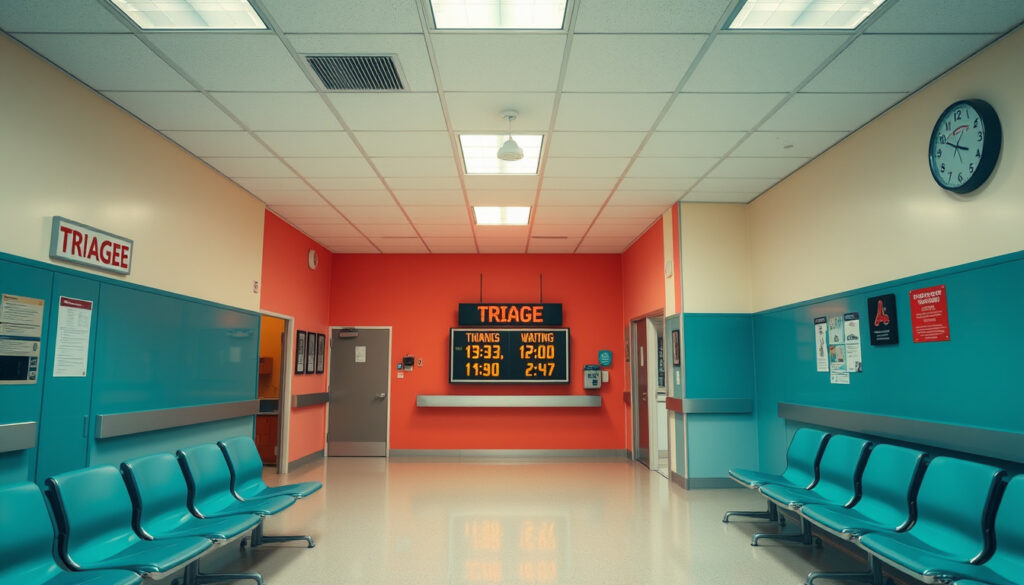
NUH A&E Guide: Waiting Times, Costs, Triage & When to Go
Few things are more unsettling than a sudden health scare and not knowing where to turn. For anyone in Singapore, the National University Hospital (NUH) Accident & Emergency (A&E) department is a 24/7 safety net, but understanding how it works — from triage categories to waiting times and costs — can save you time, stress, and money. Here’s what you need to know before you go.
NUH A&E annual visits: over 100,000 ·
Median NUH A&E waiting time (non-critical): 2–4 hours ·
Singapore A&E triage categories: P1 (critical) to P3 (non-urgent) ·
NUH A&E location: Main Building Zone F Level 1 ·
NUH A&E contact number: +65 6772 2000
Quick snapshot
- NUH A&E is open 24/7 and accepts walk-ins without a referral (NUH Emergency Services)
- Triage uses P1–P3 categories, with P1 receiving immediate care (MOH Singapore)
- Wait times for non-urgent cases typically range from 2 to 4 hours (NUH Emergency Services)
- Exact current waiting time — varies by hour, season, and patient volume
- Specific charge amounts are subject to periodic policy changes
- No fixed timeline — triage determines the order of care, not arrival time
- Check the live queue online via the NUH website before heading in
- Call NurseFirst at 6262 6262 for advice if unsure
Seven key facts about NUH A&E, one pattern: everything you need to know in one place.
| Label | Value |
|---|---|
| Location | NUH Main Building Zone F Level 1, 5 Lower Kent Ridge Road |
| Operating Hours | 24 hours daily |
| Contact Number | +65 6772 2000 |
| Triage Categories | P1 (Critical), P2 (Emergency), P3 (Non-urgent) |
| Typical Wait Time (Non-urgent) | 2–4 hours |
| Average Charge (Singaporean) | SGD 100–150 (subsidised) |
| Average Charge (Foreigner) | SGD 200–400 (no subsidy) |
The implication: knowing these numbers helps you plan — and budget — before you walk in.
Does NUH Have an A&E?
Yes, NUH operates a full-service Accident & Emergency department that is open around the clock. It is located at the Main Building Zone F Level 1, at 5 Lower Kent Ridge Road. You can reach them by phone at +65 6772 2000.
NUH A&E Location & Hours
- Address: NUH Main Building Zone F Level 1, 5 Lower Kent Ridge Road, Singapore 119074
- Hours: 24 hours a day, 7 days a week, including public holidays
- No appointment needed — walk-ins are welcome (NUH Emergency Services)
The implication: there is no excuse to delay care when the department is always open. But arriving at the right time can significantly reduce your wait.
NUH A&E Contact Information
- General enquiries: +65 6772 2000
- For ambulance or emergency, call 995
- NurseFirst helpline (for non-emergency medical advice): 6262 6262 (MOH Singapore)
The pattern: multiple contact options exist, but 995 is only for life-threatening emergencies.
When Should I Go to A&E in Singapore?
Knowing when to visit A&E — and when to choose a GP or Urgent Care Centre — can save you hours of waiting and unnecessary costs.
Life-threatening conditions vs minor ailments
- Go to A&E for: chest pain, difficulty breathing, stroke symptoms (facial droop, arm weakness, slurred speech), severe bleeding, major fractures, loss of consciousness, allergic reactions with swelling
- Go to a GP or Urgent Care Centre for: mild fever, cough, sprains, minor cuts, rashes, cold symptoms
Why this matters: treating a minor ailment at A&E ties up resources for those who need them most and costs you more in time and money.
Alternatives: GP clinics and Urgent Care Centre
Singapore has a network of GP clinics and Urgent Care Centres (UCCs) that handle non-life-threatening conditions. NUH itself operates a UCC for less urgent cases. If you are unsure, call NurseFirst at 6262 6262 for free advice from a trained nurse (HealthHub Singapore).
The catch: choosing the right door avoids hours of waiting.
Patients with non-urgent conditions face the longest waits at NUH A&E. Checking the queue viewer online and avoiding peak hours can cut your wait time by half.
Who Gets Priority in A&E? (Triage Explained)
When you arrive at NUH A&E, a nurse will assess your condition using a triage system. This determines how quickly you are seen — not the order you arrived.
P1 (Critical)
- Immediate care — life-threatening conditions such as cardiac arrest, severe trauma, or major bleeding
- Seen by a doctor within seconds to minutes
P2 (Emergency)
- Seen within 30 minutes — conditions like moderate asthma attack, fractures, or deep cuts
- Requires urgent attention but not immediate
P3 (Non-urgent)
- May wait longer — minor ailments like fever, mild infection, or small cuts
- Wait times can exceed 2–4 hours during peak periods
The pattern: your priority is based on medical need, not your arrival time. A patient who walks in after you with a heart attack will be seen before you with a sprained ankle.
How Much Does A&E Cost at NUH?
Costs vary depending on your triage category, whether you are a Singaporean, PR, or foreigner, and the treatments you receive.
NUH A&E charges for Singaporeans
- Subsidised rates apply: typically SGD 100–150 for a standard consultation plus basic treatment
- Additional charges for procedures, X-rays, or medications
- Use your CHAS or Pioneer Generation card for further subsidies
For exact figures, check the NUH Charges page.
NUH A&E charges for foreigners
- No subsidies — you pay the full unsubsidised rate
- Typical range: SGD 200–400 for a basic P3 visit
- Higher if you need advanced imaging or hospital admission
Foreigners without insurance should be prepared for a higher bill. Travel insurance or expat health plans typically cover A&E visits.
Payment methods
NUH accepts cash, NETS, credit/debit cards, and major health insurance cards (e.g., AIA, Great Eastern, Integrated Shield plans). Bring your insurance card if you have one.
The trade-off: paying more as a foreigner is the price of access to Singapore’s world-class emergency care. For locals, subsidies keep costs manageable.
What Are A&E Waiting Times and How Can I Check Them?
Waiting times at NUH A&E fluctuate throughout the day. Knowing when to go and how to check the queue can save you hours.
NUH A&E waiting time now
NUH provides a live queue viewer on its website. You can see the current number of patients waiting and estimated wait times for P3 categories. Check NUH Emergency Services for the latest.
Quietest and busiest times at A&E
- Quietest: early mornings (6am–9am) and late nights (after midnight)
- Busiest: weekday evenings (5pm–10pm) and weekends, especially Saturday afternoons
- Public holidays also see higher volumes
NUH A&E queue viewer
The queue viewer is updated in real-time and shows the number of patients waiting for each triage category. Use it to decide the best time to visit.
The implication: if your condition is non-urgent, check the queue before heading in. A 30-minute drive could save you a 3-hour wait.
Can I Go to A&E Without a Referral?
Yes, you can walk into NUH A&E without a referral from a GP or specialist. The department is designed for self-referral.
Walk-in policy
Simply walk into the A&E entrance at Zone F Level 1. You will be registered and triaged regardless of whether you have a referral letter. However, if you have a referral from a GP, bring it along as it may help the doctors understand your history.
When to call NurseFirst helpline
If you are unsure whether your condition warrants A&E, call the NurseFirst helpline at 6262 6262. A trained nurse will assess your symptoms and advise if you should go to A&E, visit a GP, or manage at home (MOH Singapore).
Why this matters: a quick phone call can prevent an unnecessary trip to A&E and free up resources for those who really need them.
What Is the 4-Hour A&E Rule?
The 4-hour A&E rule is a UK target that does not apply in Singapore. NUH does not have a strict 4-hour discharge target, but it aims to treat all patients in a reasonable time based on triage priority.
Origin of the rule
The 4-hour standard was introduced in England in 2004, requiring 95% of A&E patients to be admitted, transferred, or discharged within 4 hours. While the target has been relaxed (to 76% by 2025), it remains a benchmark (Nuffield Trust analysis).
Application in Singapore
Singapore’s public hospitals like NUH operate under a different framework. The Ministry of Health monitors waiting times but does not enforce a specific cut-off. Instead, the focus is on timely triage and appropriate care. For P1 patients, care is immediate; for P3, waits can be longer.
The catch: the absence of a rigid rule means that during peak periods, non-urgent patients may wait several hours. Plan accordingly by checking the queue viewer.
Pros and Cons of Going to NUH A&E
Upsides
- Open 24/7 with no appointment needed
- Full range of emergency services, including trauma and critical care
- On-site pharmacy, diagnostic imaging, and specialist consultation
- Accepts all patients regardless of nationality or insurance
Downsides
- Long waits for non-urgent cases (often 2–4 hours)
- Higher cost for foreigners compared to GP visits
- Limited privacy during peak hours
- Can be overwhelming for minor ailments — better suited for real emergencies
NUH A&E offers a range of services under one roof. Here’s what you can expect.
| Service | Details |
|---|---|
| Triage | Nurse-led assessment using P1–P3 system |
| Doctor consultation | Emergency physicians available 24/7 |
| Diagnostic imaging | X-ray, CT scan, ultrasound on-site |
| Laboratory tests | Blood tests, urine tests, rapid results |
| Pharmacy | Dispensing of emergency medications |
| Observation ward | Short-stay monitoring for up to 24 hours |
| Referral to specialist | If needed, admission to relevant ward |
| Ambulance bay | Dedicated entrance for emergency vehicles |
The pattern: NUH A&E is a fully equipped emergency department, not a walk-in clinic. It can handle everything from a minor cut to a major trauma.
Steps to Follow When You Arrive at NUH A&E
- Enter through Zone F Level 1 – follow the A&E signs from the main lobby.
- Register at the counter – provide your NRIC or passport, and any insurance card.
- Wait for triage – a nurse will assess your condition and assign a priority (P1, P2, or P3).
- Wait to be called – based on your triage category, wait in the designated area.
- Consult with a doctor – explain your symptoms and medical history.
- Receive treatment or discharge – the doctor will prescribe medication, arrange tests, or admit you.
- Pay at the billing counter – before leaving (unless admitted).
What to watch: bring a list of your current medications and any allergies. This speeds up the consultation.
What’s Confirmed and What’s Unclear About NUH A&E
Confirmed facts
- NUH operates a 24-hour A&E department
- Walk-ins are accepted without a referral
- Triage system follows international standards (P1–P3)
- Singaporeans receive subsidised rates
- Live queue viewer is available online
What’s unclear
- Exact current waiting time — varies by hour and season
- Specific charge amounts — subject to periodic policy changes
- Whether you will be seen within 4 hours — no guaranteed target
NUH A&E is the safest place for a real emergency, but for minor ailments it can be the slowest and most expensive option. The system works best when patients self-select appropriately.
What People Are Saying About NUH A&E
“Our Emergency Department at NUH is fully equipped to handle all types of medical emergencies, from minor injuries to life-threatening conditions. We are open 24 hours a day, every day of the year.”
— NUH Emergency Medicine website
“In Singapore, all public hospital A&E departments are required to have a triage system that prioritises patients based on clinical urgency. This ensures that the sickest patients are seen first, regardless of arrival time.”
— Ministry of Health Singapore
“When you arrive at NUH A&E, you will be registered and then triaged. Please bring your identification card, insurance card, and any referral letters. A typical visit for a non-urgent case may take 2 to 4 hours.”
— NUH Patient Guide
NUH A&E is a robust emergency department that delivers high-quality care, but its efficiency depends on how well patients triage themselves. For Singaporeans, the cost is manageable; for foreigners, it’s a steep but necessary expense. The lesson is clear: use the queue viewer, avoid peak hours, and call NurseFirst if in doubt. For anyone with a non-urgent issue, the smarter move is a GP or Urgent Care Centre — your wallet and your time will thank you.
nhs.uk, openmedscience.com, ucsfhealth.org, aewaittime.co.uk, bbc.com, medlineplus.gov, pmc.ncbi.nlm.nih.gov, yalemedicine.org, reddit.com, gov.uk, nhs.uk
Frequently asked questions
What is the NUH A&E queue viewer?
It is a live online tool on the NUH website that shows the current number of patients waiting and estimated wait times for each triage category. Check it before heading to the hospital.
Can I make an appointment at NUH A&E?
No, A&E does not accept appointments. Walk-ins are always welcome. For planned medical care, visit a GP or specialist clinic instead.
Is there a pharmacy at NUH A&E?
Yes, NUH has a 24-hour pharmacy located near the A&E department. It dispenses medications prescribed during your visit.
What is the difference between A&E and Urgent Care Centre at NUH?
The Urgent Care Centre (UCC) treats non-life-threatening conditions like minor cuts, sprains, and mild infections. A&E handles serious emergencies. UCC visits are often faster and cheaper.
How to pay for NUH A&E services?
Payment can be made by cash, NETS, credit/debit card, or via health insurance. If you have an Integrated Shield plan, present your insurance card at registration.
Does insurance cover NUH A&E visits?
Most Singaporean health insurance plans (including Integrated Shield plans) cover A&E visits. Foreigners should check their travel or expat insurance policy for coverage details.
What should I do if I am unsure whether to go to A&E?
Call the NurseFirst helpline at 6262 6262. A trained nurse will assess your symptoms and advise the best course of action — A&E, GP, or home care.
Are there any quiet times at NUH A&E?
Yes, early mornings (6am–9am) and late nights (after midnight) tend to be quieter. Weekday evenings and weekends are the busiest.
Related reading
More related posts
 List of Secondary Schools in Singapore 2026: Complete Guide
 Hong Kong Country Code: +852, ISO Codes and Calling Guide
 Brewerkz One Fullerton Reviews: What Diners Are Saying (2025)
 La Roche-Posay Sunscreen Review: Worth the Hype
 Earthquake (แผ่นดินไหว): Latest Updates, Causes, and Safety Tips
 Halal Hotel Buffet Singapore – Top MUIS-Certified Picks
 70-Inch QLED TV: Best Models, Pros vs OLED & Buyer’s Guide (2024)
 Bed Bug Bite Symptoms: How to Identify, Treat, and Prevent Them