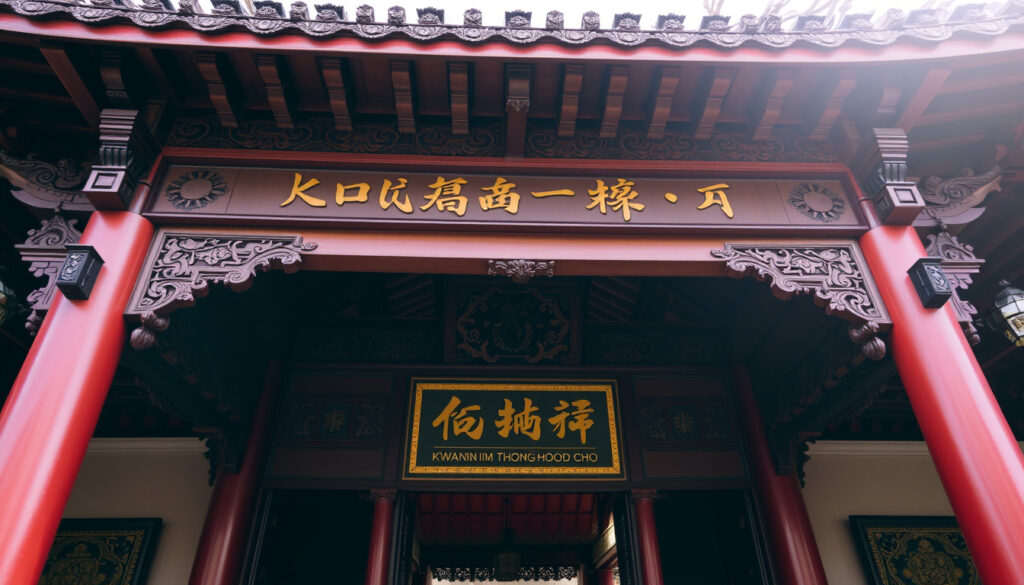
Kwan Im Thong Hood Cho Temple Opening Hours & Guide
Between conflicting advice online, one thing is certain: Kwan Im Thong Hood Cho Temple is free to enter and open from 7 AM to 6:30 PM daily. This guide cuts through the noise with verified details on dress code, prayer etiquette, and more.
Temple Name: Kwan Im Thong Hood Cho Temple · Location: 178 Waterloo Street, Singapore · Daily Opening Hours: 7:00 AM – 6:30 PM · Distance from Bugis MRT: 3-minute walk · Admission Fee: Free
Quick snapshot
- 7:00 AM – 6:30 PM daily (Rawrnie’s travel blog)
- 178 Waterloo Street, Singapore 187964 (Rawrnie’s travel blog) (Rawrnie’s travel blog)
- 3-minute walk from Bugis MRT station (TripAdvisor guide)
- Free entry (Trip.com attraction listing)
- Optional donations and incense purchase available on-site (Trip.com) (Trip.com attraction listing)
- No shorts or sleeveless tops – modest attire covering shoulders and knees (Reddit discussion on temple attire)
- Some traditions discourage black or dark red during prayers (Facebook group post)
- Remove shoes before entering the prayer hall (TripAdvisor guide) (Reddit discussion on temple attire)
- Light three joss sticks, make three bows, and offer a sincere wish (TripAdvisor guide) (Facebook visitor advice)
- Follow the queue and respect worshippers’ personal space (Facebook visitor advice)
Seven key details, one pattern: the temple is accessible, free, and welcoming—but expects respectful behavior. Here’s a quick-reference table.
| Detail | Value |
|---|---|
| Temple | Kwan Im Thong Hood Cho Temple |
| Address | 178 Waterloo Street, Singapore 187964 |
| Opening Hours | 7:00 AM – 6:30 PM daily |
| Admission | Free |
| Nearest MRT | Bugis (EW12/DT14) |
| Deity | Guan Yin (Kuan Yin), Goddess of Mercy |
| Year Established | 1884 |
What are the opening hours for Kwan Im Thong Hood Cho Temple?
Daily schedule and exceptions
- Kwan Im Thong Hood Cho Temple opens daily from 7:00 AM to 6:30 PM, according to Rawrnie’s travel blog.
- A separate visitor listing on OurHound notes the temple closes for cleaning from 12:30 PM to 1:00 PM and last entry to the queue is at 12:15 PM and 6:15 PM. These specific limits are not listed on the temple’s own materials, so they may be informal guidelines.
- The temple is located at 178 Waterloo Street, a 3-minute walk from Bugis MRT station (Rawrnie’s travel blog).
How to check if the temple is open on public holidays
- During Chinese New Year, hours change. A 2026 AsiaOne report says the temple will not open for “first joss sticks” at midnight on Chinese New Year eve; instead it follows the regular 7:00 AM – 6:30 PM schedule.
- A Facebook group post confirms the same adjusted hours for the eve and day.
- For other public holidays (Vesak Day, Deepavali), the temple typically maintains regular hours, but it’s wise to check the TripAdvisor forum for recent updates.
The catch: the cleaning break and last-entry times are reported by third-party listings, not official notices. If you arrive near 12:30 PM or 6:15 PM, expect to queue quickly.
What should I wear to a Buddhist temple in Singapore?
Do not wear shorts or sleeveless tops
- According to the Reddit discussion on temple attire, modest clothing covering shoulders and knees is expected. Slacks or trousers and short- or long-sleeve shirts are acceptable, while shorts and tank tops are not preferred.
- A Facebook visitor comment says there is no strict dress code, but clothing should not be too revealing.
Appropriate colors: avoid black and dark red at some temples
- Some traditions discourage wearing black or dark red during prayers. An Instagram post about temple etiquette notes that modest clothing is required and suggests avoiding very dark hues, though this rule varies by temple.
- The Facebook group post on CNY visits advises wearing light, bright colors for auspiciousness.
The dress code is more about courtesy than enforcement. You won’t be turned away, but locals appreciate modest coverage. Light, neutral colors are safest – skip black and dark red if you plan to pray.
The pattern: Singapore’s Buddhist temples expect modesty but rarely enforce it strictly.
Is there an entrance fee to Guan Yin temple in Bugis?
Free admission for all visitors
- There is no entrance fee to Kwan Im Thong Hood Cho Temple. Trip.com lists the attraction without a ticket price, confirming free access.
- Rawrnie’s travel blog also describes the temple as freely open to all regardless of religion.
Optional donations and purchase of incense
- Visitors can buy incense and other offerings inside the temple compound. The Trip.com listing notes optional activities available on-site.
- Donations are voluntary, according to TripAdvisor visitor guides.
The trade-off: while entry costs nothing, you may feel inclined to buy incense or drop a few dollars in the donation box. Bring small change if you want to participate fully.
What is the significance of Bugis temple?
Historical and cultural importance of Kwan Im Thong Hood Cho Temple
- Kwan Im Thong Hood Cho Temple was established in 1884 and is one of the oldest Buddhist temples in Singapore, as noted by TripAdvisor and a Moonlit blog.
- It is a key landmark in the Waterloo Street heritage precinct, a cluster of religious sites in central Singapore (TripAdvisor).
The goddess Kuan Yin and her role
- The temple is dedicated to Guan Yin (Kuan Yin), the Buddhist goddess of mercy and compassion (TripAdvisor description).
- Devotees come to pray for health, luck, and family harmony. The temple is known as a place of solace for worshippers, especially during Chinese New Year and Vesak Day.
This isn’t just a tourist stop – it’s a living community temple where locals have prayed for over 140 years. The architecture and rituals reflect Singapore’s multi-faith fabric, making a visit both culturally and spiritually meaningful.
The implication: A visit here offers insight into Singapore’s multicultural heritage.
How to pray at Kwan Im Thong Hood Cho Temple?
Step-by-step prayer guide for visitors
- Light three joss sticks. Incense sticks are available for purchase inside the compound. Light them from a candle or another stick, then gently wave to extinguish the flame (do not blow).
- Make three bows. Stand facing the main altar, holding the incense with both hands. Bow three times – once for the Buddha, once for the Dharma (teachings), and once for the Sangha (community).
- Offer your prayer. Silently or softly voice your wish or gratitude. Focus on sincerity over volume.
- Place the incense in the urn. Insert the sticks upright into the sand-filled urn.
Standard practice includes these steps, as described by TripAdvisor visitor accounts and general Buddhist etiquette guides.
Etiquette for offering incense and making wishes
- Follow the queue and respect worshippers’ personal space. Do not enter the prayer hall while someone is meditating or bowing (Facebook group advice).
- Photography may be restricted in the main prayer hall. Always ask permission or look for signs (TripAdvisor).
- Avoid pointing your feet at the altar – sit with soles facing away if you sit on the floor.
The pattern: prayer is simple and peaceful. The temple’s atmosphere encourages quiet reflection, not performance. Take your time.
Step-by-step visitor checklist
Before you go, run through this quick checklist:
- Check the time – arrive between 7:00 AM and 12:15 PM or 1:00 PM and 6:15 PM to avoid the cleaning closure.
- Dress modestly – shoulders and knees covered, light colors encouraged.
- Bring small cash (SGD 2-5) for incense or donation.
- Leave large bags and noisy items at home; keep phones on silent.
- Follow the queue, bow with respect, and enjoy the serene space.
For first-time visitors, the combination of free access and open doors makes this an easy addition to a Bugis walking tour. The only real hurdle is timing – plan around the lunch break if you want a full experience.
Confirmed facts vs. What’s unclear
Confirmed facts
- Opening hours: 7:00 AM – 6:30 PM daily (Rawrnie’s travel blog)
- Free admission (Trip.com)
- Located at 178 Waterloo Street, Singapore 187964 (Rawrnie’s travel blog)
- Temple dedicated to Guan Yin, Goddess of Mercy (TripAdvisor)
- Established in 1884 (TripAdvisor)
What’s unclear
- Exact opening status during major public holidays (Chinese New Year, Vesak Day) – local announcements may differ from regular hours (Facebook group post)
- Whether the cleaning closure (12:30–1:00 PM) is strictly enforced or just a guideline (OurHound listing)
- Specific color restrictions (black/dark red) at this particular temple – advice varies by tradition (Instagram post)
- Photography policy in the main prayer hall – signboards may not always be present (TripAdvisor discussions)
- Last entry times (12:15 PM / 6:15 PM) – reported by one source only and not confirmed elsewhere (OurHound)
“Kwan Im Thong Hood Cho Temple is a place of deep peace. Many first-time visitors are surprised by how calm it feels despite being in the heart of Bugis.”
— TheSmartLocal (local lifestyle guide)
“During Chinese New Year, the temple will not offer midnight joss sticks. Instead, it opens at 7:00 AM on both the eve and the day itself – much to the disappointment of some devotees.”
— AsiaOne (AsiaOne report)
“There’s no strict dress code, but please don’t wear anything too revealing. Sleeveless tops and shorts are not ideal – it’s a temple, not a beach.”
— Facebook group post (Facebook visitor advice)
For the visitor planning a quick stop, the implications are straightforward: show up during regular hours, dress respectfully, and bring a small donation if you wish. The one unknown – the cleaning break and last-entry cutoffs – can be managed by arriving before 12:15 PM or after 1:00 PM. For those seeking a deeper experience, the temple’s 140-year history and central location make it a meaningful cultural stop.
For the Singapore traveler, the choice is clear: budget 20–30 minutes, skip the expensive attractions nearby, and walk in with an open mind. The temple rewards sincerity, not spectacle.
Frequently asked questions
Is Kwan Im Thong Hood Cho Temple open on public holidays?
During Chinese New Year, the temple opens at 7:00 AM to 6:30 PM rather than offering midnight joss sticks, according to AsiaOne. For other public holidays, it typically maintains regular hours, but check the Facebook page for updates.
Can I take photos inside the temple?
Photography may be restricted in the main prayer hall. Ask permission or look for signs. The TripAdvisor forum suggests avoiding flash around devotees.
How long does a typical visit take?
Most visitors spend 15–30 minutes. Allow extra time if you plan to offer incense and bow.
Are there any nearby temples to visit?
Yes. The Waterloo Street area includes the Sri Krishnan Temple and the Singapore Art Museum. It’s a short walk from Bugis Junction.
Is the temple wheelchair accessible?
The entrance has a small step. The interior is generally flat, but the main prayer hall may require navigating narrow doorways. Check with staff on arrival.
What is the best time to visit to avoid crowds?
Early morning (7:00–9:00 AM) on weekdays is quietest. Afternoons before 12:15 PM are also manageable. Avoid Chinese New Year and Vesak Day if you prefer solitude.
Are children allowed inside the temple?
Yes, children are welcome. Keep them calm and supervise behavior – the temple is a space for quiet reflection.
More related posts
 Guiga Korean BBQ Restaurant: Menu, Bookings & Late Hours
 Aston Villa vs Fulham F.C. Stats: Head-to-Head Record
 Marvel Rivals Patch Notes: Seasons 3-7.5 Buffs Nerfs
 Where to Go in Singapore: Free Attractions & Family Itinerary
 Singapore Birth Rate 2025: TFR Hits Record Low of 0.87
 Eye Bag Removal Singapore: Surgical vs Non-Surgical Costs
 Where to Buy Stamps in Singapore – Locations Hours and Tips 2025
 Tuas Warehouse Shoe Recycling Project – What You Need to Know