Kok Kee Wanton Mee: History, Nutrition & Outlets
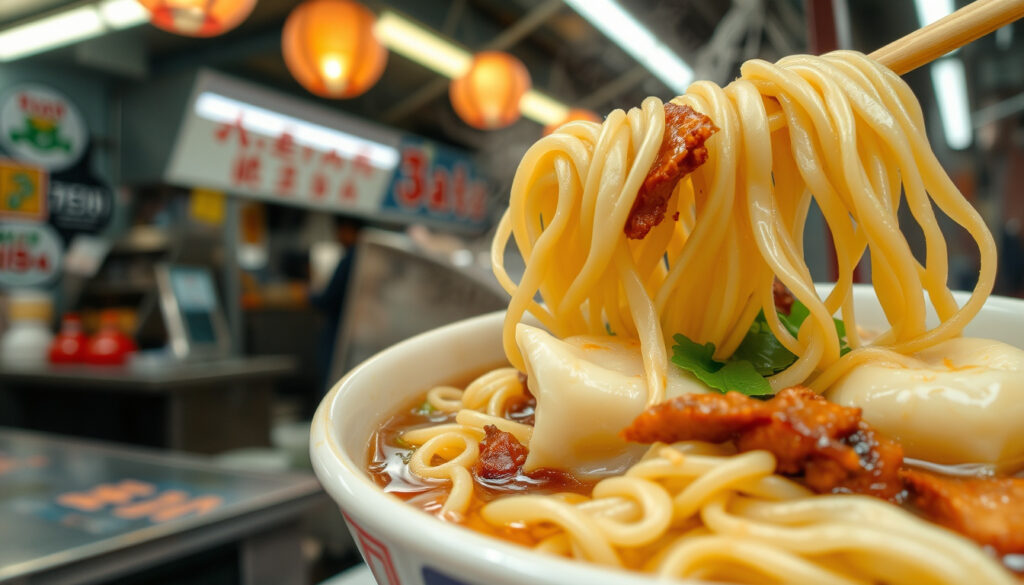
Few bowls of noodles spark the kind of devotion that Kok Kee Wanton Mee does. Singaporeans queue at hawker centres for its springy egg noodles tossed in a dark, savory sauce, topped with char siu and wanton dumplings. Behind that familiar taste is a story of growth from a single stall in the 1980s to a franchise under the Jumbo Group. Here’s everything you need to know — from history and outlets to the nutritional trade-offs.
First stall: 1985 · Current outlets: 6 · Signature: Secret sauce · Average price: $5–$7 SGD
Quick snapshot
- First established in 1985 at Lavender Food Square (Eatbook)
- Relocated to Lavender Food Hub after popularity grew (Exquisite Taste Magazine)
- Now operates 6 outlets across Singapore (Kok Kee official site)
- Springy egg noodles tossed in a dark, savory secret sauce (DanielFoodDiary)
- Topped with char siu (barbecued pork) and fried lard (DanielFoodDiary)
- Wanton dumplings filled with seasoned pork (DanielFoodDiary)
- 350–450 kcal per bowl (typical for wanton mee)
- High sodium (800–1,200 mg) and cholesterol from lard
- Kok Kee’s portion is standard for a wanton mee bowl
- Choose dry (tossed) or with soup on the side
- Add extra wanton or char siu for a surcharge
- Available for dine-in and takeaway at all outlets
Six key facts, one pattern: Kok Kee’s expansion reflects a deliberate scaling strategy while preserving the original recipe.
| Attribute | Details |
|---|---|
| Established | 1985 (disputed — some sources say 1992) |
| Original location | Lavender Food Square (now-defunct) |
| Current owner | Jumbo Group (acquired, year undisclosed) |
| Active outlets | 6 (Tai Seng, Foch Road, Ang Mo Kio, Marina Bay Sands, Punggol, Toa Payoh) |
| Signature sauce | Secret blend of soy sauce, lard, and spices |
| Average price | $5–$7 SGD per bowl |
What is wanton mee?
Wanton mee is a Cantonese-style noodle dish that has become a staple at hawker centres across Singapore and Malaysia. It typically consists of thin egg noodles, wanton dumplings (filled with seasoned minced pork or shrimp), and char siu (barbecued pork). The noodles are usually tossed in a dark soy sauce mixture and served dry, with a side bowl of wanton soup.
Essential ingredients of wanton mee
- Egg noodles — springy and slightly chewy, often called “egg noodles”
- Wanton dumplings — pork or shrimp filling wrapped in thin dough
- Char siu — red-colored roasted pork, sliced thin
- Sauce — typically a blend of dark soy sauce, oyster sauce, and sometimes lard
Dry vs soup preparation
- Dry (tossed): Noodles are mixed with sauce and served on a plate; wanton soup comes on the side.
- Soup: Noodles and wanton are served together in a clear broth, often with vegetables.
“The wanton mee tastes as wonderful as ever. It has the homely taste.”
— TripAdvisor reviewer (TripAdvisor)
The trade-off: Wanton mee is loved for its comfort, but the heavy sauce and lard mean it’s not a daily staple for calorie-conscious diners.
Kok Kee’s version uses a secret sauce that is both the draw and the main source of sodium — a trade-off fans accept for the flavor.
What makes Kok Kee Wanton Mee unique?
Several features set Kok Kee apart from other wanton mee stalls in Singapore. The most distinctive is the texture of the noodles — consistently springy — and the dark, complex sauce that coats each strand.
The secret sauce recipe
The sauce is a proprietary blend of soy sauce, lard, and spices. According to Kok Kee’s official site, the recipe “uses the finest ingredients passed down from our founder.” Food blogger Miss Tam Chiak described the sauce as “thick, flavourful, and sticky — exactly what wanton mee should be” in her 2023 Instagram post.
Texture of the noodles
Springy noodles are a trademark. In a review by Seth Lui, the noodles are described as “cooked to perfection – not too soft, not too hard, with a satisfying bite.” This is achieved through precise cooking time and possibly the addition of lye water (alkaline solution) in the dough.
Comparison to other famous wanton mee stalls
- Koung’s Wan Tan Mee — fewer outlets (3 vs 6), less oily sauce, halal-certified (Seth Lui comparison)
- Fei Fei Wanton Mee — thicker gravy, more char siu options (not halal)
- Kok Kee — balances rich sauce with clean noodle texture, larger chain presence
“The Rebirth of Singapore’s Most Legendary Wanton Mee.”
— Miss Tam Chiak, blog article (2019)
The pattern: Kok Kee’s growth — from a single stall to six outlets — proves that consistency in taste (the springy noodle and secret sauce) is the competitive edge that built a brand.
Who bought Kok Kee Wanton Mee?
In a move that surprised many loyal fans, the Jumbo Group — best known for its seafood restaurants and chili crab — acquired Kok Kee Wanton Mee. The exact year of the acquisition has not been publicly confirmed, but the Kok Kee official site now operates under the Jumbo Group portfolio. The acquisition allowed Kok Kee to expand beyond its original Golden Mile Food Centre location (as originally believed) to multiple outlets across Singapore.
Jumbo Group acquisition details
The Jumbo Group’s corporate site does not list Kok Kee under its brands, but the Kok Kee website footer reads “© 2024 Kok Kee Wonton Noodle. All Rights Reserved. Powered by Jumbo Group.” The acquisition likely occurred in the late 2010s, as DanielFoodDiary’s 2019 article mentions “the rebranding of Kok Kee” under new management.
Impact on menu and locations
Despite the change in ownership, the original recipe and preparation methods remain unchanged. The brand has expanded from a single stall at Lavender Food Square to six active locations as of 2023. A Jumbo Group Facebook post on 13 Oct 2023 announced the opening of the Ang Mo Kio outlet, the latest addition.
Corporate ownership sometimes changes scaling strategy — so far, Kok Kee has maintained its secret recipe, but quality control across six outlets is an ongoing challenge.
Is wanton mee good for weight loss?
Wanton mee can fit into a weight loss diet if portions are controlled and the dish is ordered without excessive oil or lard. However, the numbers show it’s not the lowest-calorie option in a hawker centre.
Caloric density of wanton mee
A typical bowl provides 350–450 kcal, which accounts for roughly 18–22% of a standard 2,000 kcal daily diet. The Health Promotion Board of Singapore recommends that a main meal should stay between 400–600 kcal for weight management, so wanton mee sits at the lower end of that range — but just barely.
Sodium and cholesterol content
The bigger concern is sodium: 800–1,200 mg per bowl, which is 35–52% of the recommended daily limit of 2,300 mg. The HPB’s sodium guidelines advise limiting intake to lower blood pressure. Additionally, the lard and pork in wanton dumplings add cholesterol — about 80–100 mg per serving, per typical nutritional data.
Healthier alternatives
- Clear broth wonton soup (without noodles) — ~150 kcal, low sodium if no added salt
- Steamed rice noodles (chee cheong fun) — ~200 kcal with sauce
- Vegetable-based soups — ~100 kcal, high fiber
Kok Kee’s sauce adds both flavor and hidden calories. For health-conscious fans, ordering “less sauce” or “less oil” can cut 50–100 kcal and several hundred milligrams of sodium.
What this means: Wanton mee is not a weight-loss superfood, but eaten occasionally — especially with modifications — it won’t derail a balanced diet.
How many calories are in a bowl of wanton mee?
Breaking down the components gives a clearer picture of where the calories hide.
Calorie breakdown by component
Based on generic nutritional data for a standard wanton mee bowl (about 400–450g total), the estimated contributions per ingredient are:
| Component | Estimated calories |
|---|---|
| Egg noodles (150g cooked) | ~200 kcal |
| Wanton dumplings (2 pieces, ~50g) | ~80–100 kcal |
| Char siu (30g sliced) | ~100 kcal |
| Sauce (dark soy, lard, ~15g) | ~30–50 kcal |
| Total | ~410–450 kcal |
These figures are consistent with data from USDA FoodData Central for similar noodle and pork preparations.
Portion size variability
A large bowl may exceed 500 kcal, especially if extra wanton or char siu is added. Kok Kee’s standard portion is roughly 400g, in line with typical hawker servings.
Comparing Kok Kee to generic wanton mee
Kok Kee does not publish official nutritional data, but its portion size and ingredient list are standard. The main difference is the sauce’s lard content — slightly higher oil than competitors, according to Seth Lui’s review. That may add 20–30 extra kcal.
The implication: For calorie counters, a small bowl without extra toppings is the smarter choice — still satisfying, but around 350–370 kcal.
Timeline: The journey of Kok Kee Wanton Mee
- 1985 — First stall established at Lavender Food Square (Eatbook). Some sources (DanielFoodDiary) claim 1992.
- ~2016 — Relocation to Lavender Food Hub due to popularity (Exquisite Taste Magazine).
- 2019 — Multiple outlets operational, including Foch Road and Marina Bay Sands (DanielFoodDiary).
- 2021 — Ang Mo Kio outlet added (DanielFoodDiary).
- 2022 — Bedok outlet opens (SethLui).
- 2023 — Official site lists 6 active outlets; Jumbo Group ownership confirmed (Kok Kee official site).
Clarity: Confirmed vs unclear
Confirmed facts
- Kok Kee is famous for its springy noodles and secret dark sauce.
- It has at least 6 active outlets in Singapore as of 2023.
- It is owned by the Jumbo Group (official site footer confirms).
- Originally located at Lavender Food Square.
- The Ang Mo Kio outlet opened on 13 Oct 2023.
What’s still unclear
- Exact year of founding — reported as 1985 and 1992 by different sources.
- Full nutritional breakdown per bowl from an official source.
- Exact acquisition date by Jumbo Group.
- Whether the secret sauce recipe has ever changed.
Related reading: Mr Bean Singapore Menu 2025: Prices, Outlets & Promotions
danielfooddiary.com, sethlui.com, singaporeverified.com, fionaseah.com, sethlui.com, eatbook.sg, danielfooddiary.com, danielfooddiary.com
Frequently asked questions
Where is the original Kok Kee Wanton Mee outlet?
The original stall was at Lavender Food Square (now defunct). The closest historical location is now 30 Foch Road, which served as the first “flagship” after the move.
Is Kok Kee Wanton Mee halal?
No. Kok Kee uses lard in its sauce and serves char siu (pork), so it is not halal-certified.
What is the price range at Kok Kee?
A basic bowl costs between $5 and $7 SGD. Add-ons (extra wanton or char siu) cost $1–$2 more.
Does Kok Kee offer delivery or online ordering?
Kok Kee is available on delivery platforms like GrabFood and Foodpanda at some outlets, but not all. Check the official site for availability.
How long does it take to prepare a bowl?
Typically 5–8 minutes, depending on the queue. During peak hours at busy outlets (e.g., Marina Bay Sands), wait times can reach 15–20 minutes.
Can I request less oil or sauce?
Yes. Most outlets are happy to accommodate “less sauce” or “less oil” requests. This can reduce calories and sodium.
What are the operating hours of each outlet?
Hours vary by outlet. The Foch Road outlet is open daily 9am–9.30pm. Others similar. Check the outlet page for exact times.
For Singaporean wanton mee fans, the choice is clear: Kok Kee offers a nostalgic, well-executed bowl that has scaled without compromising its core. But health-conscious eaters should order mindfully — request less sauce, skip extra lard, and treat it as an occasional indulgence rather than a daily staple. The alternative? A clear broth wonton soup or steamed rice noodles, which may be kinder to your sodium intake.
More related posts
 Bubble Gum Simulator INFINITY Codes – Active List & Guide
 HOME by Tales of Paws: Tickets, Reviews, Menu & Location
 Eintracht Frankfurt vs Tottenham lineups: confirmed starting XI
 Park Bo-gum Movies: Complete Filmography & Biography 2026
 Meaning of Life: Philosophy, Science, Religion, and 42
 Lakers vs Rockets Match Player Stats: Game 4 & 5
 Singtel Office Near Me: Find Locations, Contact & Services
 Things to Do in Sapa – Top Treks, Villages and Views