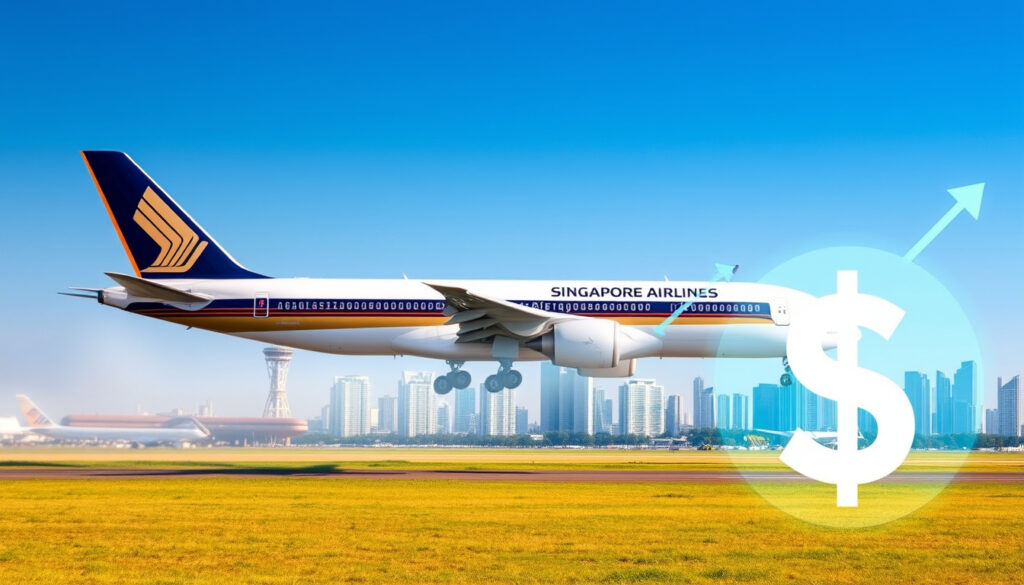
SIA Share Price Today: S$6.52, Analyst Targets & Dividend Outlook
If you have been watching the airline counters on the Singapore Exchange this week, you have probably noticed Singapore Airlines (SGX:C6L) hovering around S$6.50. The stock was last quoted at S$6.52, down 0.61 percent, after a session that ranged between S$6.52 and S$6.59 (Stock Analysis). Below, the latest quote, the dividend proposal, and the analyst targets are lined up so you can judge SIA on numbers rather than headlines.
Last quote: S$6.52 (-0.61%) · Intraday range: S$6.52–S$6.59 · 52-week range: S$6.21–S$7.92 · Consensus target: S$7.02 (~7.7% upside) · Proposed FY2025/26 dividend: S$0.37 per share
Quick snapshot
- Investing.com’s 12-month consensus target is S$7.02, roughly 7.7 percent above the last quote (Investing.com)
- SIA’s board proposed an ordinary dividend of S$0.27 per share for FY2025/26, plus a S$0.10 special dividend (Singapore Airlines annual report)
- DBS keeps a HOLD rating with a 12-month target of S$7.50 and estimates the dividend yield at 4.5 percent (DBS research)
- POEMS is Neutral with a target of S$7.35 (POEMS research)
- Dividend yield estimates range from 3.6 percent trailing (Simply Wall St) to 4.86 percent forward and 4.05 percent trailing (Stockopedia)
- Investing.com’s displayed analyst set shows one buy against four sells, holding the aggregate rating at Neutral (Investing.com, cited above) (Stockopedia)
- Which yield figure is closest to the official payout depends on whether special dividends are included; the providers above disagree by more than a full point (Stockopedia)
- 23 Dec 2025 — SIA paid the first S$0.03 special-dividend tranche (Singapore Airlines annual report, cited above)
- 15 Apr 2026 — DBS published its HOLD note with a S$7.50 target (DBS research, cited above)
- The latest POEMS research keeps the stock at Neutral with a S$7.35 target (POEMS research, cited above)
- Watch for the remaining special-dividend tranches and shareholder approval of the S$0.22 final ordinary dividend (details in the annual report cited above)
- DBS and POEMS both stop at HOLD/Neutral, so the base case is range-bound trading rather than a breakout
- Every broker target in this article sits above today’s quote; the low end of the full analyst range is the exception
Twelve rows, one pattern: the stock is trading below every published broker target and the consensus, while the rating consensus stays stubbornly Neutral.
| Metric | Value |
|---|---|
| Ticker | SGX:C6L |
| Last quoted price | S$6.52, down 0.61 percent (Stock Analysis, cited above) |
| Intraday range | S$6.52 – S$6.59 |
| 52-week range | S$6.21 – S$7.92 (Stock Analysis, cited above) |
| 12-month consensus target | S$7.02 (approx. 7.7% upside) |
| Analyst target range | S$5.80 – S$8.00 (Investing.com) |
| Consensus rating | Neutral (1 buy / 4 sells in displayed set) |
| DBS | HOLD · target S$7.50 |
| POEMS | Neutral · target S$7.35 |
| Proposed ordinary dividend (FY2025/26) | S$0.27 per share (interim S$0.05 + final S$0.22 recommended) (Singapore Airlines annual report, cited above) |
| Proposed special dividend | S$0.10 per share |
| Combined proposed payout | S$0.37 per share |
What is Singapore Airlines (SIA) share price today?
Today’s session is a quiet one for SIA. The stock slipped 0.61 percent to S$6.52 after trading between S$6.52 and S$6.59, a small move inside the band it has followed all year.
Current price and recent performance
- 1-month return: approximately +12 percent (Simply Wall St, cited above)
- Distance to consensus: the S$7.02 target implies roughly 7.7 percent upside from the current quote (key facts table above)
- Session context: today’s -0.61% move stayed inside the S$6.52–S$6.59 intraday range (key facts table above)
The daily tick matters less than the band around it. SIA has spent the past year bouncing inside the wide 52-week range shown in the table above, and today’s quote sits in the lower half of that band — closer to the floor than to the ceiling the stock reached within the past 12 months.
SIA trades below the DBS target, the POEMS target, and the consensus — about 7.7 percent below the consensus, 15 percent below DBS’s S$7.50, and 12.7 percent below POEMS’s S$7.35 — yet no broker goes beyond HOLD or Neutral. That gap is the whole SIA story right now.
The takeaway for today: a 0.61 percent dip means very little on its own. The signal to watch is whether SIA can hold the lower half of its 52-week range while the dividend calendar unfolds.
What is the best airline stock to buy?
“Best” depends on what you are buying: balance-sheet strength, dividend income, or rating momentum. On the first two, SIA has the clearest evidence in this data set.
Is SIA the best airline stock?
- Leverage: SIA projects FY2027E net debt/EBITDA of 0.4x, against a peer range of 1.0x–1.9x (POEMS research, cited above)
- Dividend support: the board proposed S$0.27 ordinary plus S$0.10 special dividends for FY2025/26 (annual report, cited above)
- Income estimate: DBS pegs the dividend yield at 4.5 percent (DBS research, cited above)
The catch for momentum buyers is the rating board: DBS says HOLD, POEMS says Neutral, and Investing.com’s displayed set shows one buy against four sells, as noted in the snapshot above.
Low leverage is what makes the payout credible: a projected 0.4x net debt/EBITDA leaves SIA room to fund the S$0.37 combined payout without straining the balance sheet, while peers at 1.0x–1.9x have less headroom.
Other airline stocks to consider
- In the peer comparison POEMS published, the rest of the airline sample sits between 1.0x and 1.9x net debt/EBITDA (POEMS research, cited above)
- On the data reviewed here, no other carrier has a confirmed dividend proposal of S$0.37 per share; SIA is the only stock in this research with a complete dividend-and-target picture
- With an analyst range of S$5.80–S$8.00 for SIA itself, the Street expects a wide outcome, which argues for diversifying across carriers rather than concentrating in one target
The honest answer to “best airline stock” among the carriers covered in this research: SIA has the strongest balance-sheet-and-dividend profile, but its ratings say “good hold”, not “urgent buy”. For a momentum investor, the best airline stock is the one with an upgrade cycle; SIA does not have one yet.
The implication: if “best” means strongest capital position and most visible dividend, SIA leads the sample; if it means the Street is aggressively bullish, it does not.
The pattern: SIA’s rating disconnect means income seekers may find value, but broad market conviction is absent.
What are the most undervalued stocks to buy?
Undervaluation is a gap between price and some measure of worth. For SIA, the gap depends on which measure you trust: analyst targets or analyst ratings.
Signs of undervaluation for SIA
- Price-to-target gap: S$6.52 versus a consensus of S$7.02 and a top target of S$8.00 (key facts table above)
- Dividend math: on the S$0.37 combined proposal, the implied yield at S$6.52 is roughly 5.7 percent — more than a point above DBS’s 4.5 percent estimate
- Price position: the stock trades in the lower half of its 52-week range despite the proposed S$0.37 payout (key facts table above)
That combination — a below-average price position and above-average dividend math — is the classic value checklist. But the checklist has a second page: the displayed analyst set at Investing.com runs one buy against four sells, and the aggregate rating is Neutral.
SIA vs broader market valuation
A stock can be “cheap” on target-price math and “not cheap” on rating conviction at the same time. That is exactly where SIA sits today: below the consensus and below both broker targets, yet rated Neutral by the same research houses that published those targets.
For investors screening the Singapore Exchange for undervalued names, SIA keeps showing up on dividend screens but not on broker-conviction screens. The gap between those two screens is the real story.
The trade-off: investors who treat the S$0.37 dividend as a floor see SIA as undervalued; investors who treat the Neutral rating as the signal see a stock that is priced about right.
Which stock will skyrocket in 2026?
The word “skyrocket” does heavy lifting on social media forums, but the analyst data for SIA points to a climb, not a launch.
SIA long-term growth potential
- 52-week context: the stock has already traded as high as S$7.92 within the past year, so the current S$6.52 quote is a round trip away from a known ceiling (key facts table above)
- Dividend signals: the S$0.10 special dividend shows management returning excess cash rather than chasing growth at any price (annual report, cited above)
- Leverage headroom: at 0.4x projected net debt/EBITDA, SIA has financial room if it decides to invest (POEMS research, cited above)
None of these signals supports a “10x in 2026” narrative. They support a slower, more durable compounding story — if the airline keeps executing.
2026 price targets
DBS target: S$7.50 (~15% upside) · POEMS target: S$7.35 (~12.7% upside) · Consensus: S$7.02 (~7.7% upside) · Analyst range: S$5.80–S$8.00
For a stock to skyrocket, the target range would need to move up sharply. Instead, the three published reference points cluster between S$7.02 and S$7.50, and the wide analyst range shows no agreement on a spike. A 2026 breakout would require at least three things:
- Upgrade momentum: a shift from HOLD/Neutral to Buy across the covered brokers
- Target revision: a move above the current top end of S$8.00
- Sustained delivery: the S$0.37 dividend paid as proposed
Why this matters: a rocket thesis needs a catalyst inside the numbers. The SIA numbers currently support a yield-backed recovery at S$6.52 — not a moonshot.
What is the SIA share price target and 12-month forecast?
There is no single SIA target — there is a band. The three reference points below define the 12-month view.
Current analyst targets
Consensus: S$7.02 · DBS: S$7.50 · POEMS: S$7.35 · Range: S$5.80–S$8.00
Four target levels, one pattern: the median sits above the last trade, while the low end of the range is a reminder that not every analyst is bullish.
| Research source | Rating | 12-month target |
|---|---|---|
| DBS (note dated 15 Apr 2026) | HOLD | S$7.50 · est. yield 4.5% |
| POEMS research | Neutral | S$7.35 |
| Investing.com consensus | Neutral | S$7.02 |
| Full analyst range | — | S$5.80 – S$8.00 |
The spread between S$5.80 and S$8.00 is the honest part of the forecast: the top end implies about 22.7 percent upside from S$6.52, while the low end implies roughly 11 percent downside.
Upside and downside risks
- Upside: the official S$0.37 dividend proposal, low projected leverage, and the DBS, POEMS, and consensus targets all sitting above the current quote
- Downside: the HOLD/Neutral consensus, the one-buy/four-sells panel at Investing.com, and dividend-yield estimates that disagree by more than a point depending on the provider
- Range risk: the 52-week low of S$6.21 is only about 5 percent below today’s quote, so the cushion to the downside is thinner than the upside math suggests
The one-buy/four-sells split is the biggest caution flag in the data: the targets say “cheap”, but the ratings say “no rush”. Buying SIA at S$6.52 is an income decision first, a momentum decision second.
The pattern: the 12-month forecast is a range, not a number — and the dividend is the hedge if the price sits near the lower bound of that range through the year.
The catch: the wide analyst range and Neutral consensus mean the stock’s trajectory remains uncertain despite the dividend support.
What are the upsides and downsides of SIA stock?
Two fair readings of the same stock:
Upsides
- Proposed FY2025/26 payout of S$0.37 per share, ordinary plus special (Singapore Airlines annual report, cited above)
- Low projected leverage: 0.4x net debt/EBITDA versus a 1.0x–1.9x peer range (POEMS research, cited above)
- The DBS, POEMS, and consensus targets all sit above the current price
- DBS estimates the dividend yield at 4.5 percent (DBS research, cited above)
Downsides
- Consensus rating is Neutral, with only one buy against four sells in Investing.com’s displayed analyst set
- DBS and POEMS both stop at HOLD/Neutral — no sell-side urgency
- Dividend-yield estimates range from 3.6 percent to 4.86 percent, so the income story depends on the data provider
- The stock already traded at S$7.92 within the last 52 weeks — today’s price is not a historic bargain
The trade-off: SIA is an income-and-recovery candidate, not a consensus buy. The upside math works only if the dividend lands as proposed and the ratings eventually follow.
Timeline signal: how SIA shares got here
- — SIA pays the first S$0.03 tranche of the special dividend (Singapore Airlines annual report, cited above)
- — DBS publishes its HOLD note with a S$7.50 target and a 4.5 percent yield estimate (DBS research, cited above)
- FY2025/26 — SIA’s annual report recommends a S$0.22 final ordinary dividend and a S$0.10 special dividend, completing the S$0.37 combined payout proposal (Singapore Airlines annual report, cited above)
The pattern: every dated marker in this timeline is about returning cash to shareholders. That is the signal — SIA’s management is treating the stock as a capital-return vehicle while the share price builds its recovery.
What’s confirmed vs what’s unclear about SIA stock
For a stock with this much coverage, the line between fact and estimate is unusually clean.
Confirmed facts
- Last quote: S$6.52, down 0.61 percent (key facts table above)
- The board proposed S$0.27 ordinary and S$0.10 special dividends for FY2025/26 (Singapore Airlines annual report, cited above)
- DBS has a HOLD rating with a S$7.50 target; POEMS is Neutral with a S$7.35 target (cited above)
- The first special-dividend tranche of S$0.03 per share was paid on 23 December 2025 (cited above)
What’s unclear
- The “real” dividend yield: 3.6 percent trailing (Simply Wall St), 4.05–4.86 percent (Stockopedia), or 4.5 percent (DBS) — providers treat special dividends differently
- Whether the one-buy/four-sells panel at Investing.com reflects the full analyst community (snapshot above)
- Whether SIA is undervalued: there is no consensus; the aggregate rating is Neutral
- The payment schedule for the remaining special-dividend tranches beyond the first S$0.03 is not detailed in the data reviewed
- The cause of the latest session’s S$0.04 decline is not tied to a single event in the research notes reviewed
What this leaves: a high-confidence dividend story and a medium-confidence valuation story. The data are strong on what SIA pays; they are weaker on whether the market should pay more for the stock.
What the analyst research actually says
Three positions define the debate on SIA — one from a bank, one from a broker, and one from the company itself. The excerpts below condense each source’s published stance.
HOLD rating on Singapore Airlines with a 12-month target of S$7.50 and an estimated dividend yield of 4.5 percent — the payout, not the price, is the main support for the stock.
DBS research, 15 April 2026
SIA projects FY2027E net debt/EBITDA of 0.4x, against a peer range of 1.0x–1.9x — the balance sheet is the cleanest part of the story.
POEMS research
A final ordinary dividend of S$0.22 per share is recommended, which lifts the proposed FY2025/26 ordinary dividend to S$0.27 per share.
Singapore Airlines FY2025/26 annual report
The shared thread: both brokers see value above the current price, but neither is willing to say “buy” yet — and the company is trying to bridge that gap with cash.
The takeaway
SIA at S$6.52 is a study in contradiction: the company is proposing S$0.37 per share in ordinary and special dividends, the DBS, POEMS, and consensus targets all sit above the market price, and yet the rating consensus is Neutral — one buy against four sells on Investing.com’s panel, DBS at HOLD, POEMS at Neutral. That is what a yield-backed recovery looks like before the market believes it. For income-focused investors on the Singapore Exchange, the decision is clear: treat SIA as a dividend-compounding position near the lower half of its 52-week range, or wait for the rating consensus to turn before committing growth capital.
Frequently asked questions
What is the SIA share price right now?
SIA was last quoted at S$6.52, down 0.61 percent, after trading between S$6.52 and S$6.59 in the latest session — figures detailed in the key facts table above.
Is Singapore Airlines stock a good buy right now?
The dividend case is strong, with a proposed S$0.37 payout for FY2025/26 and DBS estimating a 4.5 percent yield, but the analyst consensus is Neutral — with HOLD and Neutral ratings from DBS and POEMS and one buy against four sells on Investing.com’s displayed panel.
What is the SIA dividend outlook?
For FY2025/26, SIA’s board proposed an ordinary dividend of S$0.27 per share plus a special dividend of S$0.10 per share, for a combined S$0.37. The first special tranche of S$0.03 was paid on 23 December 2025.
What is Singapore’s main stock index?
Singapore’s main stock index is the Straits Times Index (STI), which trades on the Singapore Exchange — the same exchange where SIA is listed under SGX:C6L.
Which airline stock has the best growth potential?
Within the research reviewed here, SIA has the strongest balance-sheet position (0.4x projected net debt/EBITDA versus a 1.0x–1.9x peer range) and the clearest dividend proposal, but its HOLD and Neutral ratings make it an income-and-recovery candidate rather than a momentum pick.
What is the SIA 12-month price target?
Published targets cluster between S$7.02 consensus and S$7.50 at DBS, with POEMS at S$7.35 and a full analyst range of S$5.80 to S$8.00.
Why did SIA share price drop today?
The latest session showed a S$0.04 decline to S$6.52; the reviewed data does not tie that move to a single news event, so it is best read as normal trading inside the stock’s established 52-week range.
What are the best 3 stocks to buy on SGX right now?
The research behind this article covers SIA only, so naming three SGX buys would be guesswork. What the data does support: SIA is a defensible income candidate, but the Neutral rating consensus argues against treating it as a top-three momentum pick.
For most readers, the FAQ worth re-reading is the first one: today’s price is a fact, the targets are opinions, and the dividend is the bridge between them.
More related posts
 BWF China Open 2025: Schedule, Results, Prize Money & How to Watch
 The Shoppes at Marina Bay Sands: Guide to Singapore’s Luxury Mall
 Devil Behind the Gate: Plot, Cast, Ending Guide (2025)
 Halal Hotel Buffet Singapore – Top MUIS-Certified Picks
 Argan Oil for Hair: Benefits, How to Use, and Side Effects
 Singapore Birth Rate 2025: TFR Hits Record Low of 0.87
 Body Fat Percentage Female: Healthy Ranges by Age & Visual Guide
 100 SGD to Yen: Live Rate, Forecast & Travel Guide