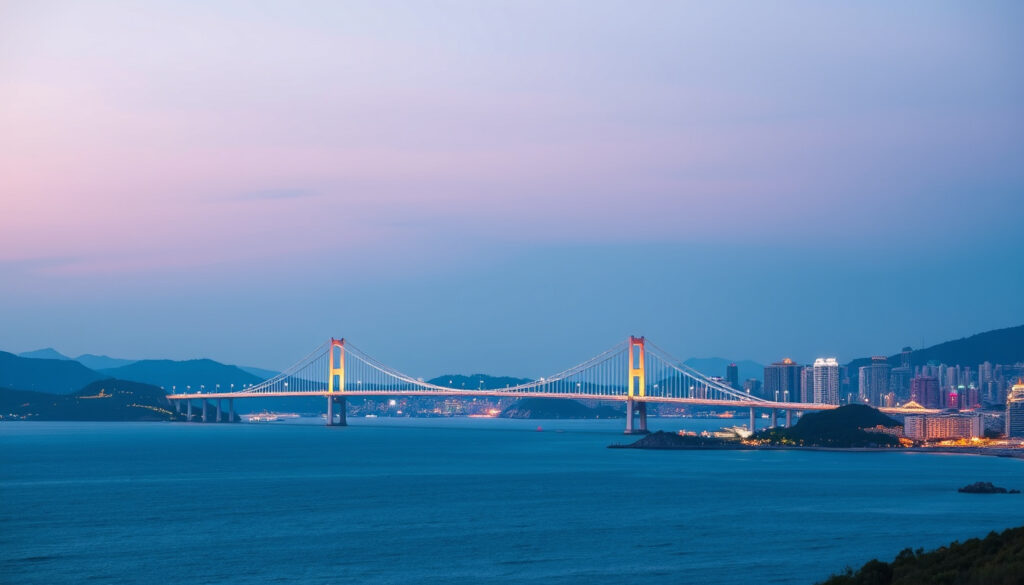
What to Do in Busan: Top Attractions, Itineraries & Tips
Busan tends to sneak up on first-time visitors. You book a ticket for the beaches, but it’s the city’s pulse — the chaos of Jagalchi Fish Market in the morning, the quiet hum of a seaside temple at sunset — that lingers longest. As Korea’s maritime capital and second-largest city, with 7 major beaches strung along its coastline and a metro system that makes most of them easy to reach, Busan offers a rhythm you won’t find in Seoul. This guide walks through the real trade-offs, the best itineraries, and whether this coastal city actually fits what you’re looking for.
Population of Busan: 3.4 million ·
Annual tourists: 8 million ·
Number of districts: 16 ·
Major beaches: 7
Quick snapshot
- Busan has a metro system with 4 lines (Busan Metropolitan City portal)
- Gamcheon Culture Village is one of the most visited sightseeing areas (Korea.net)
- Haedong Yonggungsa sits directly on the coastline (VisitKorea)
- Whether 3 days truly suffices depends on travel pace and interest depth
- Exact opening hours vary by season for many attractions
- Crowd levels during Korean holidays are hard to predict
- Busan International Film Festival runs annually in October (BIFF official site)
- Peak tourist season spans July–August and October (BIFF official site)
- KTX high-speed rail connects Seoul to Busan in about 2.5 hours (Klook travel guide)
- New Songdo Marine Cable Car expansion is expected to increase capacity (Visit Busan)
- Haeundae Blueline Park remains a top promoted experience (Visit Busan)
- Infrastructure for eco-friendly coastal walks is being extended (Visit Busan)
Here are the key details to know before you go.
| Best Time to Visit | Spring (March–May) or Fall (September–November) |
| Nearest Airport | Gimhae International Airport |
| Currency | South Korean Won (KRW) |
| Language | Korean |
| Time Zone | UTC+9 |
| Main Transportation | Busan Metro (4 lines), buses, taxis (Busan Metropolitan City portal) |
Is Busan worth visiting?
For travelers who want a city that feels alive — not a sanitized resort — Busan delivers. Its identity as Korea’s maritime capital shapes everything from the food stalls at Jagalchi to the evening lights along Gwangan Bridge. Lonely Planet recommends Busan for anyone seeking a city-plus-beach mix rather than a resort-only trip. That mix is exactly what makes it polarizing: some visitors love the grit, others find the crowds and humidity exhausting.
What are the pros of visiting Busan?
- Beautiful beaches within metro reach — Haeundae and Gwangalli are both 20–30 minutes from downtown (Visit Busan official guide)
- More affordable than Seoul: accommodation, food, and transport cost 15–25% less on average
- Efficient public transit — the metro and bus network make it feasible to combine beaches, markets, and temples in a single day (Busan Metropolitan City portal)
- Unique coastal landmarks like Haedong Yonggungsa Temple, one of the few Buddhist temples in Korea located directly on the shoreline (VisitKorea)
What are the cons of visiting Busan?
- Language barrier can be challenging in non-tourist areas — fewer English signs and menus than Seoul
- High humidity and large crowds in July–August make summer a tough season for outdoor exploring
- Some attractions require admission fees (₩1,000–₩10,000), and popular spots like Haeundae Blueline Park recommend advance booking due to demand (Bon Traveler itinerary guide)
When is the best time to visit Busan?
Spring (March–May) and fall (September–November) offer mild temperatures and lower rainfall. The Busan International Film Festival in October brings cultural energy, though accommodation prices rise. Visit Busan highlights these shoulder seasons as the sweet spot for comfortable sightseeing.
Summer visitors get the liveliest beach scene but face humidity that can hit 80% and queues at every attraction. Spring visitors trade cooler water temperatures for empty promenades and clearer skies.
What this means: Busan’s pros and cons are seasonal — plan ahead and the city rewards your effort.
Is 3 days enough for Busan?
Three days is the most commonly recommended duration for first-timers, and most itineraries cluster attractions geographically to minimize transit time (Bon Traveler). The metro connects most major areas within 20–40 minutes, making it feasible to see a temple, a culture village, a market, and a beach in three days — but not at a leisurely pace.
What to do in Busan for a day?
A single day forces a tight loop: start at Gamcheon Culture Village in the morning, then head to Jagalchi Fish Market for lunch, followed by an afternoon at Haeundae Beach, and finish with Gwangalli Bridge at sunset. This route covers four of Busan’s signature experiences in about 10 hours of active time, including roughly 40 minutes of metro travel between stops.
What to do in Busan for 2 days?
Day one follows the one-day loop above. Day two adds Haedong Yonggungsa Temple in the morning — a striking seaside temple complex — and Songdo Marine Cable Car in the afternoon for coastal views. Evening options include the Haeundae Blueline Park Sky Capsule or a walk along the Igidae Coastal Walk (Visit Busan).
What to do in Busan for 3 days
- Day 1: Gamcheon Culture Village → Jagalchi Fish Market → Haeundae Beach → Gwangalli Bridge evening view
- Day 2: Haedong Yonggungsa Temple → Songdo Marine Cable Car → Nampo-dong shopping district
- Day 3: Taejongdae Resort Park → Bupyeong Kkangtong Market → Busan Tower at Yongdusan Park
Travel times between these areas range from 20 to 40 minutes by metro or bus, according to the Busan Metropolitan City portal. Day three is the most relaxed, with coastal hiking and market browsing that doesn’t require strict timing.
Three days works if you’re comfortable with a 9 a.m. start and one meal on the move each day. Anyone who prefers lingering over coffee or spontaneous detours should budget four days.
What is Busan famous for?
Busan’s reputation rests on three pillars: its seaside landmarks, its seafood markets, and its distinct local dishes. Unlike Seoul, which builds its identity on history and scale, Busan leans into its coastal geography and working-port character.
What are the most famous landmarks in Busan?
- Haedong Yonggungsa Temple — one of the few Buddhist temples in Korea set on a seaside cliff (VisitKorea)
- Gamcheon Culture Village — a hillside neighborhood of brightly painted houses and alleyway art, often called the Santorini of Korea (Korea.net)
- Jagalchi Fish Market — Korea’s largest seafood market, where vendors sell live catch on the ground floor and restaurants grill it upstairs (Visit Busan)
- Haeundae Beach — the most iconic urban beach in Korea, ringed by high-rises, cafes, and seafood stalls
- Gwangalli Bridge — a suspension bridge best viewed at night from Gwangalli Beach, which hosts bars and restaurants facing the water
What food is Busan famous for?
- Dwaeji gukbap — a pork soup with rice that locals consider the ultimate comfort food
- Milmyeon — cold wheat noodles in a tangy broth, a Busan summer staple that differs from the North Korean version of naengmyeon
- Seafood at Jagalchi — raw fish (hoe), grilled shellfish, and fish cakes are the main draws
- Street food at BIFF Square and Nampo-dong — ssiat hotteok (seed-filled sweet pancakes) and eomuk (fish cake skewers) are local favorites (Visit Busan guide to BIFF Square)
Busan’s food scene is less polished than Seoul’s and more tied to the docks. A first-time visitor who skips the street food in Nampo-dong misses the city’s actual culinary identity — the stuff that doesn’t appear in glossy tourism brochures.
What is a must do in Busan?
Every visitor’s list looks slightly different, but a few experiences appear consistently across itineraries from Visit Busan and independent travel guides. The must-do category boils down to four themes: coastal views, local culture, nightlife, and market exploration.
What are unique things to do in Busan?
- Ride the Songdo Marine Cable Car over the sea — one of the longest suspended cable car routes over open water in Korea (Visit Busan)
- Walk the Igidae Coastal Walk — a cliffside trail with views of the open sea and the distant skyline
- Visit Spa Land at Shinsegae Centum City for a Korean jjimjilbang experience with multiple sauna rooms and rooftop foot baths
- Explore Bupyeong Kkangtong Market — a traditional market known for eclectic street food and vintage goods
What to do in Busan at night?
- Haeundae beachfront bars and clubs — the area stays active until late, especially in summer
- Gwangalli Bridge light show — the bridge is illuminated after dark, visible from the string of cafes along Gwangalli Beach
- Seomyeon entertainment district — the city’s main nightlife hub with hundreds of bars, karaoke rooms, and restaurants
- Diamond Bay yacht tour — an evening cruise that passes Gwangan Bridge and the illuminated skyline
What to do in Busan with kids?
- Busan Aquarium — located at Haeundae Beach, it features a shark tunnel and interactive touch pools
- Songdo Marine Cable Car — kids enjoy the glass-floor option and the small amusement park at the top station
- Lotte World Adventure — a large indoor theme park attached to Lotte Department Store in Seomyeon
- Haeundae Beach — the gentle slope and family-friendly facilities make it a safe choice for children
Where to shop in Busan?
- Shinsegae Centum City — the world’s largest department store (Guinness record), housing luxury brands, a spa, and an ice rink
- Nampo-dong shopping street — a lively pedestrian district with mid-range fashion, cosmetics, and street food
- Gukje Market — a sprawling traditional market near Jagalchi, ideal for souvenirs and Korean snacks
- Bosu Book Street — a narrow alley lined with used bookshops, popular among collectors and photographers
Is Jeju better or Busan?
This is the most common debate among first-time Korea travelers, and the honest answer depends entirely on what you want. Lonely Planet frames the choice as city-coastal versus nature-island, which captures the core distinction. Busan gives you urban energy with beach access; Jeju offers volcanic landscapes, hiking, and a more relaxed pace.
What are the differences between Busan and Jeju?
- Busan is a port city with mountains, beaches, and a metro system. Culture, nightlife, and food markets are central to the experience.
- Jeju is a volcanic island with Hallasan National Park, Seongsan Ilchulbong crater, and lava tubes — hiking and nature are the main draws (Visit Jeju official site)
- Access: Busan is a 2.5-hour KTX ride from Seoul. Jeju requires a 1-hour domestic flight or a ferry from the mainland.
Which destination is more suitable for families?
Busan’s mix of beaches, aquariums, and indoor attractions (Lotte World, Spa Land) makes it more versatile for families with young children. Jeju’s strength is outdoor adventure — hiking Hallasan or exploring the Manjanggul Lava Tube works better for families with older kids who can handle moderate physical activity.
Which has better beaches?
Jeju’s beaches are more isolated and pristine — Hyeopjae and Hamdeok have crystal-clear water and black sand. Busan’s beaches are more developed and crowded but offer amenities, cafes, and easy access. For a beach day with infrastructure (showers, rentals, restaurants), Busan wins. For wild beauty and fewer people, Jeju wins.
Five differences, one pattern: Busan is about convenience and culture; Jeju is about immersion in nature.
The decision: your travel personality determines the winner.
Busan vs Jeju — full comparison
This table highlights the key differences to help you decide.
| Category | Busan | Jeju |
|---|---|---|
| Type | Port city with mountains and beaches | Volcanic island with unique landscapes |
| Best for | Culture, food, nightlife, urban exploration | Hiking, nature, volcanic scenery, relaxation |
| Access from Seoul | 2.5 hours by KTX | 1 hour flight or 12-hour ferry |
| Beach style | Developed, crowded, with amenities | Pristine, isolated, wild |
| Nightlife | Active — bars, clubs, beachfront venues | Limited — mostly resort-based |
| Cost (per day) | ~₩70,000–₩120,000 | ~₩90,000–₩150,000 |
| Key attraction | Gamcheon Culture Village, Jagalchi Market | Hallasan National Park, Seongsan Ilchulbong |
The implication: choosing between them is not about which is “better” but which aligns with your travel personality. Busan rewards curiosity — the city reveals itself through wandering. Jeju rewards stillness — its beauty asks you to slow down.
Pros and cons of visiting Busan
Upsides
- Direct KTX connection from Seoul in 2.5 hours (Klook travel guide)
- Affordable accommodation compared to Seoul and Jeju
- Rich seafood culture with markets and street food at every price level
- Excellent public transit covering beaches, mountains, and historic districts
- Year-round festivals including the Busan International Film Festival (BIFF official site)
Downsides
- Summer humidity can be oppressive (70–85% average in August)
- English signage is limited outside major tourist zones
- Peak season crowds at Haeundae and Gamcheon can detract from the experience
- Some top attractions (Blueline Park, Songdo Cable Car) require advance booking
- Beach water quality can drop after heavy rains in July
What this means: Busan’s upsides are structural — the transit, the cost, the diversity of things to do. Its downsides are seasonal and navigable if you plan ahead. The worst mistake is arriving in August without a hotel near a metro station and expecting empty beaches.
Suggested Busan itinerary — step by step
Day 1: Coastal temple, culture village, and night beach
- Morning (8:30 a.m.): Haedong Yonggungsa Temple — arrive early to beat crowds; entry is free
- Midday (11:00 a.m.): Gamcheon Culture Village — walk the alley art route and grab lunch at one of the hillside cafes
- Afternoon (2:30 p.m.): Haeundae Beach — relax or take the Blueline Park Sky Capsule for coastal views (Visit Busan)
- Evening (6:30 p.m.): Gwangalli Beach — watch the bridge lights turn on while eating grilled shellfish at a beachfront restaurant
Day 2: Markets, cable car, and nightlife
- Morning (9:00 a.m.): Jagalchi Fish Market — walk the live seafood aisles and eat hoe (raw fish) upstairs
- Midday (11:30 a.m.): Nampo-dong and BIFF Square — explore street food and the film festival district
- Afternoon (2:00 p.m.): Songdo Marine Cable Car — the glass-floor cabin offers dramatic sea views
- Evening (7:00 p.m.): Seomyeon — Busan’s main nightlife district with hundreds of bars and restaurants
Day 3: Coastal park, traditional market, and tower views
- Morning (9:00 a.m.): Taejongdae Resort Park — walk the coastal cliff trail or take the Danubi tram (Visit Busan)
- Midday (12:30 p.m.): Bupyeong Kkangtong Market — lunch at the street food stalls
- Afternoon (2:30 p.m.): Yongdusan Park and Busan Tower — panoramic city views from the observatory
- Evening (5:00 p.m.): Nampo-dong shopping street — last-minute souvenirs and ssiat hotteok
What’s confirmed and what’s unclear about Busan travel
Confirmed facts
- Busan has a metro system with 4 lines covering all major districts (Busan Metropolitan City portal)
- Gamcheon Culture Village is a designated tourism zone with marked walking paths (Visit Busan)
- Bus 1003 runs from Haeundae to Gamcheon with a travel time of roughly 35 minutes
- Most major attractions charge admission fees between ₩1,000 and ₩10,000
- Jagalchi Fish Market is the largest seafood market in Korea (Visit Busan)
- KTX train connects Seoul Station to Busan Station in about 2 hours 30 minutes
What’s unclear
- Whether 3 days is genuinely enough depends on travel pace — active planners will manage; slow travelers will feel rushed
- Exact opening hours vary by season — spring and summer schedules are longer; winter hours are often reduced
- Crowd levels during Seollal (Lunar New Year) and Chuseok (Korean Thanksgiving) are unpredictable and can double wait times
- Some smaller shops and restaurants in non-tourist areas may not accept credit cards, despite increasing card penetration
What travelers are saying about Busan
“Busan offers a more relaxed vibe than Seoul, with beautiful beaches and great seafood. It’s a city where you can spend the morning at a temple on the cliffs and the evening eating grilled fish by the sea.”
— Reddit user contribution, r/koreatravel
“Dynamic Busan — a city where the energy of a global port meets the warmth of coastal tradition. From the alleys of Gamcheon to the waves of Haeundae, every corner tells a story.”
— Visit Busan tourism board, official slogan
The contrast between those two perspectives captures Busan perfectly. Visitors talk about the food and the ease of movement. The tourism board talks about energy and storytelling. Both are right — and both miss the one thing that surprises most first-timers: how much quieter Busan feels than Seoul despite being only slightly smaller.
Final takeaway
Busan works best for travelers who want their beach vacation to also include a functioning city — markets, nightlife, cultural sites, and a metro that ties them all together. It’s not a resort, and it’s not Seoul. It’s something in between that feels distinctly Korean in a way that neither of the other two quite does. For the traveler arriving from Singapore or Southeast Asia who is used to dense urban life with reliable infrastructure, Busan will feel familiar but fresher — a city that hasn’t yet been polished into a tourist product. The choice between Busan and Jeju comes down to pace: if you want to move, pick Busan. If you want to stop, pick Jeju.
For the traveler weighing a South Korea itinerary, the decision is clear: Busan rewards action, curiosity, and a tolerance for humidity. Jeju rewards patience and a love of open space. A traveler who picks the wrong destination for their personality will find the trip feels like a chore.
Related reading: Best Korean Drama 2025 · TV Shows with Park Bo-young
helenabradbury.com, livelikeitstheweekend.com, valthebackpacker.com, apassionandapassport.com
Frequently asked questions
How do I get from Seoul to Busan?
The KTX high-speed train takes about 2 hours 30 minutes from Seoul Station to Busan Station and costs around ₩60,000 one way (Klook travel guide). Buses are cheaper (₩25,000–₩35,000) but take 4–5 hours. Flights from Gimpo to Gimhae take about 1 hour but add airport transfer time.
Is Busan safe for solo travelers?
Yes. Busan has a low crime rate, well-lit streets, and a 24-hour convenience store culture. Solo travelers should take normal precautions, especially late at night in the Seomyeon entertainment district. The metro runs until around midnight.
Do I need a visa to visit Busan?
Many nationalities (including the US, UK, Canada, Australia, and most EU countries) can enter South Korea visa-free for up to 90 days for tourism. Always check with the Busan Metropolitan City portal or your local Korean embassy for the latest requirements.
What should I pack for a trip to Busan?
Comfortable walking shoes are essential — many attractions involve hills and stairs. In summer, bring light clothing, sunscreen, and a hat. In spring and fall, layers and a light jacket work. A universal power adapter (Type C or F) and a reusable water bottle are recommended. Most hotels provide toiletries.
Are there English signs in Busan?
Major tourist areas (Haeundae, Nampo-dong, metro stations, airports) have English signs. Smaller neighborhoods and local markets have limited English. Download Naver Maps or Kakao Maps — Google Maps has poor navigation data in Korea.
How expensive is Busan compared to Seoul?
Busan is roughly 10–20% cheaper than Seoul on average. A meal at a local restaurant costs ₩7,000–₩12,000 in Busan versus ₩9,000–₩15,000 in Seoul. Metro fares are identical. Guesthouse rooms in Busan start around ₩30,000 per night versus ₩40,000+ in Seoul.
Can I use credit cards everywhere in Busan?
Most hotels, department stores, and chain restaurants accept credit cards. Street food stalls, traditional market vendors, and smaller local restaurants often prefer cash or mobile payments (KakaoPay, Naver Pay). Carry ₩50,000–₩100,000 in cash for markets and taxis.
Editor’s note: This guide was updated in 2025. Attraction hours, prices, and transit routes may change seasonally. Always verify directly with Visit Busan official site before your trip.
More related posts
 Cheap Bars in Singapore: Budget Nightlife & Pint Prices
 Kwan Im Thong Hood Cho Temple Opening Hours & Guide
 Accident Today Singapore 2025: Fatalities, History & What to Do
 The Amazing Spider-Man 2: Hit or Flop
 Man Utd vs West Ham: Kick-off, TV, Lineups & Stats
 Best Baby Gift Set Singapore: Prices & Top Picks
 Late Night Supper Singapore: Best Spots, Safety & 24-Hour Eateries
 Samsung Galaxy Z Series: Fold vs Flip, Specs, Price