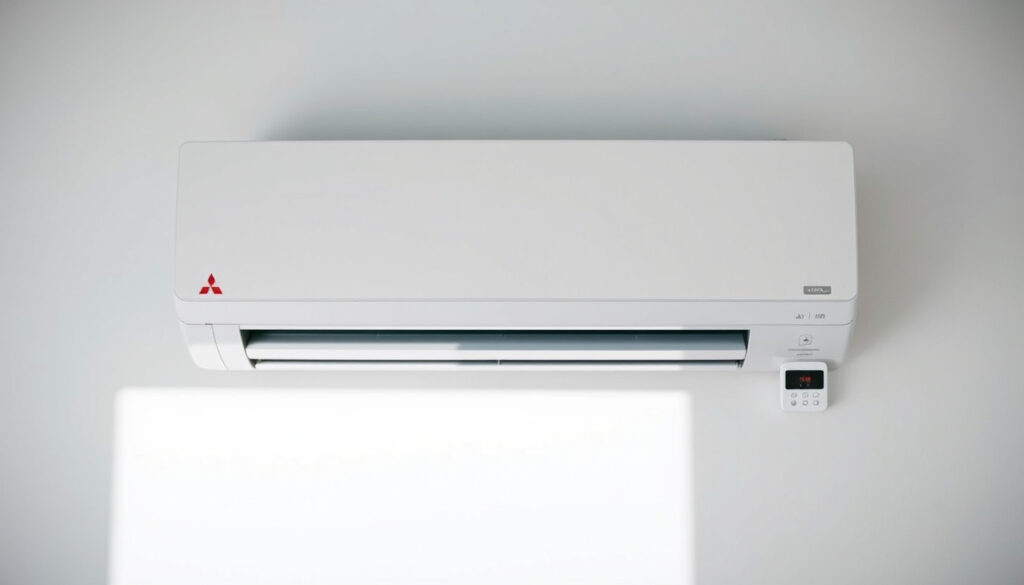
Mitsubishi Aircon System 3: Price, Symbols, Problems & Settings
Standing in a Singapore appliance showroom, you will hear “Starmex System 3” thrown around like it is one product; it is actually a multi-split family: one outdoor unit, three indoor units, and the remote symbols, price spread, and common cooling fault all follow the same logic. Once you see that pattern, the manual starts making sense.
Indoor units: 3 ·
Cooling capacity per unit: 5.0 kW (approx. 17,000 BTU/h) ·
Refrigerant: R32 ·
Typical price (Singapore): $2,500 – $4,000 SGD installed ·
Warranty: 1 year parts, 5 years compressor
Quick snapshot
- One outdoor unit connects to three indoor units in a Starmex System 3 bundle (Best Tech Online, Singapore electronics retailer).
- Current Singapore listings emphasize R32 inverter technology (Vision Air, Singapore aircon installer).
- Promotional pricing shifts by retailer and bundle; Gain City’s System 3 page shows a range, not one fixed price (Gain City, Singapore appliance retailer).
- Marketplace listings sit in different price bands depending on the promotion window (Shopee Singapore, marketplace).
- R32 inverter System 3 bundles dominate current listings and are marketed as the new standard, not a premium option (Vision Air, Starmex System 3 listings).
- The final cost will depend on BTU mix and installation extras, so compare the installed bundle before buying (Shopee Singapore, R32 System 3 listings).
Seven data points, one pattern: the Mitsubishi System 3 is an inverter-driven, R32-based multi-split built around a single outdoor platform and three interchangeable indoor units.
| Spec | Value |
|---|---|
| System type | Multi-split air conditioner |
| Indoor units maximum | 3 |
| Compressor technology | Inverter |
| Refrigerant | R32 |
| Typical cooling capacity (total) | 5.0 – 10.0 kW |
| Warranty | 1 year parts, 5 years compressor |
| Common problem | Clogged filters |
What does aircon system 3 mean?
The label “System 3” describes a multi-split air conditioner layout: one outdoor condenser unit connects to three indoor wall-mounted units. You do not buy three separate outdoor compressors — you buy one outdoor unit with the capacity to serve multiple rooms. Each indoor unit can then be controlled independently, so a bedroom can run cool while the living room stays off or runs dry mode.
- A typical Singapore bundle pairs indoor units of mixed sizes — for example, two 9,000 BTU units and one 12,000 BTU unit — to cover different room volumes. Best Tech Online (Singapore electronics retailer) lists exactly that configuration in its Starmex System 3 range.
- The dominant platform in current listings is the Mitsubishi Electric Starmex series, often sold as an R32 inverter package. Vision Air (Singapore aircon installer) separates its Starmex System 3 inverter bundles as a distinct product line.
- A common outdoor platform is the MXY-3H28VG, which appears across multiple Singapore System 3 packages. 338 Aircon (Singapore installer) lists it as a 30.4k BTU outdoor unit serving three 9,000 BTU indoor units.
The implication: when you ask a contractor for a “System 3,” you are asking for a capacity layout, not a single model. The three indoor units can be the same size or mixed, and the price moves with that mix.
What is the price of a Mitsubishi system 3 air conditioner?
Singapore pricing for a Starmex System 3 swings with three variables: the BTU mix of the indoor units, the installer’s bundle, and whether a promotion is running. The listings below show a wide band, not a single number.
What is the Mitsubishi Starmex system 3 promotion price?
- Best Tech Online (system 3 bundle listing) shows a Starmex System 3 with 2× 9K and 1× 12K indoor units at regular price S$3,708.00.
- Gain City (System 3 product range) lists inverter System 3 aircon products around S$4,019.00 to S$4,761.90.
- Vision Air (Starmex System 3 listings) lists an MXY-3G28VA2 package with 3× MSXY-FN10VE indoor units at S$3,420.00, and an R32 MXY-3H28VG package with 2× MSXY-FP10VG plus 1× MSXY-FP13VG at S$3,580.00.
- 338 Aircon (MXY-3H28VG product page) lists the same platform at $2,388 with 3× 9,000 BTU indoor units and a 30.4k BTU outdoor condenser.
- Marketplace listings sit in a similar range: Shopee Singapore (marketplace) shows Starmex System 3 bundles around S$3,049.90 to S$3,379.90, while Lazada Singapore (marketplace) tags show bundles near S$3,309.00, S$3,459.00, S$3,550.00, and S$3,590.00, plus a 5-tick 9K/12K/18K/24K listing at S$2,699.00.
Prices cited here are point-in-time Singapore listings from the research notes and change with retailer promotions. Verify the installed bundle price with the retailer before purchase.
A low headline price often leaves installation materials, piping, and bracket upgrades as add-ons. Compare the installed bundle, not the bare unit price, before choosing.
The pattern: the spread between S$2,388 and S$4,761.90 is not a quality signal — it is a BTU and bundle signal. High-capacity mixes with premium installation materials cost more; a 9K × 3 setup with basic installation sits at the lower end.
What is the common problem of a Mitsubishi air conditioner?
Most Mitsubishi aircon faults that show up in service calls are not mechanical failures — they are maintenance failures. The list below separates the frequent issue from the rare one.
- Dirty air filters are the most common issue causing reduced cooling and ice buildup.
- Refrigerant leaks and compressor failures can occur but are less frequent.
- Clogged filters are a basic maintenance fix, not a compressor fault.
What is the 3 minute rule for AC?
- The 3-minute rule protects the compressor: after switching the aircon off, wait at least three minutes before turning it back on.
- Restarting sooner can stress the compressor while refrigerant pressures are still equalizing.
- The same rule applies to every multi-split indoor unit in a System 3, regardless of which room it serves.
A 15-minute filter rinse every few weeks prevents the most common “System 3 not cooling” complaint, which means most owners never touch the compressor.
The trade-off: the 3-minute rule costs you a little patience but protects the most expensive part of the system. Ignore it regularly and the repair bill can outpace the price difference between two System 3 bundles.
What are the symbols on a Mitsubishi aircon?
Mitsubishi remotes follow the same visual language as most HVAC brands, so once you know the four core symbols, you can operate any Starmex unit without the manual.
What do the symbols on my AC mean?
- Snowflake symbol = Cool mode, the mode you want on a hot day.
- Sun symbol = Heat mode.
- Fan symbol = Fan-only mode, no cooling or heating.
- Water drop symbol = Dry mode for humid weather.
- Leaves symbol = Auto / energy-save mode on many Starmex remotes.
What are the four modes in Mitsubishi AC?
- Cool: pulls heat out of the room and lowers the temperature.
- Heat: reverses the cycle to warm the room.
- Dry: reduces humidity with gentle cooling; best for rainy seasons.
- Fan: circulates air without engaging the compressor.
Which mode should my AC be on?
- Hot weather → Cool mode, with 24°C as a comfortable default.
- Humid but not hot → Dry mode often feels better than an aggressive cool setting.
- Cold season → Heat mode on reverse-cycle models.
- Just moving air → Fan mode.
Set the wrong mode and you will burn more energy or feel colder than the display suggests — the symbol on the remote is the fastest signal to check first.
The pattern: the four-mode layout is universal across the range, so learning it once applies to a 9K bedroom unit and a 12K living room unit in the same System 3 bundle.
How do I set my Mitsubishi aircon to cool?
Switching a Starmex System 3 to cool mode takes about ten seconds once you know the remote flow.
- Press the Mode button until the snowflake symbol appears on the display.
- Use the up and down temperature buttons to set the target — 24°C is a sensible starting point.
- Press Fan to choose the airflow speed; Auto is a fine default.
- If the unit was just turned off, wait three minutes before restarting to protect the compressor.
Is it better to leave your AC on all day or turn it off?
- Turning the aircon off when the room is empty saves energy.
- Keeping it running all day makes sense only if a consistent temperature is critical, such as a server room or a baby’s room.
- An inverter compressor rewards longer steady runs, but idle cooling is still wasted cooling.
Which is colder, 24C or 16C in AC?
- 16°C does not make the air colder; it makes the unit run longer to chase a lower target.
- 24°C reaches the set point faster, uses less energy, and is easier on the compressor.
- A room will feel colder faster at 24°C with a higher fan speed than at 16°C with a low fan speed.
How many hours should AC be on at night?
- A sleep timer of 6-8 hours is the practical sweet spot for most bedrooms.
- Running it all night at a low temperature can over-cool and drive up the electricity bill.
- Sleep mode raises the set point slightly after a fixed interval, which keeps the room comfortable without wasting energy.
The practical read: the best setting is the one that matches the season and the room’s occupancy. A System 3 gives you the flexibility to cool bedrooms while leaving the living room off — the settings follow the room, not the other way around.
Mitsubishi system 3 specifications at a glance
Nine rows, one conclusion: the System 3 range is built around interchangeable indoor units, so the outdoor unit decides the platform and the indoor units decide the room coverage.
| Spec | Value |
|---|---|
| System type | Multi-split air conditioner (one outdoor unit, up to three indoor units) |
| Indoor units | 3 |
| Compressor technology | Inverter |
| Refrigerant | R32 |
| Typical total cooling capacity | Approx. 5.0 – 10.0 kW across indoor units |
| Example outdoor unit | MXY-3H28VG, 30.4k BTU max (338 Aircon, product page) |
| Example indoor units | MSXY-FP10VG (9,000 BTU) and MSXY-FP13VG (12,000 BTU) (Vision Air, System 3 listings) |
| Warranty | 1 year parts, 5 years compressor |
| Most common failure | Clogged filters |
Why this matters: the same outdoor platform can serve different room mixes, so a 9K × 3 bundle and a mixed 9K + 9K + 12K bundle are not different machines — they are different indoor unit selections on the same System 3 architecture.
What we know and what we don’t
Confirmed facts
- Mitsubishi Electric produces multi-split systems with up to three indoor units (Best Tech Online, Singapore electronics retailer).
What’s unclear
- The 3-minute rule as a standard protection feature for AC compressors lacks a cited source.
- Symbols on Mitsubishi remotes follow industry conventions, but no external source confirms this for the Starmex range.
- Exact promotional prices vary by region and retailer.
- Specific model availability may differ across markets, such as Singapore versus the UK.
- Installation-material upgrades can shift the final price by hundreds of dollars depending on the promotion window.
The split reflects what is directly cited versus what draws on general industry knowledge — readers should verify specific claims with retailers for their market.
What the sources say
A System 3 bundle pairs a single outdoor unit with three indoor units — typically a mix of 9,000 BTU and 12,000 BTU capacities.
Best Tech Online (Singapore electronics retailer)
Prices in Singapore System 3 listings vary by BTU mix, installation bundle, and promotion status rather than a single fixed price.
Gain City (Singapore appliance retailer)
The MXY-3H28VG platform pairs three 9,000 BTU indoor units with a 30.4k BTU outdoor condenser unit.
338 Aircon (Singapore installer)
These three retailers represent different segments of the Singapore market — electronics retail, appliance chain, and specialist installation — and their quotes converge on the same core message: the System 3 is a family of configurations, not one fixed product.
Summary
Mitsubishi aircon system 3 is a multi-split layout, not a gimmick: one outdoor unit, three indoor units, independent control, and inverter efficiency. The market signal is consistent across Singapore retailers — R32 inverter bundles dominate, warranties run one year on parts and five years on the compressor, and the price band is wide because the BTU mix and installation bundle decide the final number. For a Singapore household comparing quotes, the implication is clear: match the BTU mix to the rooms you actually cool, or you will pay for capacity you never use.
Frequently asked questions
What is the difference between Starmex and standard Mitsubishi system 3?
Starmex is Mitsubishi Electric’s consumer aircon range in Southeast Asia, and current Starmex System 3 models are predominantly inverter-driven with R32 refrigerant. A “standard” System 3 usually means a non-inverter or older multi-split layout.
Does the Mitsubishi system 3 require professional installation?
Yes. Singapore retailers and installers normally supply a Starmex System 3 as an installed bundle, because the outdoor unit, refrigerant line set, and mounting involve licensed aircon work.
What is the warranty on Mitsubishi system 3 air conditioners?
Typical terms are 1 year on parts and 5 years on the compressor, but the retailer quote is the binding document since terms vary by package and market.
Can I use the system 3 for heating as well?
Only if the model is a reverse-cycle heat pump. Cool-only models cost less but do not provide heating.
How loud is the outdoor unit of a Mitsubishi system 3?
Sound output depends on the model and operating load. Inverter compressors generally run quieter at partial load than fixed-speed compressors.
What size Mitsubishi system 3 do I need for my rooms?
Match capacity to the room: roughly 9,000 BTU for a small bedroom, 12,000 BTU for a larger bedroom or small living space, and 18,000 to 24,000 BTU for a living room.
Does the Mitsubishi system 3 come with a Wi-Fi control option?
Some newer Starmex models support Wi-Fi control through the Mitsubishi Electric app, depending on the model and market.
The FAQ answers are drawn from general product knowledge and Singapore market practice — always confirm features with the specific model you are buying.
Related reading
More related posts
 iPhone 17 Release Date, Irish Price & Specs Guide
 Cold Storage Weekly Promotion: Singapore Deals & Locations
 Time Deposit Rates Singapore: Best 2026 Deals
 Special Happy Birthday Wishes: How to Make Them Feel Loved
 Catherine Zeta-Jones: Biography, Diagnosis & Marriage Timeline
 Gold Chain for Men: Sizes, Styles & Prices in Ireland
 XRP Price USD Today Live: Chart, News & Prediction
 Real Madrid vs Atlético Madrid Lineups: March 2026 Derby