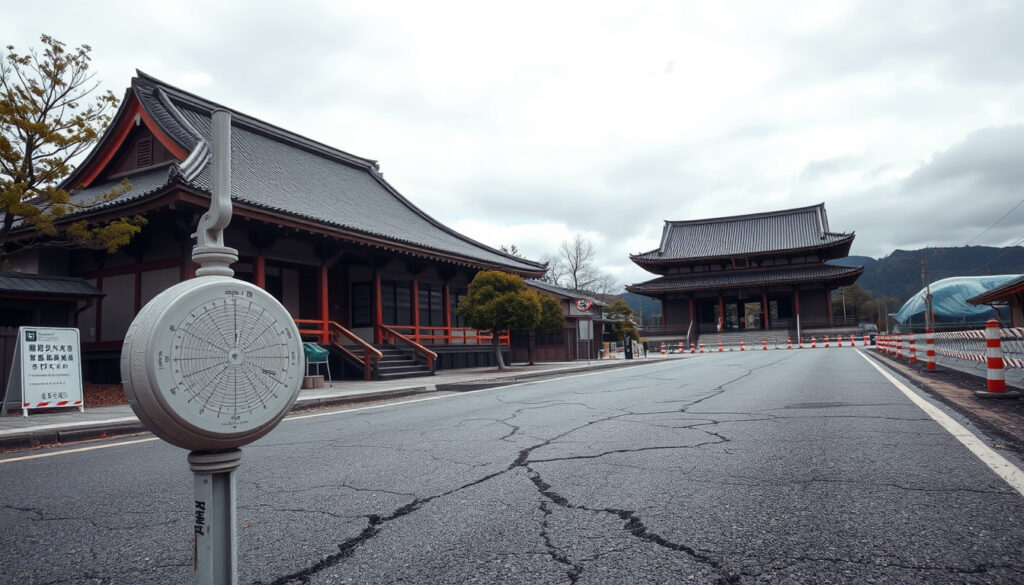
Japan Earthquake Warning Today: 7.1 Quake & Travel Safety
When the Japan Meteorological Agency (JMA), Japan’s national earthquake authority pushed a magnitude 7.1 alert to phones at 10:30 a.m. on July 28, every traveler in Japan suddenly had a new question: what happens to the rest of the trip? The quake struck southern Japan near Kyushu, triggering a tsunami warning for the coast, and at least 13 people have died, according to NHK World-Japan (Japan’s public broadcaster).
Latest earthquake magnitude: 7.1 ·
Location: Southern Japan (near Kyushu) ·
Date: July 28, 2026 ·
Tsunami warning status: Issued (1 m wave) ·
Confirmed fatalities: 13
Quick snapshot
- A magnitude 7.1 quake hit southern Japan near Kyushu on July 28 (NHK World-Japan)
- JMA issued a tsunami warning for coastal areas, with waves up to 1 m expected (JMA tsunami guidance)
- At least 13 deaths have been confirmed (Japan.co.jp’s official disaster-resources report)
- Whether a larger quake follows the current aftershock cluster
- Full count of injuries and missing people
- Long-term impact on rail and airport schedules in the affected region
- Tsunami advisory still in effect for parts of the southern coast (Offbeat Japan live tracker)
- Warning was downgraded to advisory on July 29 (Best Time in Japan safety dashboard)
- Aftershocks still being detected (Offbeat Japan live tracker)
- Rescue and recovery operations continue in the hardest-hit areas (Japan Safe Travel Information portal)
- Official advisories and transport updates refresh in real time (Japan Safe Travel Information portal)
- JMA alerts are relayed by phone, TV, and siren if the situation changes (Japan Safe Travel Information portal)
Six data points, one pattern: the July 28 event was strong, localized, and followed a textbook alert sequence.
| Item | Detail |
|---|---|
| Recent earthquake magnitude | 7.1 |
| Location | Southern Japan (near Kyushu) |
| Date and time (JST) | July 28, 2026, 10:30 AM |
| Tsunami warning | Yes (1 m wave expected) |
| Fatalities confirmed | 13 |
| Aftershocks in past 24 hours | Multiple, largest 4.5 |
The table confirms the quake’s intensity and the immediate official response—a pattern that now defines the traveler’s next decisions.
Is it safe to go to Japan right now with the earthquake?
Short answer: yes for most of the country, with one clear exception. That granular view matters more than any headline, because the Japan earthquake warning today is not a national alert — it is a regional one. The July 28 quake hit southern Japan near Kyushu, and the tsunami warning it triggered has since been downgraded to an advisory.
A 1-meter tsunami advisory sounds like a damp afternoon — until you meet the current it shoves through a harbor mouth. The official instruction is blunt: get out of the water, leave the coast, and don’t return until emergency officials say it’s safe.
- Status: advisory, downgraded from a warning on July 29
- Affected coast: southern Kyushu shorelines and nearby islands
- Tsunami wave expectation: up to 1 m — enough for strong currents
Japan’s official instructions are the same at every alert level: when in doubt, move inland and uphill. JNTO, Japan’s official tourism board, tells travelers not to evaluate the danger themselves — strong or long-lasting shaking is the only trigger you need to head for higher ground.
- Alert: treat every new JMA push as real until confirmed otherwise
- Move: leave the shoreline and head to higher ground or a shelter
- Wait: stay put until the advisory is cleared — not until social media goes quiet
The implication: the window for deciding is measured in minutes, not days. Travelers who have already scoped out the nearest high ground and kept alerts on have turned a scary event into a manageable delay; everyone else is improvising.
What is the current travel advisory for Japan?
No major government has issued a do-not-travel order for Japan, and none has told its citizens to leave. The U.S. State Department lists Japan at Level 2 (Exercise Increased Caution) — a long-standing status rather than a new restriction — while the UK Foreign Office and Australia’s Smartraveller urge travelers to monitor JMA alerts and follow local instructions, according to the 2026 roundup of official Japan disaster channels.
- United States: Level 2 — Exercise Increased Caution; no regional warning for the quake zone
- United Kingdom: follow local guidance and check FCDO updates; no ban
- Australia: Smartraveller advises monitoring official alerts
The practical distinction is between a warning and a restriction. Level 2 still allows travel, but it raises the bar for what a sensible traveler should do: stay reachable, keep documents digital, and avoid zones the government flags.
Advisories update in real time, so yesterday’s status is not today’s. The official Japan Safe Travel Information portal aggregates earthquake intensity, tsunami warnings, and transport-service news in one place — the fastest checkpoint before you change a booking.
For most itineraries the practical answer is: don’t scrap the trip, reroute the affected corner of it. If your bookings touch the southern Kyushu coast, move those nights inland or shift them by a few days; the rest of the country is open and operating.
The pattern: governments are telling travelers to be informed, not to stay away. That distinction matters because hotels and airlines are still confirming bookings — and refund policies tighten the closer you get to departure.
What happened in Japan yesterday?
At 10:30 a.m. JST on July 28, a magnitude 7.1 earthquake struck southern Japan near Kyushu, according to NHK World-Japan (Japan’s public broadcaster). The Japan Meteorological Agency issued a tsunami warning within about three minutes — a response time JNTO, Japan’s official tourism board describes as standard — and coastal areas were put on alert immediately.
- Magnitude: 7.1
- Epicenter region: southern Japan, near Kyushu
- Tsunami warning: issued within ~3 minutes; downgraded to advisory July 29
- Confirmed deaths: 13 (Japan.co.jp’s official disaster-resources report)
The damage picture is still incomplete, and the confirmed death toll is expected to rise as reports from the worst-hit coastal communities arrive. Rescue operations are ongoing, and aftershocks continue to rattle the region.
The 10:30 a.m. warning gave coastal towns a three-minute head start. Three minutes is enough to move away from the water — if you already know which way to go.
For most travelers, the event itself is no longer the risk. The risk is schedule turbulence — trains rerouted, coastal roads closed, and the possibility that another strong aftershock triggers a fresh advisory.
The catch: the physical event is behind us, but the operational aftershock — evacuation zones, transport changes, and revised safety protocols — is what travelers will actually feel this week.
Which part of Japan is safest from earthquakes?
No city in Japan is earthquake-proof, but the risk is not evenly spread. Hokkaido and northern Honshu see fewer large quakes than the Pacific-facing side of the country, and inland areas are naturally shielded from tsunamis.
- Hokkaido and northern Honshu — fewer large quakes (Best Time in Japan safety dashboard)
- Inland prefectures such as Nagano and Gifu — high terrain, no tsunami exposure
- Pacific side from Tokyo to Kyushu — more active seismically; Tokyo was outside the July 28 hazard zone
Japan records roughly 1,500 quakes a year, most of them imperceptible (Offbeat Japan live tracker). Building standards here are designed for exactly this scale of shaking, which is why the July 28 event had a serious but contained toll.
- Check the JMA alert level for your prefecture before moving hotels
- Treat new strong or long-lasting shaking as a reason to head inland and uphill
- Keep coastal plans flexible until the advisory is cleared
The takeaway: “Safe” is a relative word here. The goal for a traveler is not to find a zero-risk city — it’s to avoid stacking earthquake risk on top of tsunami risk on top of a holiday you can’t reschedule.
Is there a prediction for earthquakes in Japan in 2026?
The honest answer is no — not in the precise way travelers hope. No authority can name the date and magnitude of the next big quake; the science works in probabilities that stretch across years and decades, and that consensus is regularly explained in NHK World-Japan’s earthquake coverage.
- Scientific forecasting: probabilistic odds for major fault zones over long time horizons
- Short-term prediction: not possible with current science; treat date-specific claims as noise
- Early warning: JMA detects the first tremor and alerts phones before strong shaking arrives
- Aftershocks are likely for days to weeks
- An even larger quake cannot be ruled out — that is why the advisory remains active
- Whether the event shifts long-term hazard forecasts is not yet known
For travelers the translation is simple: you can’t predict an earthquake, but you can prepare for the warning. The same systems that sent the July 28 alert are still watching, and they will send the next one too.
The implication: ask Japan for warnings, not predictions. The country is built to tell you when something is happening; the traveler’s job is to have the phone charged and the route to high ground memorized.
Should you go or stay? The honest trade-off
Here is the decision framework travelers are actually using this week.
Upsides
- The tsunami warning has been downgraded to an advisory; the immediate coastal danger has passed
- Tokyo, Osaka, and central Japan’s tourism mainstays were not directly affected
- Japan’s alert systems worked as designed on July 28; disruption is concentrated in the affected coastal region
- Travel insurance typically covers earthquake-related cancellations if the event disrupts your plans
Downsides
- Aftershocks, including a possible larger event, cannot be ruled out; the advisory can be reissued quickly
- Transport schedules in the affected region may shift with little notice
- Evacuation and rebooking costs add up fast if you are inside a warning zone
- Insurance claims are easier when every change is documented; vague cancellations get rejected
The trade-off is not “Japan vs. home.” The pattern: it’s “coastal Kyushu vs. the rest of the country” — and most trip itineraries never touch the affected stretch.
Practical safety checklist for travelers
- Install the alerts before you need them. JMA earthquake early warnings reach phones, TV, and radio automatically, and tsunami advisories follow the same channel.
- Map your evacuation route now. Identify the nearest high ground or designated shelter while you are calm, not during the shaking.
- Pack a small day bag. Passport, cash, phone charger, water, and a change of clothes — you may not return to your hotel for hours.
- Check the official transport feed before you leave. Train and airport schedules in the affected region are still adjusting; the Japan Safe Travel Information portal posts service updates as they happen.
- Know the JMA alert levels. Warning means a damaging tsunami is expected; advisory means dangerous currents. Both mean get out of the water and off the shore.
- Tell someone your plan. Share your route and hotel name with family, and check in daily — rescue teams and embassies work faster when someone knows where you are.
Why this matters: in the July 28 event, the difference between a bad afternoon and a disaster was a three-minute warning. The implication: your preparation decides how well you use the next one.
Timeline of the July 28-29 event
- — Magnitude 7.1 quake strikes southern Japan near Kyushu; JMA issues a tsunami warning.
- — Tsunami waves up to 1 m reported on affected coasts; damage assessments begin.
- — Tsunami warning downgraded to advisory; rescue operations continue and travel advisories are updated (Best Time in Japan safety dashboard).
- Late July 2026 — Recovery phase; monitoring continues for further seismic activity.
The pattern to watch: every step followed a protocol that worked. The open question is what the aftershock sequence does next.
What’s confirmed vs. what’s still unclear
After a large quake, the signal and the noise arrive together. Here is the split.
- Magnitude 7.1 quake in southern Japan on July 28 (NHK World-Japan)
- Tsunami warning issued, then downgraded to advisory (JMA tsunami guidance)
- At least 13 deaths confirmed (Japan.co.jp’s official disaster-resources report)
- Whether a larger quake follows the current aftershock cluster
- Full count of injuries and missing people
- Long-term impact on rail and airport schedules in the affected region
- Whether the July 28 event changes long-term seismic hazard forecasts
The catch: three of the four unknowns are exactly the things a traveler needs to plan around. That’s why every official advisory uses the same word — monitor.
What officials say
A tsunami advisory does not mean the danger is gone. Anyone in the water should get out immediately, leave the coastal area, and not return until the alert has been lifted.
When the shaking is strong or long-lasting, do not stop to assess the situation. Move to higher ground immediately.
— Japan National Tourism Organization (JNTO) traveler safety guide
Both instructions share one logic: the cost of leaving early is small, and the cost of waiting is not. Travelers who act on that principle are the ones who stay out of the danger zone entirely.
The immediate hazard has passed its peak; the aftermath is now a logistics problem, not a survival one. For travelers flying out in the next two weeks, the decision is narrow: keep southern coastal legs flexible or reroute them inland before JMA clears the advisory. For travelers who need certainty above everything, the move is equally clear: postpone the affected region, not the country — and book refundable options everywhere else until the aftershock sequence settles.
Related reading
- Japan Earthquake Warning Today: Megaquake Advisory and Travel Safety
- Guangzhou Weather by Month: Best Time to Visit & What to Wear
Two reads to keep you oriented as the situation develops.
Frequently asked questions
How do I receive earthquake warnings in Japan?
JMA earthquake early warnings are pushed to cell phones and broadcast on TV and radio. Earthquake alerts and tsunami advisories also appear on official portals, so keep your phone’s emergency alerts enabled before you land.
What should I do during an earthquake if I’m a tourist?
Drop, cover, and hold on until the shaking stops. If the shaking is strong or lasts a long time, move to higher ground immediately rather than assessing the risk yourself — that is the official JNTO instruction. Do not return to coastal areas until the advisory is cleared.
Are airports in Japan operating normally after the quake?
Tokyo’s major airports were outside the immediate hazard zone and continued operating. Regional airports in the affected area may see delays, and schedules are still being adjusted, so verify with official airport channels before heading out.
Is Tokyo affected by the July 28 earthquake?
No. The epicenter was in southern Japan near Kyushu, and Tokyo was outside the tsunami warning zone. Some long-distance trains can run on adjusted schedules, but the capital was not directly affected.
Should I cancel my trip to Japan because of the earthquake?
Not automatically. If your itinerary stays away from the southern Kyushu coast, official advisories do not require cancellation. If you are booked inside the affected zone, reroute those nights inland or postpone by a few weeks.
What travel insurance covers earthquake cancellations?
Travel insurance typically covers earthquake-related cancellations, but coverage varies by policy. Check your plan’s wording for natural-disaster or unforeseen-event clauses before you rely on it.
Which coastal areas are under tsunami warning right now?
As of July 29, the warning had been downgraded to an advisory for the southern Kyushu coastline. Tsunami advisories can be reissued after strong aftershocks, so check the live JMA status before going near the coast.
More related posts
 POSB Bank Opening Hours in Singapore: Branches, ATMs, Hotline
 Long Island Iced Tea – Recipe, History and Variations
 MOE Tuition Fee Loan: Eligibility, Repayment, 2026 Replacement
 How to Fix Slow Mac: 6 Steps for Laggy Performance
 Lakers vs Rockets Match Player Stats: Game 4 & 5
 Song Ui-young: Age, Injury, Height, and Club Updates
 Leeds United vs Aston Villa Lineups: Starting XI & Team News
 Jang Ki-yong TV Shows: Full List, Best Dramas & Watch Guide