Qiu Lian Ban Mian: What It Is, Health, and Where to Eat
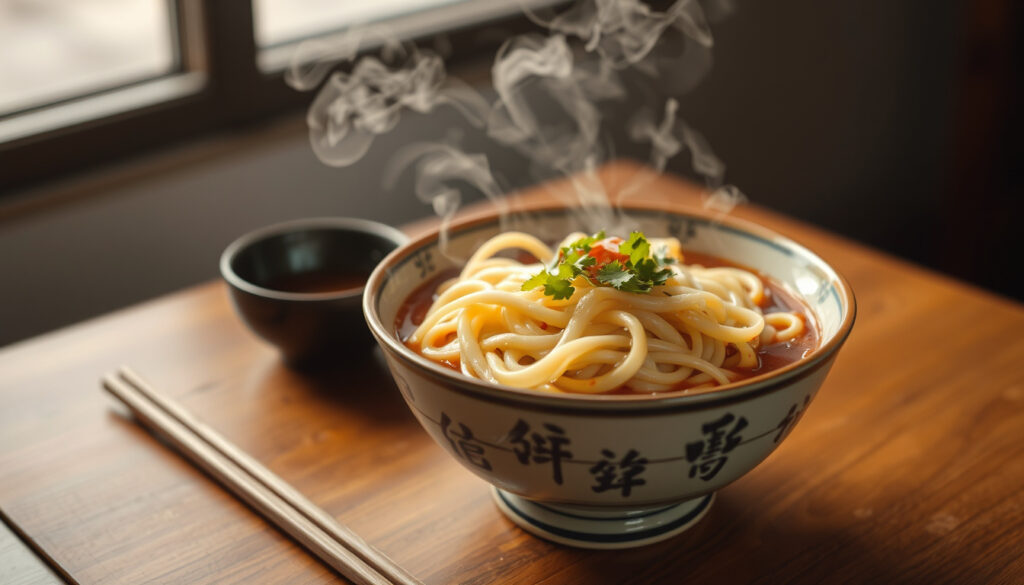
For anyone who’s spent a humid afternoon in a Singapore hawker centre, the sight of a steaming bowl of ban mian is a familiar comfort. The flat, chewy noodles swimming in a savory broth with minced pork, a runny egg, and crispy anchovies — it’s a dish that’s earned a loyal following. But what exactly is ban mian, and how does it differ from other noodle dishes like pan mee or u mian? This guide uses Qiu Lian Ban Mee — a Singapore brand that’s been serving it since 1988 — as a lens to explore the dish’s origins, varieties, health profile, and where to find the best bowls.
Origin: Hokkien Chinese noodle dish, popular in Singapore and Malaysia ·
Typical ingredients: Wheat noodles, minced pork, mushrooms, vegetables, anchovies, egg ·
Key brand: Qiu Lian Ban Mee, operating since 1988 ·
Average calorie range: 350–500 kcal per serving (soup version)
Quick snapshot
- Ban mian translates to “flat noodles” in Chinese (SethLui.com food review)
- Qiu Lian Ban Mee founded in 1988 (the.fat.guide (Singapore food blog))
- Ban mian is made from wheat flour, eggs, and water (SethLui.com food review)
- Pan Mee and Ban Mian refer to the same dish (SethLui.com food review)
- Exact nutritional breakdown for Qiu Lian’s menu items (the.fat.guide (Singapore food blog))
- Whether ban mian is “heaty” varies by individual constitution (SethLui.com food review)
- 1988 — Qiu Lian Ban Mee founded (the.fat.guide (Singapore food blog))
- 1990s–2010s — Ban mian becomes a staple hawker dish (SethLui.com food review)
- 2019 — Food showdown compares Face Ban Mian vs Qiu Lian (SethLui.com food review)
- 2023 — Qiu Lian updates outlet list on Instagram (the.fat.guide (Singapore food blog))
- Growing popularity of dry ban mian with premium sauces (the.fat.guide (Singapore food blog))
- Potential expansion of Qiu Lian to new locations (Spring Tomorrow (Singapore food blog))
Seven key facts, one theme: ban mian is a simple wheat noodle dish with deep roots in Hokkien cuisine, and Qiu Lian has been a consistent player for over three decades.
The facts below establish a clear baseline for the dish’s identity and the brand’s footprint.
| Attribute | Details |
|---|---|
| Dish type | Noodle soup or tossed noodle dish |
| Cuisine origin | Hokkien (Chinese), popular in Singapore & Malaysia |
| Main noodle ingredient | Wheat flour, egg, water, salt |
| Primary protein | Minced pork or chicken |
| Common toppings | Fried anchovies (ikan bilis), mushrooms, bok choy, egg |
| Qiu Lian founding year | 1988 |
| Qiu Lian outlet count | At least 6 outlets in Singapore |
What is ban mian?
What is ban mian called in English?
- Ban mian literally means “flat noodles” in Chinese (SethLui.com food review).
- It belongs to the Hokkien noodle family and is often translated as “flat noodle soup” or “ban mian soup” in English.
The dish is typically served in a savory broth with minced pork, mushrooms, vegetables, and a soft egg, then topped with fried anchovies for crunch. A dry version — tossed in dark soy, sesame oil, and chili — is also popular.
Is ban mian heaty?
- In Chinese food therapy, ban mian is considered neutral — not excessively heaty or cooling — because it lacks strong Yin or Yang ingredients (SethLui.com food review).
- However, adding fried anchovies and chili may tip the balance toward heaty, especially for individuals with sensitive constitutions.
The implication: ban mian is generally safe for regular consumption, but if you’re prone to heatiness, you can request less fried anchovies or skip the chili.
Qiu Lian’s customers who order the dry version get a richer sauce but also a higher sodium load — the trade-off between flavor and health is real.
Are Pan Mee and Ban Mian the same?
What is ban mian and u mian?
- Pan Mee is the Malaysian name for the same dish — both refer to flat, hand-pulled or machine-cut wheat noodles (SethLui.com food review).
- U mian is a different noodle: thick, yellowish, and made with alkaline water (kan sui), giving it a springy texture and distinct flavor.
- Chow mein uses thin, steamed and stir-fried noodles — not ban mian.
Four noodle types, one pattern: texture and ingredients separate them more than name.
Here is how these four noodles compare across key traits.
| Noodle | Key ingredient | Texture | Common use |
|---|---|---|---|
| Ban mian / Pan Mee | Wheat flour, egg, water | Flat, chewy, irregular | Soup or tossed |
| U mian | Wheat flour, alkaline water | Thick, springy, yellow | Soup or stir-fry |
| Chow mein noodles | Wheat flour, egg | Thin, steamed, then stir-fried | Stir-fry |
| Lo mein | Wheat flour, egg | Round, soft, boiled then tossed | Tossed with sauce |
The catch: many menus use the terms interchangeably, but knowing the noodle base helps you pick the right dish.
What noodles are used in Ban Mian?
Ban mian noodles are made from wheat flour, water, eggs, and salt. The dough is rolled and cut into flat, ribbon-like strips. Machine-made versions are common, but hand-pulled texture is prized (SethLui.com food review). No alkaline water is used, unlike u mian or lo mein.
The pattern: ban mian’s flat shape and soft chew make it a canvas for broths and sauces — it’s not meant to be al dente like Italian pasta, but tender enough to absorb flavors.
Is chicken ban mian healthy?
Is Ban Mian Healthy?
- Chicken ban mian may have lower fat than pork versions, but the overall calorie count (350–500 kcal) is similar (the.fat.guide (Singapore food blog)).
- Ban mian provides a balanced meal with protein, carbohydrates, and vegetables.
- Dry versions with sauce can be higher in sodium and fat.
- Healthfulness depends on portion and added ingredients — fried anchovies, for example, add crunch but also calories and sodium.
What this means: a bowl of soup ban mian with chicken and extra vegetables is a solid choice for a filling meal, but the dry version should be treated as an occasional indulgence.
What kind of sauce is best for dry ban mian?
Easy Homemade Dry Ban Mian Recipe
- Typical dry ban mian sauce includes light soy sauce, dark soy sauce, sesame oil, minced garlic, and chili (the.fat.guide (Singapore food blog)).
- Vinegar and sugar are sometimes added for balance.
- Some recipes use a simple blend of light soy, dark soy, and lard for richness.
- The sauce should coat the noodles without making them soggy.
How to make noodles taste like Chinese takeaway? The secret is in the wok hei — high heat and a well-seasoned wok. But for home cooks, a good sauce and quick tossing over high heat can approximate the flavor.
Qiu Lian’s dry ban mian recipe — with its minced meat, egg, and crispy ikan bilis — is a template that home cooks can replicate easily, but the restaurant version benefits from decades of seasoning and technique.
Can you freeze pan mee noodles?
Fresh ban mian dough can be frozen for up to 3 months. Cooked noodles may become mushy upon thawing, so portioning before freezing is recommended (SethLui.com food review).
The trade-off: freezing extends shelf life but sacrifices texture. For best results, freeze the raw dough and cook fresh each time.
Where are Qiu Lian Ban Mian locations?
Qiu Lian Ban Mian menu
- Signature ban mian with minced meat balls, a raw egg, vegetables, and ikan bilis (the.fat.guide (Singapore food blog)).
- Stir-fried ban mian with soft minced meat, egg, vegetables, crispy ikan bilis.
- Fishball ban mian and dry versions available.
- Chopped chili can be requested as an add-on (the.fat.guide (Singapore food blog)).
Qiu Lian Ban Mian Lau Pa Sat
Lau Pa Sat outlet is one of the most accessible for tourists and office workers (Spring Tomorrow (Singapore food blog)).
Qiu Lian Ban Mian Tiong Bahru
Another well-known location in the Tiong Bahru area, convenient for residents and visitors exploring the heritage estate.
Other confirmed outlets include Sumang Lane, Clementi, Plaza Singapura, Sengkang, Punggol, Hougang Mall, and City Square Mall (Tripadvisor (Singapore user reviews)).
The pattern: Qiu Lian has expanded steadily across the island, making it one of the most accessible ban mian brands in Singapore.
Pros and Cons of Ban Mian
Upsides
- Balanced meal with protein, carbs, and vegetables
- Versatile — soup or dry, customizable toppings
- Relatively low calorie count (350–500 kcal) for a filling meal
- Widely available at affordable prices (S$3.80–S$5.80)
Downsides
- Dry versions can be high in sodium and fat
- Fried anchovies add calories and sodium
- Not ideal for low-carb or gluten-free diets
- Fresh noodles don’t freeze well after cooking
tripadvisor.com, danielfooddiary48.rssing.com, tripadvisor.in, tripadvisor.com, tripadvisor.com, no.tripadvisor.com, hungryghost.sg, no.tripadvisor.com
Frequently asked questions
What is ban mian?
Ban mian is a Chinese flat noodle dish from Hokkien cuisine, typically served in a savory soup with minced pork, mushrooms, vegetables, and fried anchovies. It can also be served dry with sauce.
Is ban mian the same as pan mee?
Yes, pan mee is the Malaysian name for the same dish. Both refer to flat, hand-pulled or machine-cut wheat noodles.
What noodles are used in ban mian?
Ban mian noodles are made from wheat flour, water, eggs, and salt. They are rolled and cut into flat, ribbon-like strips. No alkaline water is used.
Is ban mian healthy?
Ban mian provides a balanced meal with protein, carbohydrates, and vegetables. The soup version is around 350–500 kcal. Dry versions with sauce can be higher in sodium and fat.
What is the best sauce for dry ban mian?
A typical dry ban mian sauce includes light soy sauce, dark soy sauce, sesame oil, minced garlic, and chili. Vinegar and sugar can be added for balance.
Can you freeze ban mian noodles?
Fresh ban mian dough can be frozen for up to 3 months. Cooked noodles may become mushy upon thawing, so portioning before freezing is recommended.
Where can I find Qiu Lian Ban Mian in Singapore?
Qiu Lian Ban Mian has multiple outlets across Singapore, including Sumang Lane, Clementi, Lau Pa Sat, Plaza Singapura, Tiong Bahru, Sengkang, Punggol, Hougang Mall, and City Square Mall.
What is on the Qiu Lian Ban Mian menu?
The menu includes signature ban mian with minced meat balls, stir-fried ban mian, fishball ban mian, and dry versions. Chopped chili is available on request.
For Singapore diners, the choice is clear: Qiu Lian Ban Mian offers a reliable, affordable, and tasty ban mian experience, but those watching their sodium or calories should opt for the soup version and go easy on the anchovies. For the dry version, treat it as a weekend treat — the flavor is worth the trade-off.
More related posts
 Best FD Rates in Singapore May 2026: Compare Top Bank Rates
 Singapore Police WhatsApp Number: Official Contacts & Scam Alerts
 Bayern Munich vs Tottenham Lineups: Confirmed Telekom Cup 2025
 V Aesthetics Hair Grow Raffles City: Reviews & Complaints
 100,000 VND to SGD: Current Rate & Guide (April 2025)
 Tom Cruise Net Worth 2026: $600 Million, Career and Comparisons
 Who is Michelle Chia’s Ex-Husband? Shaun Chen Details & Timeline
 Yet Not I but Through Christ in Me: Lyrics, Chords, Bible Verse