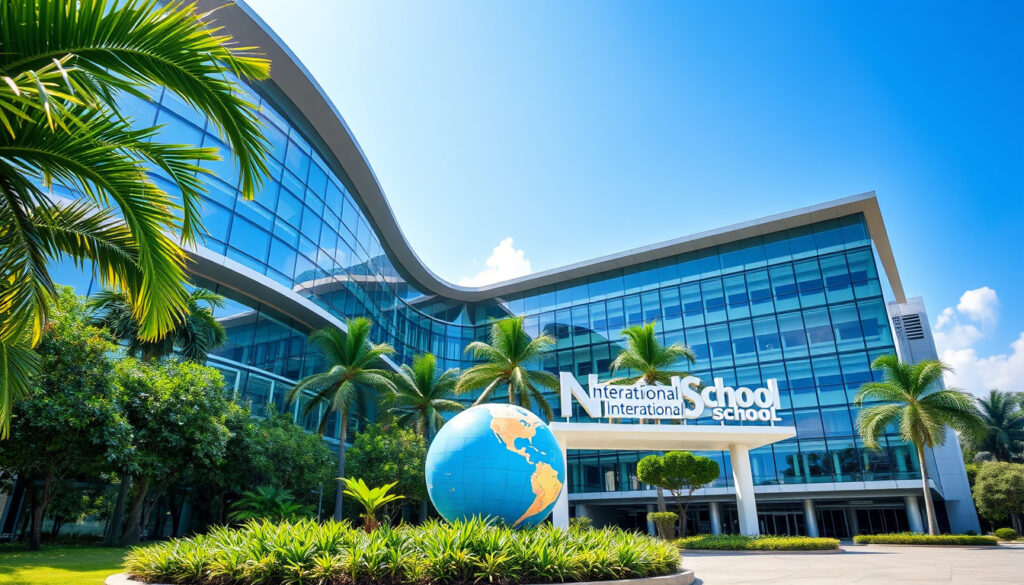
International High Schools Singapore: Top Schools & Fees
Choosing a high school in Singapore can feel like standing at a crossroads in a dense, tropical jungle of options—except the jungle is air-conditioned and the pathways are lined with IB diplomas, IGCSE certificates, and AP credits. You are likely here because you are an expat parent trying to make sense of a system that boasts over 70 international schools, each promising a golden ticket to universities worldwide. This guide is your compass, breaking down the top institutions, the true costs of tuition, and the subtle art of matching a curriculum to your child’s future, starting with a reassuring fact: while public schools offer a deep immersion into local culture, the international circuit provides a familiar, globally recognized path.
Snapshot: Key Facts at a Glance
- Total international schools: over 70
- Share of expat students in international schools: approximately 80%
- Typical school day start: 8:00 AM – 8:30 AM
- Average class size (high school): 18–22 students
- Most common curricula: IB, IGCSE, AP
- Top-ranked school (2024 IB average): UWCSEA ~36.5 points
- Accreditation bodies: WASC, CIS, IB
- Public school fees (monthly, non-citizens): Primary SGD 750, Secondary SGD 1,600, Pre-university SGD 2,100
- Integration focus: Language immersion (mother tongue) and national education content.
Scale of Choice: Over 70 international options is a staggering number, but it’s the diversity—not just the count—that defines the market. OWIS (international school group) and similar providers cater to specific niches, from American-style to British traditional, ensuring a fit for most expat profiles.
Academic Structure: The near-universal start time of 8:00 AM and moderate class sizes are industry standards, but they are also key selling points. They promise a structured, attentive environment that contrasts sharply with the often larger, more rigid classrooms found in some local public schools.
Credentials & Outcomes: A 2024 IB average of ~36.5 points at UWCSEA (United World College of South East Asia) is not just a number; it’s a benchmark that signals university placement success. However, it’s crucial to note that rankings vary by source, and a holistic view of a school’s value includes arts, sports, and community service.
Public School Alternative: For the truly adventurous, Singapore’s public schools offer an incredible opportunity for cultural integration at a fraction of the cost. The monthly fees for non-citizens are a bargain compared to their international counterparts, but the trade-off is a fully local curriculum and a more challenging language environment.
The Cost of International Education in Singapore (2025)
While the sticker price for international schools is steep, the scale varies dramatically. The most expensive tier—schools like Dover Court International School (part of Nord Anglia)—can command annual fees exceeding SGD 45,000, while more modest options might start around SGD 25,000. This disparity reflects not just prestige, but also campus size, faculty quality, and the range of extracurriculars offered.
However, costs extend beyond tuition. Parents should budget for a mandatory one-time enrollment fee (often non-refundable), additional charges for lunch programs, school trips (which can be lavish for IB CAS components), and technology levies. The Singapore Ministry of Education (MOE) announced revised fees for public schools in 2024, but for the international pathway, the market demand continues to push fees upward, especially in the IB strongholds.
## What are the top 5 international schools in Singapore?
Academic Powerhouses and Legacy Institutions
The leadership set is defined by academic results and university placement. UWCSEA remains the gold standard, with its East and Dover campuses consistently producing near-perfect IB scores and sending graduates to Ivy League and Oxbridge. Just behind, St Joseph’s Institution International (SJI) offers a distinct Ignatian ethos, blending strong academics with a focus on service, and its 2024 IB average of ~36.5 is a testament to its quality.
For American-curriculum families, Singapore American School (SAS) provides a non-IB, Advanced Placement pathway, emphasizing creativity and athletics. Meanwhile, Tanglin Trust School (British) and Nexus International School (IB continuum) round out the top tier, each with unique strengths in music, technology, and inclusive education. A quick survey shows that while the press loves rankings, asking a parent from a top school often reveals that culture and teacher retention matter as much as the score.
Beyond the Top 5: Specialist and Mid-Tier Options
The second tier of schools offers excellent value and niche focus. Dulwich College (Singapore) is renowned for its music and drama programs, while Canadian International School (CIS) excels in bilingual programs. For those seeking a more intimate setting, Invictus International School provides a rigorous, research-based curriculum with a lower fee structure, making it accessible to more families without compromising on the IGCSE/IB pathway.
It’s easy to dismiss mid-tier schools as safe options, but many boast exceptional facilities—such as Chatsworth International School‘s Orchard Road campus—that are hidden gems. The choice here often comes down to whether you prefer a school’s morning bus route or its weekend outdoor education program.
## Frequently asked questions
What are the different curricula offered by international schools in Singapore?
Most international schools in Singapore offer one or more of three main curricula: the International Baccalaureate (IB), the IGCSE (Cambridge), and the American Advanced Placement (AP) program. A few schools also offer the International Primary Curriculum (IPC) for younger students, and the German, French, or Australian systems for their respective expat communities. According to Singapore MOE, the choice of curriculum is a key factor for expat parents, as it directly impacts university admissions in their home countries.
How do I choose between IB and AP in Singapore?
The choice between IB and AP is a strategic one. The IB Diploma is a holistic, research-based program recognized globally—it is the default for top schools here, such as UWCSEA, and is demanding but well-regarded by UK and Australian universities. AP is a subject-based, credit-accumulating system, ideal for American university applications, especially from Singapore American School. If your child thrives on continuous assessment and independent study, IB is a strong fit; if they prefer a flexible schedule with more elective choices, AP might be better.
Are there any schools that bridge the gap between public and international?
Yes, a few schools offer a hybrid model. For instance, Singapore MOE has a small number of international students in the mainstream system, but this is rare. More commonly, schools like St Joseph’s Institution International blend the local culture with international curricula, offering integrated humanities and a mandatory mother-tongue program. However, the majority of expat students—about 80%—remain in fully international schools, which provide a more uniform western-style education.
What are the typical entrance requirements?
Admission varies, but most top-tier schools require an entrance exam (MAP testing or the IB-specific tests) and an interview for high school admission. For instance, OWIS and St Joseph’s Institution International also assess English proficiency and prior school records. It’s not just about grades; a student’s co-curricular activities (CCA) record is often a differentiator. For competitive schools like UWCSEA, a truly holistic profile is essential.
Are students from public schools able to transfer to international schools?
Yes, the reverse migration happens, but it is academically challenging. Public school students have a strong foundation in mathematics and sciences, but the mid-year transition to an IB school requires adaptation to a different assessment style (more essays, less rote learning). It’s common for such transfers to be placed in a pre-IB year to adjust. According to a Chatsworth International School admissions lead, a student from the local system often needs a term to catch up on the critical thinking demands of the IB.
What is the typical class size and teacher-to-student ratio?
International high schools in Singapore typically maintain small class sizes—averaging 18 to 22 students—to facilitate discussion. The teacher-to-student ratio is generally around 1:10, often with dedicated teaching assistants for students with learning needs. This is a significant draw, as it allows for personalized attention, a stark contrast to the 40+ student classes seen in many public schools.
Can my child apply for Permanent Residency (PR) while on a Student Pass in an international school?
Yes, it is possible but extremely rare and subject to Indonesian or Indian national policies. The Student Pass is valid for 2 years, but the issuance of a PR depends on the child’s capacity to contribute to Singapore society, which is a tricky threshold. Generally, the number of PR grants to international students in private schools is very low, and the move to a local school is a faster route to citizenship eligibility.
Related reading: **International Schools in Singapore: 2025 Fees & Guide** · **Singapore Birth Rate 2025: TFR Hits Record Low of 0.87**
More related posts
 BullionStar Singapore: 45 New Bridge Road Guide
 La Roche-Posay Sunscreen Review: Worth the Hype
 Singapore Coffee Shop Toilet Suspension: Fines & Rules
 Ah Yat Seafood Restaurant: Menu, Locations & Singapore Guide
 List of Secondary Schools in Singapore 2026: Complete Guide
 Singapore Airlines SQ Flight to Bangkok: Full Guide & Schedule
 Richest Country in the World? 2026 by GDP & Wealth
 Union Saint-Gilloise vs Newcastle – Preview, Lineups and Prediction