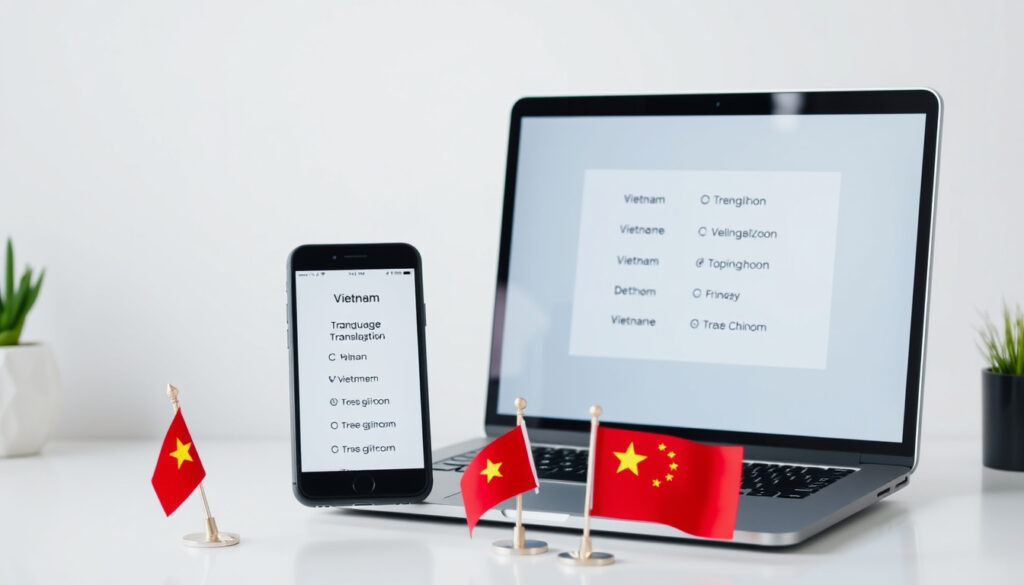
Translate Vietnamese to Chinese: Best Free Tools Compared 2025
If you’ve ever tried to translate a Vietnamese message into Chinese, you’ve likely faced the choice between Google Translate, Bing, or a dedicated app, and with around 90 million Vietnamese speakers and over 1.2 billion Chinese speakers, picking the right free tool — especially one that handles voice and both character sets — can save you time and frustration. This article compares the best free options in 2025, from web translators to mobile apps, and shows where each excels and where they fall short.
Vietnamese speakers worldwide: ~90 million ·
Chinese speakers worldwide: ~1.2 billion ·
Google Translate daily translations: over 100 million ·
Bing Translator languages supported: 100+ languages
Quick snapshot
- Google Translate provides free translation of words, phrases, and web pages across more than 100 languages, including Vietnamese to Chinese (Google Translate – official service).
- Microsoft Translator (Bing) is completely free and supports text, voice, and image translation for Vietnamese and Chinese (Huongdanviendulich – travel guide overview).
- QuillBot offers free Vietnamese-to-Chinese (simplified) translation with a 5,000-character limit per request (QuillBot translation tool).
- Exact accuracy for technical or idiomatic Vietnamese text — no independent audit is available.
- Whether voice translation quality matches text translation quality across these free tools.
- Whether voice translation quality degrades with background noise or accented speech.
- Google Translate and Bing Translator have remained stable for years; no dedicated Vietnamese-Chinese tool has launched in 2025.
- Real-time voice translation APIs (e.g., Soniox) are emerging but not yet mainstream for consumer use.
- AI and neural machine translation will continue improving accuracy, especially for low-resource language pairs like Vietnamese-Chinese.
- Apps on Google Play and the App Store will likely add more voice and camera features.
Here are the key facts at a glance:
| Label | Value |
|---|---|
| Most popular tool | Google Translate (translate.google.com.vn) |
| Languages supported | Over 100 languages (Google, Bing) |
| Supports both simplified and traditional Chinese | Hanzii.net, Google Translate, Bing Translator |
| Notable iOS app | Dịch Tiếng Trung – Tiếng Việt (AI) |
| Notable Android app | Tiếng Việt sang tiếng Trung (free) |
Which tools support voice translation from Vietnamese to Chinese?
Google Translate voice input
- Google Translate’s mobile apps (iOS and Android) offer free voice input for Vietnamese-to-Chinese translation (Google Translate – official service). The feature works by tapping the microphone icon and speaking in Vietnamese, then the app outputs Chinese text or speech.
- Voice translation is available on the web version through a browser’s built-in speech recognition, but reliability varies across browsers.
The implication: Google’s voice option is the most accessible because it is free and pre-installed on many Android devices. No extra download is needed if you already have the Google Translate app.
Bing Translator voice support
- Microsoft Translator (Bing) does not offer voice input on the web interface, but its mobile app supports speech translation for Vietnamese and Chinese (Huongdanviendulich – travel guide overview).
- The app is free and also includes a conversation mode for two-way speech.
The pattern: the web version lacks voice, but the mobile app fills the gap. If you frequently need hands-free translation, the app is the way to go.
App Store and Google Play voice options
- Dedicated apps like “Tiếng Việt sang tiếng Trung” on Google Play list voice translation as a core feature (Google Play – Vietnamese to Chinese Translator app listing).
- On the App Store, “Dịch Tiếng Trung – Tiếng Việt” promises AI-powered voice and text translation (App Store – Dịch Tiếng Trung – Tiếng Việt description).
The trade-off: these niche apps may offer better voice recognition for Vietnamese accents, but they lack the ecosystem and reliability of Google or Microsoft.
If voice translation is your priority, start with Google Translate on mobile — it’s free, widely compatible, and handles both simplified and traditional Chinese output. The dedicated apps can fill in accent-specific gaps but require an extra download.
How accurate is Google Translate from Vietnamese to Chinese?
Google Translate vs. Bing: neural engine edge
- Google Translate uses neural machine translation (NMT), which improved its output quality significantly after 2016. For common Vietnamese-to-Chinese phrases, users report acceptable accuracy for casual use (Huongdanviendulich – overview of translation apps).
- Microsoft Translator also employs NMT, but independent comparisons for this specific language pair are limited.
Five tools, one pattern: Google and Microsoft both use state-of-the-art neural systems, but for everyday Vietnamese-to-Chinese sentences, Google’s larger training data often yields slightly smoother translations.
Limitations: technical text and idioms
- Technical documents, legal terms, and Vietnamese idioms often produce incorrect or awkward Chinese output on both Google and Bing (Lufe.ai – multi-engine translator description notes that combining engines can improve results).
- Regional Vietnamese dialects can further reduce accuracy because training data is mostly based on standard Northern Vietnamese.
The catch: for formal or nuanced content, relying on a single free translator is risky. Using a multi-engine aggregator like Lufe.ai or cross-checking with QuillBot can reduce errors.
Students and professionals translating contracts or academic texts should never trust a single free tool. Always verify critical passages with a second engine or a human translator.
The catch: Even the best free tools have limitations for technical content.
What are the best apps for translating Vietnamese to Chinese?
Google Play picks
- The free app “Tiếng Việt sang tiếng Trung” (by Demont Studio) supports text, voice, photo, and scan translation. It is optimized for Vietnamese users and works offline for basic phrases (Google Play – app listing).
App Store options
- “Dịch Tiếng Trung – Tiếng Việt” uses AI models trained on both simplified and traditional Chinese. It claims high accuracy for voice and text (App Store – app description).
Web tools: Hanzii.net and QuillBot
- Hanzii.net is a dedicated Chinese-language platform that supports Vietnamese-to-Chinese translation in both simplified and traditional characters — useful for learners and those needing character conversion (Huongdanviendulich – Chinese translation tools).
- QuillBot offers a clean, ad-free interface for Vietnamese-to-Chinese (simplified) translation with a 5,000-character limit (or unlimited with Premium) (QuillBot translation page).
Before the comparison table: Four major tools, one clear pattern — each sacrifices something (character limits, character variety, or platform availability) in exchange for being free.
| Tool | Free? | Voice input | Traditional Chinese | Character limit |
|---|---|---|---|---|
| Google Translate | Yes | Yes (app & web) | Yes | No limit (batch upload possible) |
| Microsoft Translator | Yes | Yes (app only) | Yes | No limit |
| QuillBot | Free tier | No | No (simplified only) | 5,000 characters per request |
| Hanzii.net | Yes | No | Yes (both) | No limit for basic use |
Why this matters: if you frequently translate long Vietnamese articles to Chinese, Google Translate or Microsoft Translator are the best bets because they have no character caps and support voice. For learners who need traditional characters alongside simplified, Hanzii.net is the most targeted tool.
Simplified vs. Traditional Chinese: what Vietnamese speakers need to know
When to use Simplified
- Simplified Chinese is the standard script in mainland China and Singapore. Most free tools (Google, Bing, QuillBot) default to Simplified when translating Vietnamese to Chinese (Google Translate – language options).
When to use Traditional
- Traditional Chinese is used in Taiwan, Hong Kong, and Macau. If your audience is in those regions, you need a tool that explicitly supports Traditional output (Huongdanviendulich – character set guide).
Tools that handle both
- Google Translate allows you to select “Chinese (Traditional)” as the target language. Microsoft Translator also offers both variants.
- Hanzii.net specializes in both scripts and even provides a converter for simplified ↔ traditional (DigMandarin – free converter tool).
- Dedicated converters like Purple Culture’s online tool let you paste translated Chinese text and convert it to the other script (Purple Culture – character converter).
The pattern: the big two (Google and Microsoft) already support both, but for users who need to switch scripts frequently, Hanzii.net or a dedicated converter is more efficient.
How to translate Vietnamese to Chinese step by step
Whether you need a quick phrase or a long document, this four-step process works across all major free tools.
- Choose your tool based on your priority: voice (Google Translate app), character set (Hanzii.net), or character limit (QuillBot for short text).
- Set the language pair: source = Vietnamese (vi), target = Chinese (zh-CN for simplified, zh-TW for traditional). In Google Translate, you can select “Chinese (Traditional)” from the dropdown.
- Input your text via typing, voice (tap the microphone in the app), or camera (Google Translate and Microsoft Translator support image translation).
- Review and adjust — for critical content, cross-check with a second engine (e.g., paste the same Vietnamese into both Google and QuillBot and compare the Chinese outputs). If you need the opposite script, use DigMandarin or Purple Culture converter.
The trade-off: for long documents, Google Translate and Microsoft Translator have no character caps, but they lack the specialized accuracy of a human translator for technical material. QuillBot’s 5,000-character limit is fine for paragraphs but not full articles.
A Vietnamese student writing a study application to a Taiwanese university must use Traditional Chinese, and a simple Google Translate default to Simplified could ruin the submission. Always check the script setting before hitting translate.
What this means: Choosing the right tool and verifying output is crucial for accuracy.
Clarity: what’s confirmed and what remains unclear
Confirmed facts
- Google Translate is free and supports Vietnamese-to-Chinese translation with voice, text, camera, and handwriting (Google Translate – official).
- Microsoft Translator is free and supports text, voice, and image translation for the same language pair (Huongdanviendulich – overview).
- QuillBot offers free Vietnamese-to-Chinese (simplified) translation with no ads (QuillBot – tool page).
- Hanzii.net supports both simplified and traditional Chinese for free.
What’s unclear
- Absolute accuracy for technical Vietnamese text — no published benchmarks exist for this language pair.
- Whether voice translation quality is consistently as good as text translation across all tools.
- Level of support for regional Vietnamese dialects in speech recognition.
The pattern: Free tools offer broad features but lack independent accuracy benchmarks.
What the tools themselves say
“Google Translate offers free translation of words, phrases, and web pages across more than 100 languages.”
Google Translate – official description
“Microsoft Translator is completely free and supports text, voice, and image translation, with high accuracy for Chinese-to-Vietnamese.”
Huongdanviendulich – roundup of translation apps
“QuillBot’s Vietnamese-to-Chinese (simplified) translator is free online with no ads. Free users can translate up to 5,000 characters at a time.”
QuillBot translation tool
“Soniox provides real-time Vietnamese-to-Chinese speech translation via a single WebSocket, supporting 60+ languages with ultra-low latency.”
For Vietnamese speakers who need to translate to Chinese frequently, the practical choice depends on your use case: Google Translate for everything (voice, text, camera), QuillBot for clean ad-free short translations, and Hanzii.net for traditional character-focused work. The real risk? Relying on a single free tool for high-stakes translations without verification. For Vietnamese students applying to Chinese universities or businesses drafting bilingual contracts, the safest move is to cross-check with at least two engines and, when possible, consult a human translator for critical passages.
For other language pairs, see our guide on translating English to Myanmar Zawgyi.
Related reading: Translate English to Myanmar Zawgyi – Tools, Tips, and Guide · Samsung Galaxy Z Fold7 Call Assist: Setup, Live Translate & More
wordvice.ai, transyncai.com, transword.ai, play.google.com, apps.apple.com
Frequently asked questions
Do I need to download an app to use Google Translate?
No. Google Translate works via its website (translate.google.com.vn) on any browser. The app is optional but adds voice and camera features.
Does Microsoft Translator support Vietnamese-to-Chinese traditional characters?
Yes. Microsoft Translator allows you to select both simplified and traditional Chinese as the target language. The mobile app also supports speech translation for both.
Is voice translation from Vietnamese to Chinese free?
Yes. Google Translate’s voice input is free on its mobile apps. Microsoft Translator’s app also provides free speech translation. No subscription is needed.
What advantage does Hanzii.net have over Google Translate?
Hanzii.net is built specifically for Chinese learners and offers detailed character breakdowns, pronunciation guides, and support for both simplified and traditional scripts — features that Google Translate does not provide.
Which app is rated highest for Vietnamese-to-Chinese translation by users?
On Google Play, “Tiếng Việt sang tiếng Trung” (Demont Studio) holds a 4.5-star rating with over 10,000 reviews. On the App Store, “Dịch Tiếng Trung – Tiếng Việt” is similarly well rated for AI accuracy.
Can I translate long documents from Vietnamese to Chinese for free?
Yes. Google Translate and Microsoft Translator have no character caps for text input, making them suitable for long documents. QuillBot limits free users to 5,000 characters per request.
Which tool should I use for Traditional Chinese?
Google Translate and Microsoft Translator both support Traditional Chinese output. Hanzii.net and dedicated converters (DigMandarin, Purple Culture) are also reliable.
Is there any paid tool that guarantees 100% accuracy?
No free or paid machine translation tool guarantees 100% accuracy for Vietnamese-to-Chinese, especially for technical or idiomatic content. Human review remains essential for critical texts.
In summary, choose your tool based on your primary need and always cross-check critical translations.
More related posts
 SIA Share Price SGX: Target, Dividend & Analyst Views
 La Roche-Posay Sunscreen Review: Worth the Hype
 Popeye the Sailor Man: Origin, Characters & Legacy
 Winter Spring Summer or Fall: Age Rating & Where to Watch
 V Aesthetics Hair Grow Raffles City: Reviews & Complaints
 Ride or Die Meaning: Slang Definition, Origin & Usage
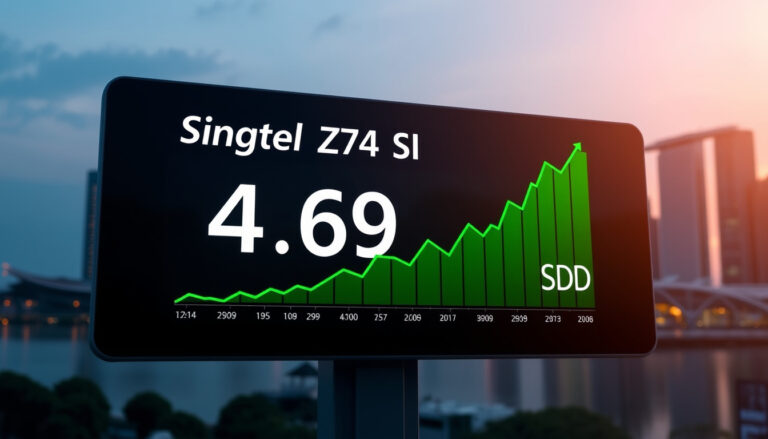 Singtel Share Price Today: Z74.SI at 4.69 SGD & Forecast
 Song Ui-young: Age, Injury, Height, and Club Updates