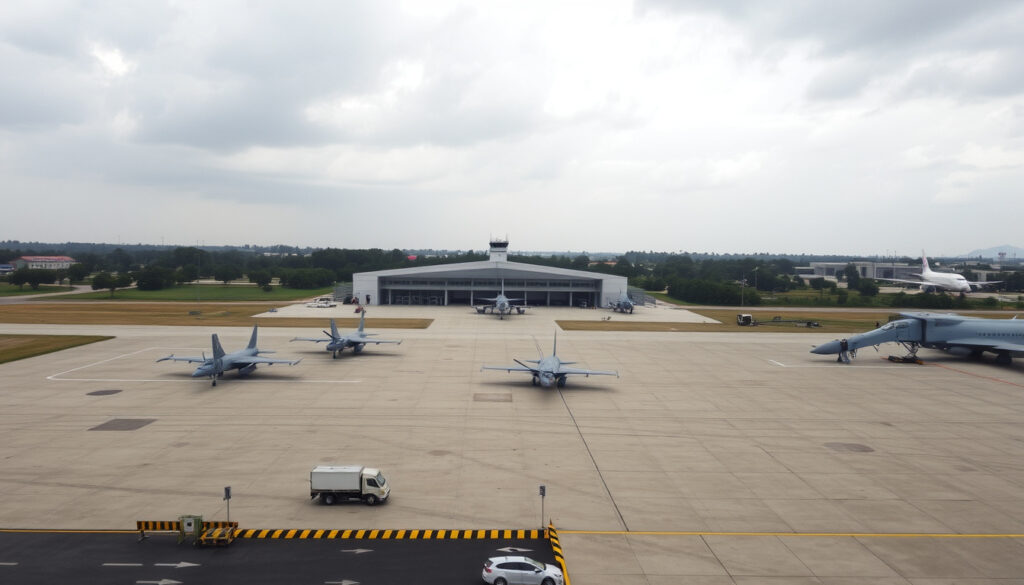
Paya Lebar Air Base Bomb Threat: MINDEF Arrests Serviceman
Few things unsettle a military base quite like a bomb threat. On January 23, 2026, Paya Lebar Air Base (PLAB) in Singapore became the focus of such a threat — an online post that claimed improvised explosive devices had been planted in twelve locations across the base. Within days, the Ministry of Defence identified a 22-year-old Full-Time National Serviceman (NSF) as the suspect, arrested him, and confirmed that no explosives were ever found.
Date of bomb threat report: January 24, 2026 ·
Suspect arrested: 22-year-old Full-Time National Serviceman (NSF) ·
Date of arrest: January 28, 2026 ·
Bomb sweeps result: No threats found ·
Detention location: Singapore Armed Forces Detention Barracks ·
Source of arrest announcement: Ministry of Defence, Singapore (MINDEF)
Quick snapshot
- False bomb threat reported at Paya Lebar Air Base on Jan 24, 2026 (MINDEF (Singapore Ministry of Defence))
- 22-year-old NSF arrested on Jan 28, 2026 (MINDEF) (MINDEF (Singapore Ministry of Defence))
- Bomb sweeps found no threat; base operations normal (MINDEF) (MINDEF (Singapore Ministry of Defence))
- Specific charges the NSF will face (MINDEF) (Yahoo News Singapore / The Straits Times)
- Whether double prosecution (military and civilian) will occur (Yahoo News Singapore / The Straits Times)
- Exact nature of the threat (verbal statement, written note, online post) (AsiaOne (Singapore news outlet))
- What motivated the suspect to make the threat (Yahoo News Singapore / The Straits Times)
- Jan 23, 2026: RSAF made aware of online posts alleging bomb threat (AsiaOne)
- Jan 24, 2026: Bomb sweeps conducted, no threat found (MINDEF)
- Jan 28, 2026: NSF placed under close arrest at SAf Detention Barracks (MINDEF)
- Investigations ongoing; possible charges under Penal Code s 268A (MINDEF) (Malay Mail (Malaysian news outlet))
- Case likely tried via General Court Martial (MINDEF) (Malay Mail (Malaysian news outlet))
- PLAB continues operations; future redevelopment plans by URA unchanged (Malay Mail (Malaysian news outlet))
Seven facts from the official investigation, one pattern: the speed and transparency of the response.
| Base name | Paya Lebar Air Base (PLAB) |
| Date of threat | January 24, 2026 |
| Suspect identity | 22-year-old Full-Time National Serviceman (NSF) |
| Arrest date | January 28, 2026 |
| Outcome of sweeps | No explosives found |
| Detention facility | Singapore Armed Forces Detention Barracks |
| Investigating body | Ministry of Defence, Singapore (MINDEF) |
What will happen to Paya Lebar Air Base?
Paya Lebar Air Base remains operational. The Republic of Singapore Air Force continues its normal routines, and the Urban Redevelopment Authority’s long-term plans for the site after the airbase’s eventual relocation to Changi East remain unchanged. MINDEF confirmed that bomb sweeps found no danger, and the base was never placed on full lockdown. The investigation is internal, and the base’s day-to-day functions have not been disrupted.
Current status of operations
- All flights and training at PLAB continue as scheduled (MINDEF)
- No public access restrictions beyond normal security protocols (AsiaOne)
- RSAF posted a Facebook update at 11.35pm on Jan 23 to inform the public (AsiaOne)
Future redevelopment plans by URA
The Urban Redevelopment Authority has outlined plans to redevelop PLAB after the airbase relocates to Changi East, expected in the 2030s. The bomb threat incident does not alter those timelines. The site is slated for a mixed-use district with housing, parks, and commercial spaces (Malay Mail).
The pattern: a single hoax, however alarming, does not derail years of urban planning. The base’s future remains firmly on course.
What happens if you say you have a bomb in an airport?
Making a false bomb threat — whether at an airport, an air base, or any public facility — triggers immediate legal and security consequences. In Singapore, the response is swift and severe.
Legal consequences in Singapore
- Under Section 268A of the Penal Code 1871, a false bomb threat carries up to seven years in jail, a fine of up to S$50,000, or both (MINDEF)
- For military personnel, the case is tried via General Court Martial under the Singapore Armed Forces Act (MINDEF)
- Civilian perpetrators may also face charges under the Penal Code and the Public Order Act (Yahoo News Singapore / The Straits Times)
Security response protocols
When a bomb threat is received, the facility immediately activates a security lockdown. Bomb sweeps are conducted by trained personnel, and evacuation orders may be issued. In the PLAB case, MINDEF said precautionary measures were taken and bomb sweeps were conducted across the base (MINDEF). No threat was identified. The entire process, from report to all-clear, took less than 48 hours.
The trade-off: speed of response versus disruption. In this case, the base avoided a full evacuation, but the psychological impact on personnel is real.
What should you do during a bomb threat?
If you are ever near a bomb threat — at an airport, military base, or public space — the official guidance is clear. Do not panic, but act methodically.
Immediate steps for civilians
- Leave the area calmly and follow evacuation orders from authorities (MINDEF)
- Do not touch any suspicious objects or packages (AsiaOne)
- Report the threat to the nearest security personnel or call the police hotline (Yahoo News Singapore / The Straits Times)
- Do not spread unverified information or rumors on social media (Malay Mail)
Official guidance from MINDEF and OEM
The Singapore Ministry of Defence advises all personnel to remain vigilant and report any suspicious activity immediately. The Office of Emergency Management (OEM) recommends that civilians stay informed through official channels and avoid engaging with unconfirmed posts. In the PLAB case, MINDEF explicitly warned against fake threats, stating that they “cause unnecessary alarm and divert resources” (MINDEF).
The catch: the best defense is awareness. A calm, informed response can prevent a hoax from escalating into chaos.
Warning: Spreading unverified information about bomb threats can cause panic and legal consequences. Always rely on official sources.
Is there a US Air Force base in Singapore?
No. There is no US Air Force base in Singapore. The United States maintains a naval facility — Naval Support Activity Singapore — but it is a US Navy logistics hub, not an air base. Paya Lebar Air Base is operated by the Republic of Singapore Air Force (RSAF) and hosts RSAF fighter squadrons, transport aircraft, and training units (MINDEF).
The distinction matters because bomb threat protocols differ between military and civilian installations. In Singapore, all air bases fall under RSAF jurisdiction, and incidents are handled by the Singapore Armed Forces, not the US military. The PLAB incident was purely a Singaporean affair.
Why this matters: confusion about jurisdiction can lead to misinformation. The PLAB threat was contained within Singapore’s military justice system, and no US involvement occurred.
Timeline: How the Paya Lebar Air Base bomb threat unfolded
- January 23, 2026 — RSAF becomes aware of online posts alleging a bomb threat at PLAB. The post, later deleted, claimed improvised explosive devices were placed at twelve locations and in the vehicles of senior officers (MINDEF).
- January 24, 2026 — MINDEF confirms that bomb sweeps were conducted and no threat was found. The public is notified via RSAF’s Facebook page (AsiaOne).
- January 28, 2026 — A 22-year-old NSF, serving at PLAB, is placed under close arrest at the Singapore Armed Forces Detention Barracks (MINDEF).
- February 9, 2026 — MINDEF announces the arrest and identifies the suspect as a lone perpetrator. Investigations continue (MINDEF).
The pattern: the entire timeline from threat to arrest spans just five days — demonstrating the efficiency of Singapore’s security apparatus, not a cause for alarm.
Note: The swift identification of the suspect highlights the effectiveness of digital forensics in military investigations.
Confirmed facts vs. What remains unclear
Confirmed facts
- A false bomb threat was made at Paya Lebar Air Base on Jan 24, 2026 (MINDEF)
- A 22-year-old NSF was arrested on Jan 28, 2026 (MINDEF)
- No actual explosives were found during sweeps (MINDEF)
- The suspect is in close arrest at the SAf Detention Barracks (MINDEF)
What’s unclear
- The specific charges the NSF will face (MINDEF)
- If double prosecution (military and civilian) will occur (Yahoo News Singapore / The Straits Times)
- The exact nature of the threat (e.g., verbal statement, written note) (AsiaOne)
- What motivated the suspect to make the threat
The distinction between confirmed and unclear points helps readers understand the limits of official statements.
Quotes from official sources
Precautionary measures were taken and bomb sweeps were conducted at Paya Lebar Air Base. No threat was identified.
— MINDEF official statement, February 9, 2026 (MINDEF)
The online post appeared on a Reddit forum focused on national service and alleged that an explosion would occur at the airbase at a designated time and date.
— The Straits Times, as reported by Yahoo News Singapore (Yahoo News Singapore / The Straits Times)
Making a bomb hoax is punishable by up to seven years’ jail, a fine of up to S$50,000, or both.
— AsiaOne report on Penal Code Section 268A (AsiaOne)
The consequence: for the 22-year-old NSF, the cost of a single hoax could be years of his life. For Singapore’s defence establishment, the incident reaffirmed the importance of rapid investigation and public communication.
thestar.com.my, reddit.com, facebook.com, youtube.com, reddit.com, x.com
Frequently asked questions
What is the penalty for a false bomb threat in Singapore?
Under Section 268A of the Penal Code, a false bomb threat can result in up to seven years in jail, a fine of up to S$50,000, or both. Military personnel may face trial by General Court Martial (MINDEF).
How did MINDEF identify the suspect?
MINDEF traced the online post back to a 22-year-old Full-Time National Serviceman serving at Paya Lebar Air Base. Current evidence suggests he acted alone (MINDEF).
Will the suspect face civilian charges after NS?
It is possible. Depending on the investigation outcome, the NSF could be charged under the Penal Code and also face military disciplinary action. Double prosecution is not ruled out (Yahoo News Singapore / The Straits Times).
Can the air base be evacuated during a threat?
Yes, if the threat is deemed credible. In this case, MINDEF conducted bomb sweeps but did not order a full evacuation, as no immediate danger was identified (MINDEF).
How are bomb threats at military bases different from civilian airports?
Military bases follow protocols under the Singapore Armed Forces Act, with internal investigations and military courts. Civilian airports fall under the Police and the Civil Aviation Authority of Singapore, with cases handled in civilian courts. The response speed and legal framework differ (AsiaOne).
More related posts
 Catherine Zeta-Jones: Biography, Diagnosis & Marriage Timeline
 Chelsea vs Leicester City Lineups: Predicted XI & Team News
 Spicy Wife Nasi Lemak Reviews: Menu, Price & Halal
 Things to Do in Singapore: Top Attractions & Budget Tips
 Real Madrid vs Atlético Madrid Lineups: March 2026 Derby
 The Boy in the Striped Pajamas: Ending, Facts & FAQs
 Long Island Iced Tea – Recipe, History and Variations
 Yoona Movies and TV Shows: Complete Filmography Guide